



Strategy Acquires Additional Bitcoin Amid Market Turbulence
Introduction to Bitcoin Acquisitions
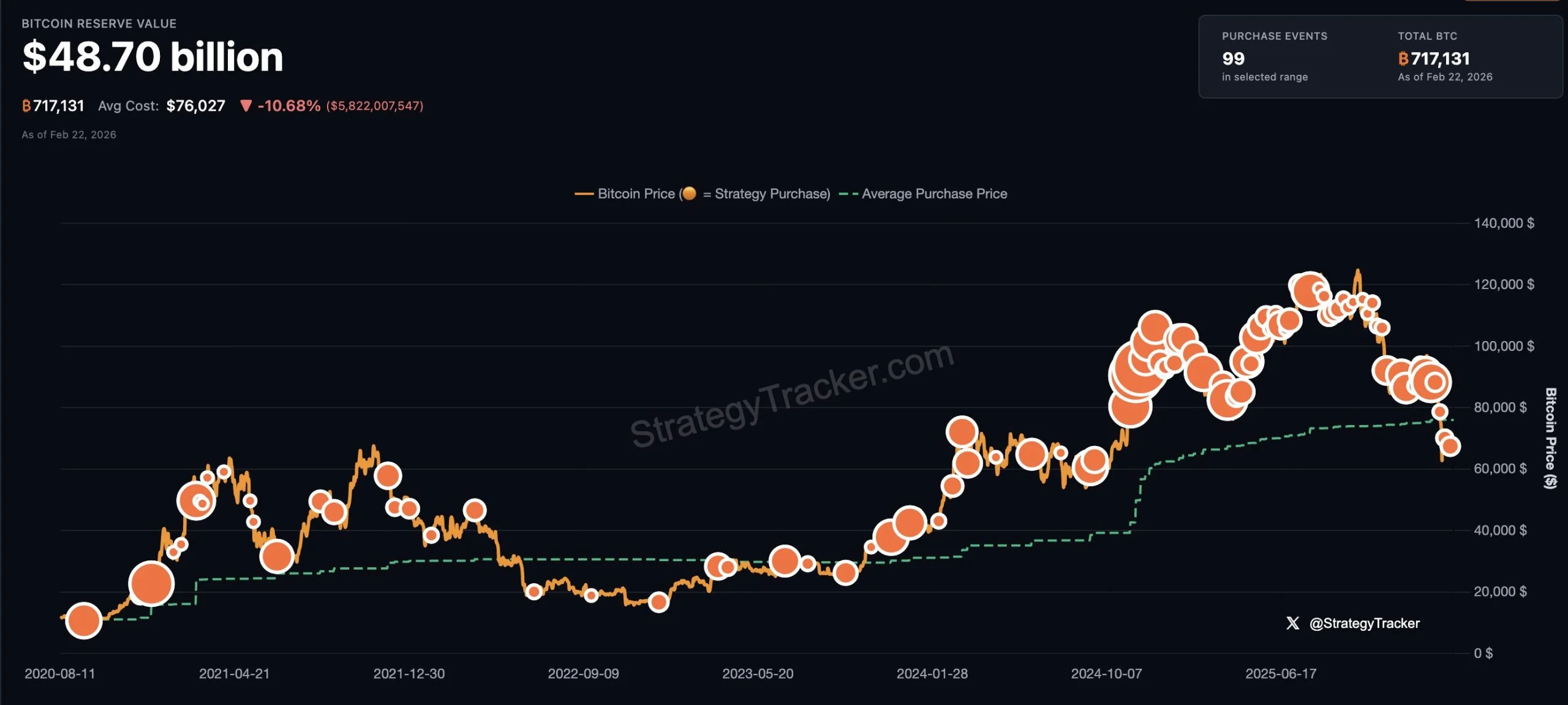
In a notable move, Strategy, a leading Bitcoin treasury company, has made headlines through its recent acquisition of 592 BTC for approximately $39.8 million. This purchase, executed between February 17 and February 22, reflects an average price of $67,286 per Bitcoin, as stated in a recent 8-K filing with the Securities and Exchange Commission. With this latest transaction, Strategy’s total Bitcoin holdings have surged to 717,722 BTC, valued at around $47.5 billion. Despite acquiring such a significant amount, the company is facing approximately $7.1 billion in unrealized losses. This article will delve into the implications of these acquisitions, the company’s market strategies, and the broader context of the cryptocurrency landscape.
Current Holdings and Financial Overview
Michael Saylor, Strategy’s co-founder and executive chairman, outlined the company’s financial position, confirming the total investment in Bitcoin amounts to around $54.6 billion, including associated fees and expenses. The significant holdings represent more than 3.4% of Bitcoin’s capped supply of 21 million coins. Utilizing proceeds from recent sales of its Class A common stock (MSTR), Strategy has demonstrated a tactical approach to replenishing its Bitcoin reserves even during a period marked by substantial market volatility. Just last week, the company generated approximately $39.7 million by selling 297,940 MSTR shares, with an impressive $7.8 billion still available for future sales under this program.
Market Sentiment and Saylor’s Perspective
While acknowledging the current "crypto winter," Saylor expresses optimism regarding the market’s future. He characterizes this downturn as milder than previous cycles and predicts a shorter recovery period. His belief is fueled by growing institutional support for Bitcoin, alongside a more robust banking sector backing cryptocurrencies compared to four years ago. In a recent interview, Saylor reiterated his positive outlook: "If it’s not going to zero, it’s going to a million." This sentiment reflects a broader bullish perspective within parts of the cryptocurrency ecosystem despite the rough terrain.
The Digital Asset Treasury Landscape
Analysts point to crucial data from Bitcoin Treasuries, which indicates that 193 public companies have adopted various Bitcoin acquisition models, with Strategy leading the pack. Some of the notable companies in this space include MARA, Tether-backed Twenty One, and Riot Platforms, showcasing that institutional interest in Bitcoin remains strong, despite the turbulent financial climate. However, many of these companies have seen their share values plummet, signaling significant stress within the digital asset treasuries (DATs) sector. Saylor’s Strategy, for instance, has experienced a staggering 71% decline in its market cap during this downturn.
Market Challenges and Potential Consolidation
According to Coin Bureau co-founder Nic Puckrin, the overall environment signifies concerning trends. As Bitcoin experiences a pronounced sell-off, many digital asset treasuries are facing pressures that could lead to further corporate selling. Notably, some companies have seen their share values drop dramatically, with Nakamoto’s shares down 99.3% over the last 280 days. This erosion appears to reflect broader market pressures, with three consecutive weeks of selling observed among Bitcoin treasury companies—a first in their brief history. Such developments could prompt market consolidation as cut-throat competition rises among firms trying to weather the storm.
Future Prospects and Conclusion
Despite the ongoing market challenges, Strategy’s stock showed a slight rebound, climbing 3.2% overall last week. This contrasts with Bitcoin’s nominal decline, which recently slipped below $65,000. Analysts will be keeping a close eye on these market fluctuations and corporate responses as the situation develops. While the current atmosphere seems daunting, Saylor’s company is strategically positioned to capitalize on future opportunities, emphasizing a long-term vision for Bitcoin investment. As institutional support grows and technological advancements continue in the crypto space, the narrative surrounding Bitcoin’s recovery could become increasingly optimistic.
In conclusion, while Strategy navigates these treacherous waters with substantial Bitcoin holdings, the interplay of market sentiment, institutional backing, and evolving dynamics will significantly shape the future of Bitcoin and similar investments. Whether this latest acquisition phase leads to a renaissance for Bitcoin or results in further consolidation among digital asset treasury companies remains to be seen, but all eyes will be on Strategy as it executes its forward-looking strategy.