


Large Holders Drive Bitcoin Exchange Inflows Amid Bear Market: An Analytical Overview
In the current cryptocurrency landscape, Bitcoin exchange inflows are increasingly influenced by large holders, as indicated by recent data from the onchain analytics firm CryptoQuant. This trend highlights a critical aspect of market activity during the ongoing bear phase. As investors grapple with fluctuations, the significant control exerted by large participants points towards changing dynamics in selling behaviors and market confidence.
Rising Exchange Whale Ratio
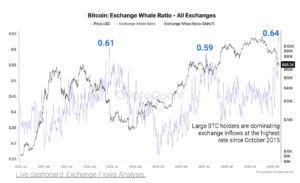
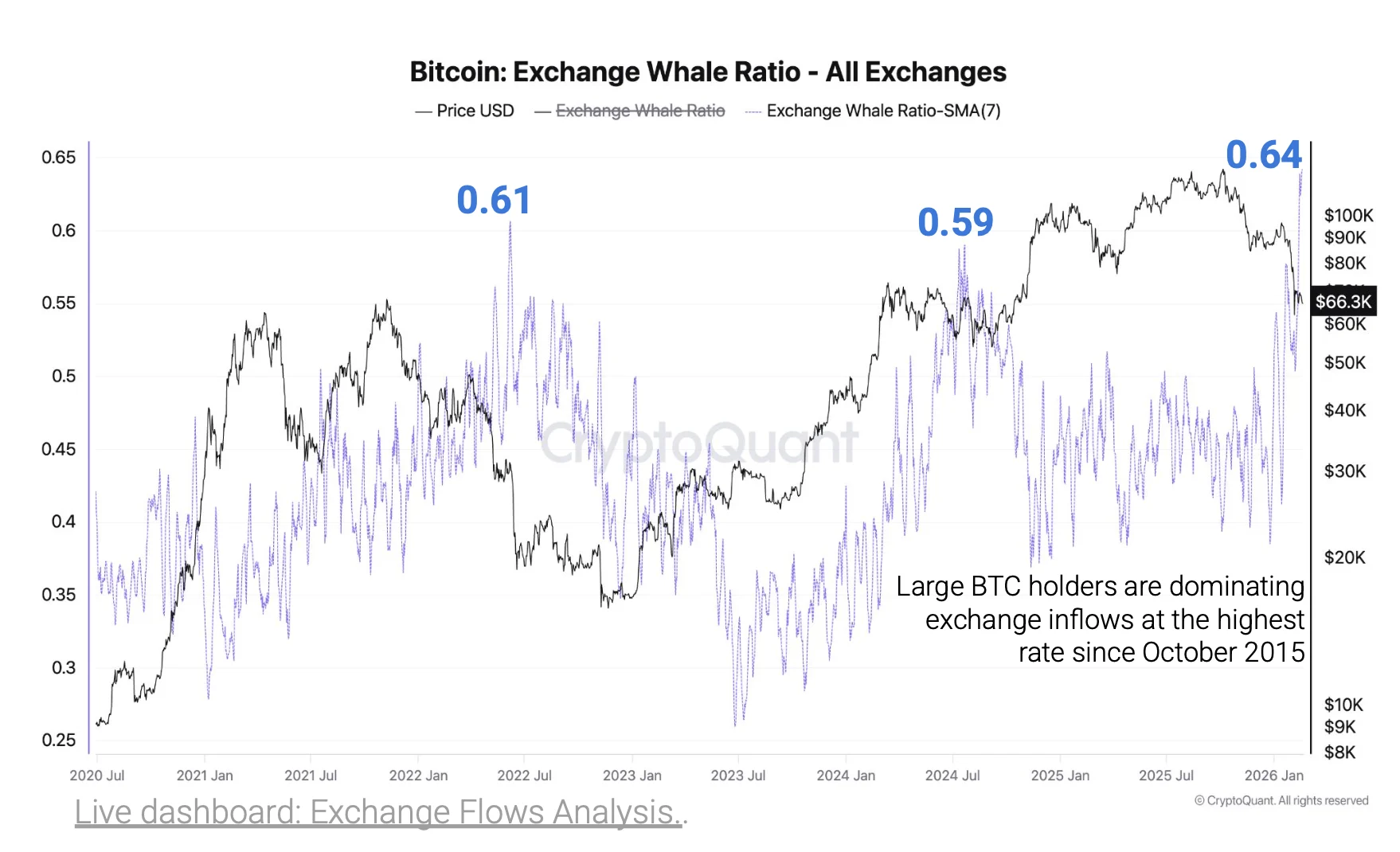
The exchange whale ratio has surged to 0.64, marking the highest level seen since October 2015. This figure signifies that 64% of all Bitcoin exchange inflows are derived from the top 10 deposits by volume. On this note, CryptoQuant emphasizes that the current market sentiments are largely steered by large-scale investors, evidenced by their predominant role in the selling activities. This phenomenon indicates a strategic shift towards profit-taking amongst major holders, as they navigate through the complexities of a bearish market environment.
Recent Inflows and Volatility
February witnessed a notable uptick in the average Bitcoin exchange inflow, rising to 1.58 BTC, a level not seen since June 2022, right in the midst of the previous bear market. Notably, after a correction that brought Bitcoin values down to approximately $60,000, exchange inflows reached a peak of around 60,000 BTC on February 6, representing the highest daily inflow since November 2024. However, following this spike, inflows have receded to approximately 23,000 BTC on a 7-day moving average, marking a significant decline of roughly 60%. CryptoQuant attributes this reduction to a normalization of market activity, suggesting that the acute selling phase may have subsided.
Altcoin Activity and Market Confidence
While Bitcoin exchange inflows showcase a complex narrative, the altcoin market faces its own challenges. Currently, the daily volume of altcoin deposits has increased to around 49,000, reflecting a 22% rise from approximately 40,000 deposits in the fourth quarter of 2025. This increase in altcoin activity may signify broader selling pressure, as heightened deposit levels often correlate with impending market volatility. Consequently, the growing altcoin inflows illustrate a market sentiment that is increasingly bearish and indicative of diminishing confidence outside of Bitcoin.
Declining Stablecoin Flows
Another concerning trend is observed within the stablecoin segment, particularly regarding Tether (USDT) inflows. Daily net inflows have dramatically decreased from a yearly high of $616 million in November 2025 to a mere $27 million recently. This decline in stablecoin activity raises alarms about liquidity in the market. The volatility is further exacerbated by periodic negative net flows, such as a robust outflow of $469 million on January 25, 2026. These figures collectively suggest a tightening liquidity environment, further complicating the potential for new investments in the cryptocurrency sphere.
Implications for Market Structure
As highlighted by CryptoQuant, the mounting selling pressure predominantly concentrated among large holders, combined with the widespread distribution of altcoins and declining stablecoin liquidity, creates an intricate picture for the cryptocurrency landscape. This evolving market structure appears to be fragile and susceptible to further volatility during the lingering bear market phase. The observations push towards an urgent call for caution among smaller investors, urging them to remain vigilant and informed amid the complexities characterizing the current state of the market.
Future Outlook and Considerations
In summary, the influence of large holders on Bitcoin exchange inflows, coupled with the challenges faced by altcoins and stablecoins, sketches a challenging outlook for the cryptocurrency market. As major investors dominate selling activities and liquidity tightens, the potential for increased volatility looms large. Stakeholders within the crypto space must now analyze these trends carefully, ensuring they comprehend the implications of current market cycles and prepare for possible future outcomes. As the market navigates through bear dynamics and fluctuating investor sentiment, staying informed will be essential for all participants in this rapidly evolving landscape.
Navigating the complexities of the cryptocurrency market demands an understanding of these trends and a proactive approach to investment strategies. Whether you are a large holder or a small investor, being aware of the nuances affecting Bitcoin and altcoins is crucial as we continue to witness this transformative phase in digital finance.