



Current Market Dynamics: Analyzing Bitcoin and Altcoin Trends
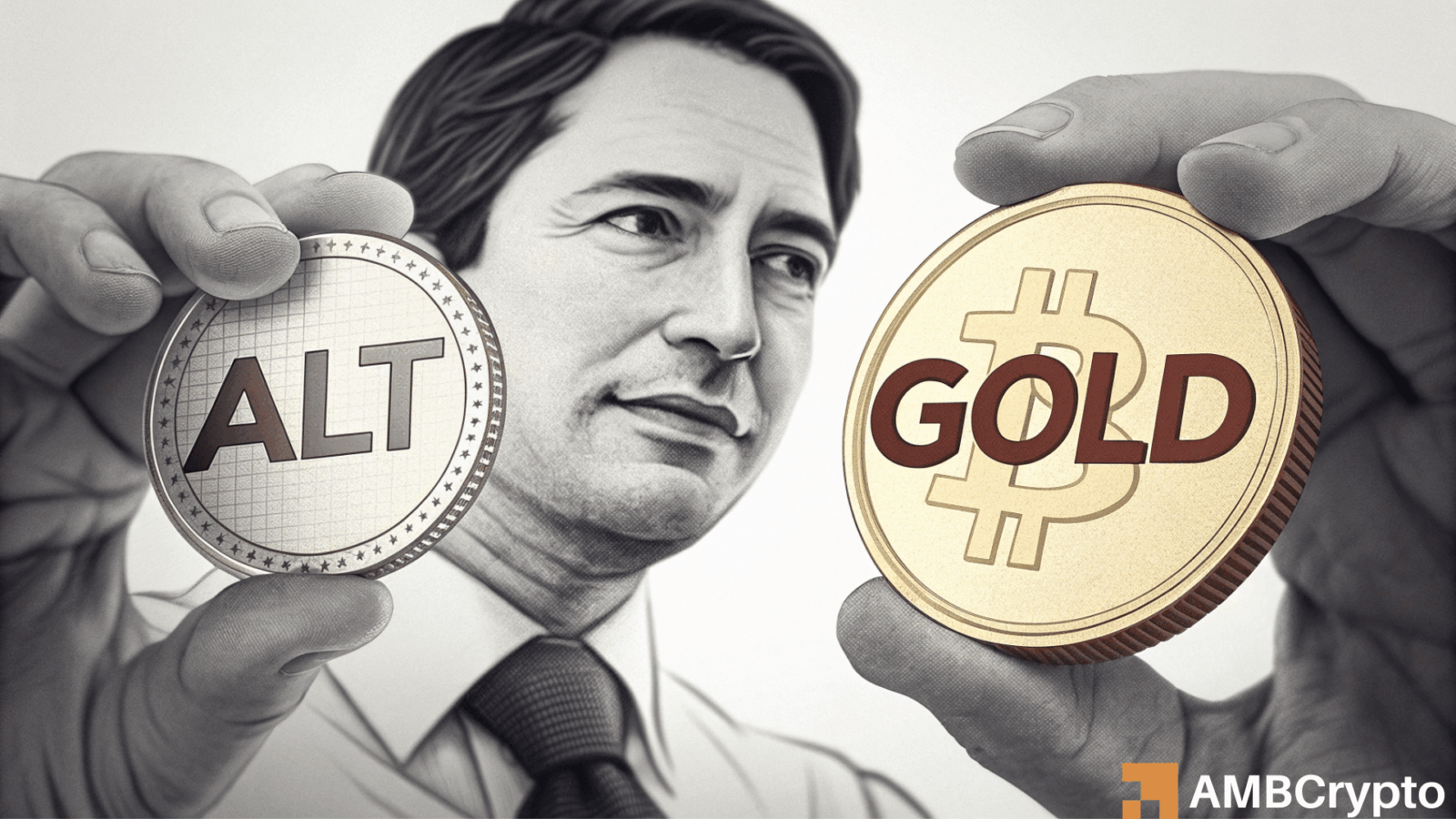
The cryptocurrency market is currently in a corrective phase marked by various interconnected traits. As macroeconomic volatility intensifies, investors find themselves recalibrating their risk appetite, which leads them to reassess their portfolio allocations. Many market participants are diverting capital away from Bitcoin (BTC), which faces ongoing selling pressure, and are increasingly gravitating toward select altcoins. This trend could have significant implications for the overall market landscape as it evolves.
Technical Indicators Highlight Bitcoin Dominance and Altcoin Performance
From a technical standpoint, Bitcoin dominance (BTC.D) has encountered resistance at the key 60% level. This resistance has resulted in the first red yearly candle recorded in five years for BTC. Concurrently, the Altcoin Season Index shows a notable uptick, gaining 10 points this month. This suggests a burgeoning trend where capital is rotating toward altcoins, signaling that altcoin attractiveness is on the rise, albeit within a cautious framework driven by market conditions.
Significance of the Bitcoin Risk Index
As we delve deeper into the current market dynamics, the Bitcoin Risk Index paints an interesting picture. It has been increasingly mirroring patterns observed in 2022, where rising Risk Index levels imply a loss of stability for BTC. When the negative altcoin impulse rises above a critical 25% threshold, it can cause corrective pressures that traverse the broader altcoin market. Presently, this threshold is being approached, indicating that altcoins may exhibit heightened sensitivity to BTC’s stability and the overarching risk environment.
Caution Among Investors
Given the current landscape, investors appear to be exercising caution. The elevated risk associated with altcoins and the resistance Bitcoin faces is prompting selective rotations within the market. This pattern suggests that investors are actively searching for short-term opportunities while being wary of potential pitfalls, thus contributing to a muted rally and reinforcing the corrective pressures prevailing across the cryptocurrency market.
The Impact of Macroeconomic Factors
Adding another layer of complexity is the ongoing macroeconomic volatility, which has begun to factor heavily into trading decisions. The market has been pricing in stagflation concerns—characterized by stagnant economic growth paired with persistent inflation, reducing risk appetite among investors. This has made it challenging for participants to allocate portfolios effectively, leading to a careful balancing act involving BTC, altcoins, and traditional hard assets such as gold and silver.
Movement Toward Hard Assets
Interestingly, recent developments suggest that investors could be preemptively hedging against anticipated market shifts. Technically, gold has decoupled from equities and has seen gains of over 4%, while silver surged by 5%. Together, these metals have added approximately $1.3 trillion in market capitalization. As Bitcoin slips below the $70,000 mark and BTC dominance remains capped at 60%, the move into hard assets can be seen as a strategic decision, aimed at mitigating broader market risks, which may, in turn, limit upside potential for altcoins until Bitcoin stabilizes and overall risk metrics improve.
Conclusion
In summary, the cryptocurrency market is experiencing a pronounced rotational phase, characterized by Bitcoin’s struggles against resistance and rising altcoin interest. Coupled with rising gold and silver prices, which suggest deliberate hedging strategies by investors, this environment is indicative of careful navigation amidst increasing macroeconomic uncertainty. As it stands, until BTC stabilizes and risk factors ease, the prospects for altcoins may remain constrained.