


David Sacks Transitions from AI and Crypto Czar to Co-Chair of PCAST: A Mixed Legacy
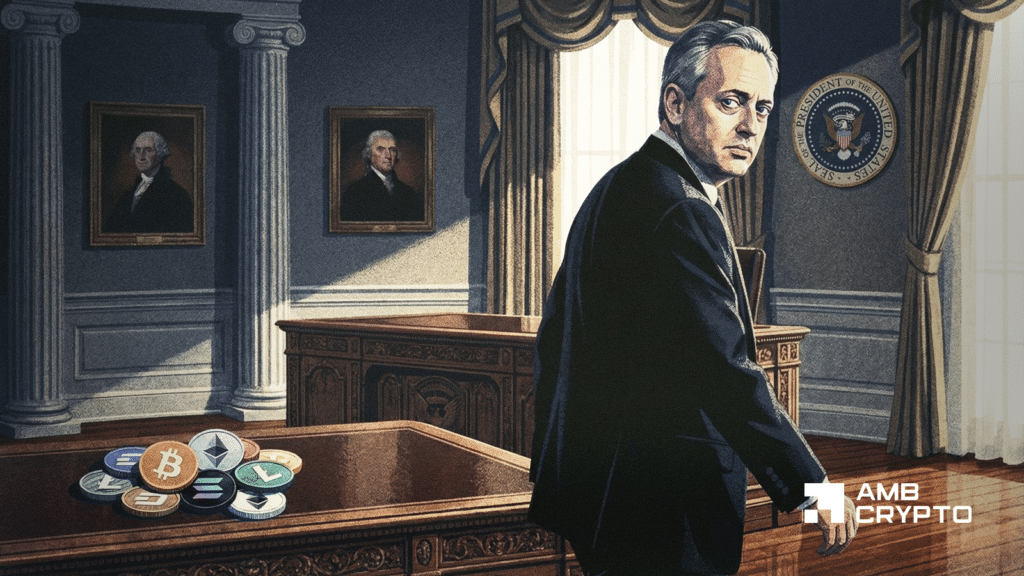
The recent conclusion of David Sacks’s tenure as the AI and crypto czar for President Donald Trump has sparked mixed reactions within the crypto community. Appointed for a 130-day term, Sacks has now shifted his focus to a new role as co-chair of the President’s Council of Advisers on Science and Technology (PCAST). This move indicates a broader scope for his recommendations in the technology sector, expanding beyond just artificial intelligence to include a wider array of tech topics. Despite his new position, Sacks’s track record in the crypto space remains a topic of debate.
During his brief tenure, Sacks played a significant role in advancing the GENIUS Act, a piece of stablecoin legislation that was passed into law. Collaborating with Bo Hines, Trump’s former chief crypto advisor, Sacks aimed to establish a more regulated framework for stablecoins. However, the transition of leadership following Hines’s resignation to join Tether raised questions about continuity and direction in the White House’s crypto initiatives. Patrick Witt, the current crypto advisor, has since taken charge of larger efforts surrounding the CLARITY Act, which aims to define the broader crypto market structure.
Looking ahead to 2024, the crypto sector has put forth an ambitious policy agenda that includes a comprehensive overhaul of regulatory agencies like the SEC and CFTC, the introduction of a U.S. strategic Bitcoin reserve (SBR), and the implementation of clear regulatory measures through both the GENIUS Act and the CLARITY Act. While significant progress has been made, particularly with the GENIUS Act, skepticism surrounds the SBR initiative, which hasn’t gained notable traction or support in recent discussions. Critics have pointed to this stagnation as a key element in evaluating Sacks’s performance during his term, using it as a primary metric to assess his effectiveness.
In response to the criticism regarding the U.S. SBR, some voices within the community, such as Jacquelyn Melinek, founder of Token Relations, have deemed these perspectives misleading. Melinek asserts that Sacks didn’t exit his role by choice but rather that his term simply expired. She emphasized that there are still advocates for digital assets and policy within the White House, urging others to remain optimistic about ongoing efforts in the crypto space. This sentiment reflects a larger conversation about the complexities and dynamics of crypto regulation in the U.S., where change is often met with both resistance and hope.
Despite the nuanced opinions surrounding Sacks’s contributions, current predictions indicate that the likelihood of establishing a U.S. SBR before 2027 remains low, with estimates under 30% on forecasting platform Polymarket. This continued uncertainty underscores the challenges facing regulatory frameworks in the evolving cryptocurrency landscape. Many in the community have expressed frustration at the slow pace of reform, urging for more decisive action to solidify the legal status and market structure of digital assets.
In conclusion, David Sacks’s departure from the role of AI and crypto czar to co-chair of PCAST marks a pivotal moment in his career but also highlights the complexities surrounding his legacy in the crypto world. While he played a vital role in advancing the GENIUS Act, the mixed feedback on his overall impact reveals that much work remains to solidify the future of cryptocurrency regulations in the United States. As the PCAST chair, Sacks now has the opportunity to advocate for a broader spectrum of technological advancements, potentially influencing a more favorable climate for innovation in the digital asset space.