




The Rise of Blockchain in Finance: How Polygon is Leading the Charge
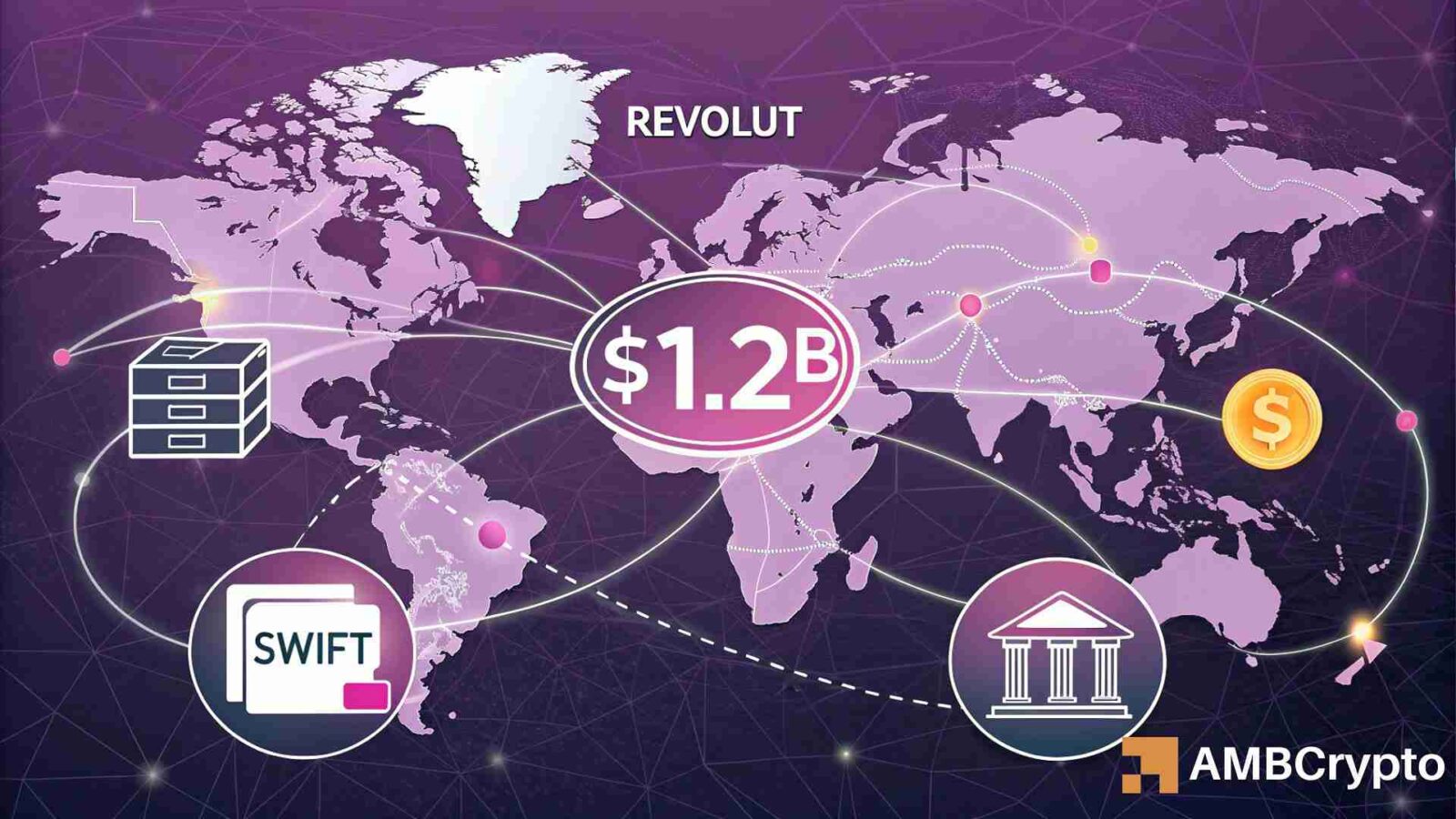
The ongoing debate between traditional finance and blockchain technology is heating up, but there’s a consensus emerging among investors and institutions: blockchain has established itself as a formidable contender in the financial arena. A prime example of this shift can be seen with digital banking giant Revolut, which recently achieved a remarkable milestone by processing over $1.2 billion in stablecoin transfers on the Polygon network. This accomplishment underscores the growing acceptance of blockchain within mainstream finance and signals a transformative change in how financial transactions are conducted.
Polygon: A Game-Changer for Institutions
Revolut’s significant volume of transfers is not just a statistic; it represents real user activity rather than simple test flows. According to Polygon’s official report, these transactions were settled in mere seconds and incurred costs of only fractions of a cent. This stark contrast to legacy systems highlights the economics driving institutions toward blockchain solutions. Revolut’s entire $1.2 billion volume reportedly incurred less than $700 in total fees—a testament to the scalable advantages that blockchain offers for financial transactions. With Polygon offering transaction costs up to 426 times lower than Ethereum and four times lower than Solana, it’s clear why institutions are gravitating toward Polygon for their operational needs.
The Drawbacks of Traditional Cross-Border Transfers
Despite advancements in technology, traditional cross-border payment systems remain cumbersome and expensive. Payments routed through legacy correspondent banking networks, such as SWIFT, can take anywhere from one to five business days and often involve multiple intermediaries, causing delays and inflated fees. For instance, global remittance fees average around 6.49%, with some banks charging over 14% in specific corridors. In stark contrast, transfers made using the Polygon network eliminate the need for intermediaries, providing rapid settlements and offering one-to-one stablecoin conversions without hidden foreign exchange spreads. This allows institutions to realize significant cost savings and quicker transaction times.
A Structural Shift in Financial Infrastructure
Revolut’s recent achievement is far more than a mere headline; it illustrates a fundamental shift within the financial sector. Institutions are increasingly moving beyond experimental phases and are deploying blockchain technologies at an industrial level. As the infrastructure surrounding stablecoins matures, networks like Polygon are emerging as the backbone for global financial transactions. This evolution represents a transformative departure from traditional financial methods, resulting in faster, cheaper, and more efficient services that users may not even notice.
The Positive Impact on Polygon’s Network Token
The growing acceptance of blockchain technologies and the utilization of platforms like Polygon are also positively influencing the network’s native token, POL. Although the token’s prices have experienced periods of consolidation in recent weeks, it appears to be gaining traction as of late. If the trends continue and significant gains persist, there’s potential for a breakout in POL’s price, especially if it maintains its demand zone around $0.095. As more institutions come on board, the future looks bright for Polygon and its token holders.
Why Institutions are Choosing Polygon
The advantages of using Polygon for institutional finance are hard to overlook. Traditional banking systems are not only costly but also notoriously slow. In an age where speed and efficiency are crucial for financial operations, institutions are adopting blockchain solutions that excel in both areas. Polygon’s ability to handle large capital movements at near-zero cost and instantaneous speed positions it as a frontrunner in the blockchain race. As financial institutions continue to migrate towards these innovative solutions, it’s clear that the future will favor technologies that deliver both efficiency and cost-effectiveness.
Conclusion: The Future of Finance
In summary, blockchain technologies like Polygon are revolutionizing the financial landscape by offering significantly cheaper and faster alternatives to traditional cross-border financial systems. Revolut’s impressive $1.2 billion milestone marks a pivotal point in the adoption of stablecoin-driven global payments, indicating a shift from a temporary trend to a long-term structural evolution within the financial sector. As more institutions recognize the potential benefits, it becomes increasingly apparent that blockchain is not just a passing fad; it is becoming an essential part of the financial ecosystem. With implications for efficiency and cost savings, the future of finance is undoubtedly leaning toward blockchain solutions like Polygon.