




Bitcoin ETFs See Surge in Inflows Amidst Market Dynamics
On Monday, Bitcoin exchange-traded funds (ETFs) in the U.S. experienced their largest net inflows in six weeks, totaling a remarkable $471.3 million across six different products. According to data from SoSoValue, this surge in investment was primarily led by BlackRock’s iShares Bitcoin Trust (IBIT), which saw inflows of $181.9 million. Following closely were Fidelity’s ETF, FBTC, with $147.3 million, and Ark Invest’s ARKB with $118.7 million. Alongside these, notable contributions also came from Grayscale, Bitwise, and VanEck, reinforcing a robust resurgence in institutional interest in Bitcoin.
These inflows are significant not only for the record numbers they represent but also because they offset previous outflows amounting to $173.7 million recorded on April 1. The latest inflow registers as the highest since February 25, when Bitcoin ETFs reported $506 million in net inflows. Andri Fauzan Adziima, research lead at Bitrue, pointed out that this reflects renewed confidence from institutional investors utilizing regulated channels. He emphasized that the strong monthly inflows of $1.32 billion in March marked a pivotal recovery phase for Bitcoin ETFs, illuminating the potential for continued positive momentum throughout the year.
Simultaneously, the Ethereum ETFs also enjoyed a boost, with net inflows of $120.2 million—the highest seen since mid-March. Such figures indicate a broader positive trend not just for Bitcoin but for decentralized finance assets in general, signifying renewed interest from both retail and institutional investors. Adziima noted that continued structural buying within these markets could facilitate Bitcoin surpassing its current consolidation range, yet potential macroeconomic uncertainties could act as a limiting factor.
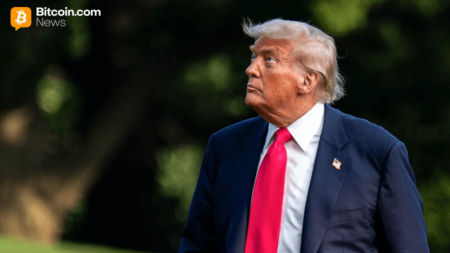
Concerns regarding geopolitical tensions, particularly the ongoing conflict in the Middle East involving the U.S. and Iran, continue to loom over both global equities and crypto markets. The situation has escalated to the point where the Strait of Hormuz remains closed, thereby affecting global oil prices. The hard deadline set by President Donald Trump for Iran to reopen the Strait has introduced fears of further military escalation, highlighting how external factors can influence market dynamics and investment sentiments.
Market analysts posit that the resolution of such geopolitical issues could trigger a bullish resurgence in cryptocurrencies. LVRG Research Director Nick Ruck commented that the current situation reflects a period of healthy consolidation for the crypto market. He expressed optimism that, should inflows remain strong and regulatory clarity improve, Bitcoin might test critical resistance levels in the near future. The anticipation of renewed bullish momentum aligns with the growing involvement of institutional players in cryptocurrency markets.
In summary, the surge in Bitcoin ETF inflows underscores a resurgent confidence in Bitcoin and, by extension, other cryptocurrencies. With significant inflows recorded, particularly from major entities like BlackRock and Fidelity, the market appears well-positioned for potential growth, contingent upon the resolution of existing macroeconomic uncertainties. As traders and investors keep a close eye on geopolitical events, we might soon witness a decisive shift in market dynamics that could very well propel Bitcoin into new heights.
This article aims to shed insight into the current trends within Bitcoin and Ethereum ETFs, illustrating the importance of institutional investment in shaping the cryptocurrency landscape. As the market continues to evolve, the intersection of regulatory clarity, investor sentiment, and global economic conditions will be critical in determining the future trajectory of cryptocurrencies.