


The Controversy Surrounding the Garden Finance Exploit: A Deep Dive
The recent exploit of Garden Finance has captured significant attention in the crypto community, not only due to the scale of the theft but also because of the turbulent backstory involving allegations of money laundering. In this article, we delve into the details of the incident, examine the implications surrounding the exploit, and explore what lies ahead for Garden Finance and the broader decentralized finance (DeFi) space.
Background of the Garden Finance Exploit
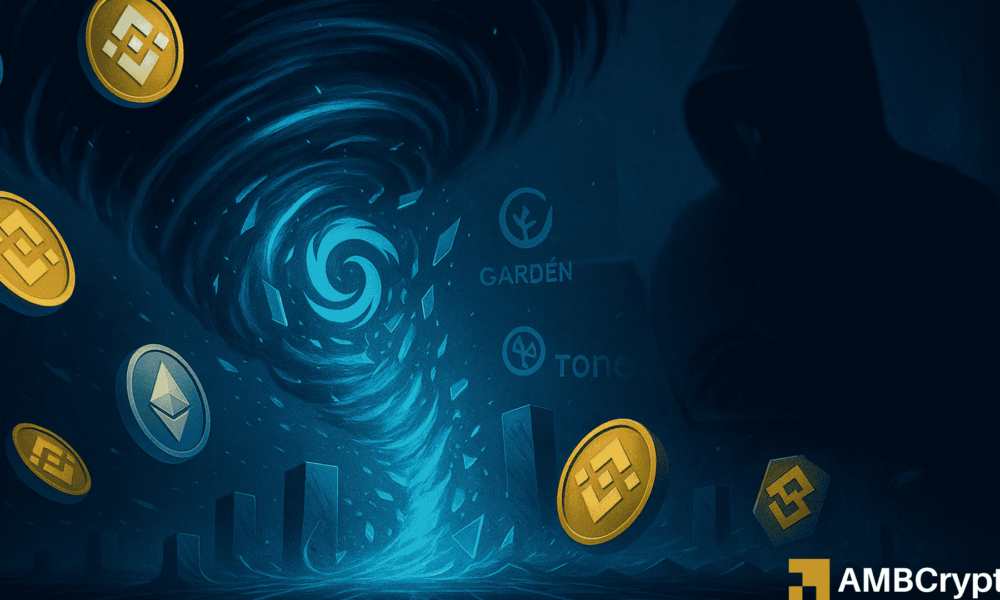
On October 31, Garden Finance fell victim to a substantial hack, resulting in a loss of approximately $10.8 million across multiple blockchains, including Ethereum, Solana, and Arbitrum. The exploit was first identified by blockchain investigator ZachXBT, who alerted the community to unauthorized withdrawals and suspicious fund movements. Shortly after the hack, Garden Finance attempted to engage with the hacker by offering a 10% white-hat bounty, hoping to recover some of the stolen assets. However, the attacker ignored these overtures, instead opting to launder the funds by transferring approximately $6.65 million to Tornado Cash, a privacy-focused cryptocurrency mixer.
The Aftermath: Fund Movements and Allegations
Tracking by the security firm CertiK revealed that the exploiter channeled 501 BNB and 1,910 ETH through the Tornado Cash mixer, while still retaining around $910,000 worth of stolen assets in one of their addresses. These fund movements raised eyebrows and fueled a new layer of controversy surrounding the integrity of Garden Finance. The on-chain analysis provided by ZachXBT contradicted the Garden Finance team’s narrative claiming that only third-party systems were affected, suggesting the vulnerability was more extensive than initially advertised.
Garden Finance’s Response: Denial and Strategy
In a public update on November 5, Jaz Gulati, co-founder of Garden Finance, asserted that the attack had only compromised a third-party solver’s Web2 infrastructure and not their core smart contracts or user funds. This assertion aimed to reassure users about the security of their assets. Despite this, preliminary evidence suggested a different reality, as it indicated that multiple blockchains were compromised. The divergence between the official statement and on-chain evidence raised questions about the true scope of the breach, leaving investors and stakeholders unsettled.
The Background Context: Money Laundering Allegations
Compounding the distress over the exploit is the backstory of Garden Finance itself. Prior to the hack, ZachXBT had accused the platform of laundering funds derived from major breaches, indicating that more than 25% of Garden’s transactions involved questionable funds. Notably, the platform was founded by former developers from Ren Protocol, a project previously linked to the processing of over $540 million in illicit funds. Such historical context paints a complex picture of Garden Finance, positioning it as both a potential facilitator of criminal activity and a victim of the very crimes it may have previously facilitated.
The Stakeholders’ Concerns: Who is Responsible?
The allegations surrounding Garden Finance extend beyond the immediate loss of funds, touching on broader issues of security in the DeFi landscape. Investigators have suggested that the recent hack might be linked to the DPRK-connected hacker group known as "Dangerous Password," raising questions about the involvement of international actors in crypto exploits. The potential links to these organizations highlight the risks protocols face, particularly when they process substantial sums potentially involving illicit flows of money.
Looking Ahead: Recovery Challenges and Industry Implications
As the situation stands, the future for Garden Finance remains uncertain. With millions now mixed through Tornado Cash, the likelihood of recovering stolen funds appears grim. This incident underscores the persistent security challenges that DeFi infrastructure faces and serves as a cautionary tale for protocols navigating unclear ethical waters. As the industry continues to grow, the necessity for robust security measures, enhanced transparency, and better regulatory framework becomes imperative for maintaining user trust and fostering a healthier cryptocurrency ecosystem.
In conclusion, the Garden Finance exploit is not just another hack in the crypto world; it serves as a critical case study highlighting the complexity of security, regulation, and ethical concerns within the DeFi space. Stakeholders are urged to remain vigilant and proactive in addressing these challenges to safeguard the integrity of decentralized finance for future users.