




The U.S.-China Crypto Clash: Allegations of Bitcoin Theft and Geopolitical Tensions
Introduction
In recent developments, the dynamics of the cryptocurrency space have shifted dramatically, ignited by allegations from China against the United States regarding a significant Bitcoin seizure. The tension revolves around a 2020 hack involving the LuBian mining pool, from which 127,000 Bitcoin were allegedly stolen. This situation escalates an ongoing feud between the two largest economies globally, further complicating the already intricate relationship fraught with technological and cybersecurity concerns.
Allegations Against the U.S.
China’s National Computer Virus Emergency Response Center (CVERC) has explicitly accused the U.S. of orchestrating the 2020 hack of the LuBian mining pool using state-sponsored hacking tools. The agency claims this act was not merely a cybercrime but a deliberate operation disguised as legitimate law enforcement activities. According to CVERC, the subsequent seizure of the stolen Bitcoin by U.S. authorities in 2024 was a calculated move to misappropriate these assets under false pretenses, significantly impacting the perception of U.S. intentions in the global crypto arena.
The U.S. Justification for Seizure
In defending its actions, the U.S. Department of Justice (DOJ) maintains that the seizure of the Bitcoin was a lawful asset forfeiture connected to extensive anti-money laundering investigations. The DOJ argues that it acted within the parameters of established legal frameworks to address criminal activities linked to the seized Bitcoin. Specifically, the DOJ has associated the funds with Chen Zhi, the chairman of Cambodia’s Prince Group, who is under indictment for allegedly operating a massive crypto fraud scheme. This narrative suggests that the seizure was a legitimate response to thwart criminal activities rather than an act of international cyber warfare.
The Details of the 2020 Hack
The hack that triggered these allegations occurred in December 2020, with attackers draining over 127,000 BTC from LuBian’s hot wallet. These coins remained notably inactive for nearly four years, only to be moved to new addresses in mid-2024. Within this period, the situation evoked speculation regarding the true nature of the funds and their ownership. The U.S. authorities announced the confiscation of the Bitcoin in October 2025, justifiably linking them to Chen Zhi’s fraudulent operations. Still, CVERC disputes this connection, claiming that the movement patterns of the Bitcoin indicate underlying involvement by U.S. entities from the outset.
Competing Perspectives
The contrasting narratives provided by the U.S. and China showcase the competing worldviews on cybersecurity, digital assets, and international relations. While the U.S. frames the seizure as a necessary step in the fight against financial crime, CVERC characterizes the entire scenario as an “internal showdown among thieves.” They further emphasize that only a fraction of the seized Bitcoin can be traced to illegal activities, with the majority stemming from legitimate earnings. This fundamental disagreement regarding the source and legality of the funds highlights broader implications for the cryptocurrency industry, especially concerning the neutrality of digital assets amid geopolitical conflicts.
Broader Implications for Crypto Markets
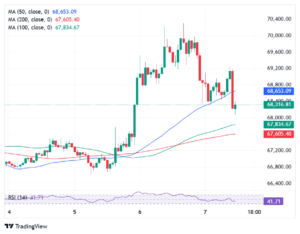
The controversy transforms Bitcoin from a mere speculative asset into a potential geopolitical weapon, marking a pivotal moment in the crypto landscape. The 127,000 BTC, which represents about 0.65% of the total circulating supply, holds substantial financial implications, especially given Bitcoin’s value peaks. At an all-time high in October 2025, this cache was valued at over $16 billion, but current estimates place it closer to $13.3 billion. This volatility raises daunting questions about the safety and neutrality of cryptocurrencies, particularly as governments engage in strife. As the U.S. remains silent on CVERC’s allegations, this dispute serves as a cautionary tale for investors navigating the increasingly complex interplay between technology, finance, and international relations.
Conclusion
As the allegations of Bitcoin theft unfold, the dispute between China and the U.S. over the LuBian mining pool hack underscores the fraught intersection of cybersecurity and international finance. Given the substantial value of the seized assets and their potential impacts on markets, this conflict emphasizes the shifting nature of cryptocurrency—from a decentralized monetary system to a contentious weapon of diplomacy. The further developments in this situation could significantly alter the future landscape of cryptocurrencies, warranting close observation from both investors and policymakers.