


The Current Landscape of Crypto Secondary Markets: Discounts, Trends, and Future Outlook
Recent insights from prominent figures in the crypto industry have highlighted a significant widening of discounts in crypto secondary markets. Santiago Roel Santos, founder and CEO of crypto private equity firm Inversion, described average discounts on crypto secondaries reaching approximately 90%. This alarming statistic, however, appears to be more specific than it seems, as most industry sources assert that such extreme discounts are not necessarily emblematic of a broader market trend. Instead, they are often linked to specific tokens and their structures, suggesting that while discounts have increased, the situation is not uniformly dire across all assets.
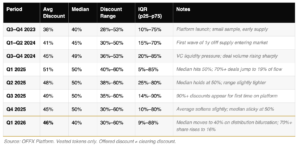
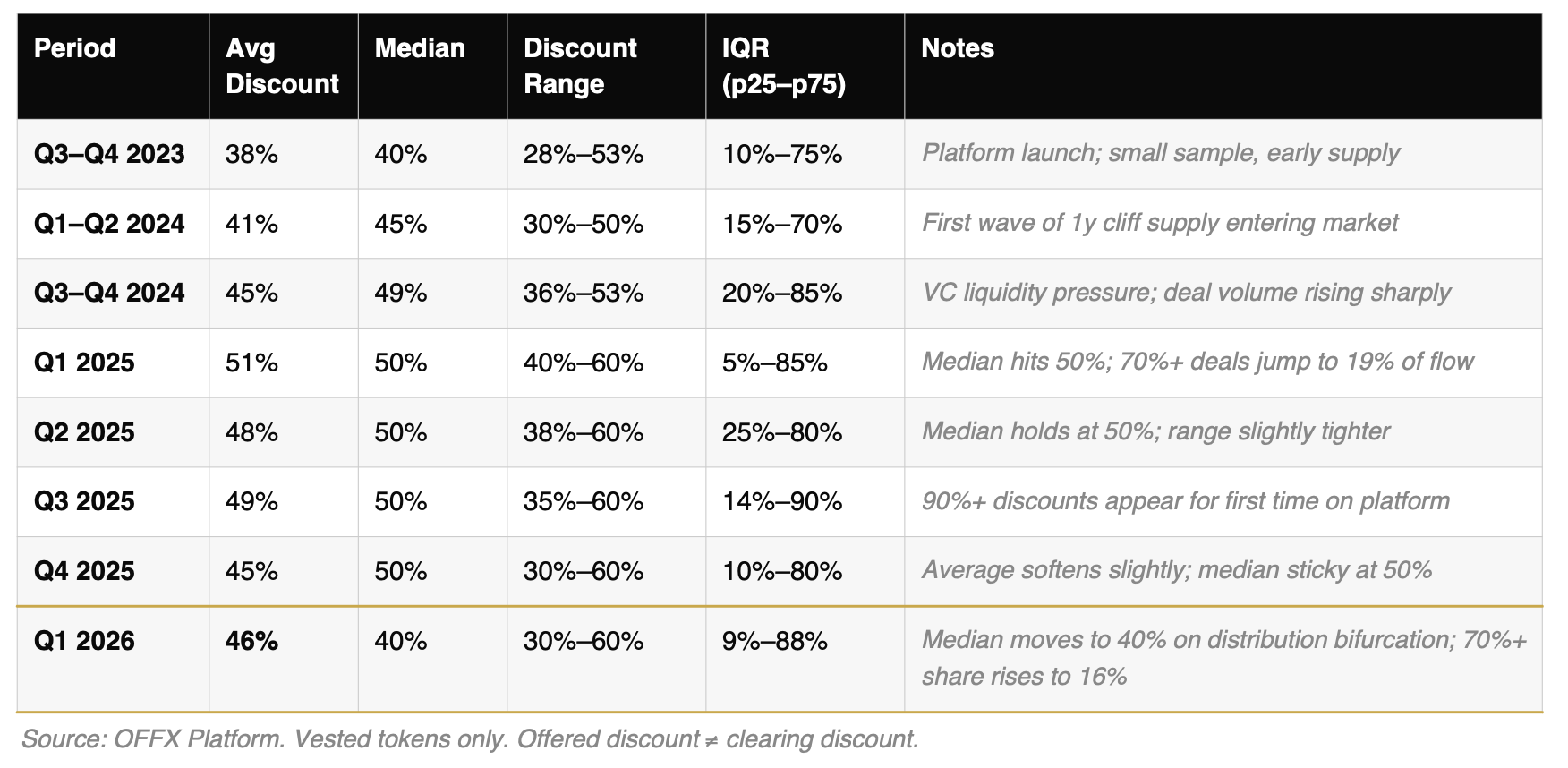
The findings from a range of experts indicate a nuanced market where significant discounts are prevalent, but extremes like 90% are more the exception than the rule. Omar Shakeeb, co-founder of SecondLane, explained that while discounts are widespread—60% of secondary demands currently feature discounts—values more commonly hover between 40% to 46%. The more severe discounts primarily emerge from weaker opportunities, constituting only a small fraction of the market. These insights reflect the complexities within the crypto secondary landscape, urging investors to look beyond blanket statistics and into the specific factors driving these discount rates.
One of the principal drivers behind rising discounts is the underlying vesting structures of various tokens. Jonas Thiele, CEO of OFFX, outlined a clear distinction between short-, medium-, and long-term vesting schedules, indicating that while short schedules (up to 12 months) exhibit more stable median discounts of around 40%, long-duration assets often face significant depreciation. As these long-term positions become increasingly difficult to liquidate, investors are taking a more cautious stance, driving the median discount rates even higher.
Despite this apparent market concern, the situation isn’t entirely bleak. Several contributing factors outline why discounts have escalated. Market dynamics show that a flood of token unlockings—from $500 million to $1 billion weekly—combined with dwindling demand, are placing significant pressure on prices. Brandon Potts from Framework Ventures pointed out that institutional investors are becoming selective, opting for regulated products rather than speculative tokens, thereby exacerbating liquidity challenges in the crypto market.
Market sentiment has shifted sharply, revealing that early-stage tokens which previously commanded high prices are now suffering under the weight of their own structures. Investors are increasingly leaning towards equities rather than locked tokens, as evidenced by Jan-Philip Grabs of Areta’s statement about the robust demand for high-quality equity secondaries compared to their crypto counterparts. This change marks a pivot towards more stable, fundamentally sound investments, a potential harbinger of a more cautious market approach moving forward.
The future of discounts in crypto secondary markets hinges on broader market conditions and improvements in token structuring. Many believe that tighter discounts are achievable, given enhanced token designs, better market infrastructure, and improved investor confidence. Dorman from Arca articulated that all players in the market—from issuers to exchanges—must adapt to avoid continuing declines. Market resilience may very well depend on illustrating clear value and streamlined offerings.
In summary, while discounts in crypto secondary markets have widened, the underlying complexities warrant a more detailed analysis. Investors should remain aware of fluctuating market conditions and evolving investor appetite, particularly as interest in equity over tokens grows among institutional players. Ultimately, improving market dynamics and fostering stronger tokens may help restore some equilibrium in discount levels and investor confidence in the crypto landscape.