


Understanding Cryptocurrency Allocation in Investment Portfolios
When it comes to investing in cryptocurrencies, there’s no one-size-fits-all approach. Each investor has unique goals, risk tolerance, and market outlooks that influence their decisions. According to Charles Schwab, a leader in the brokerage sector with over $12 trillion in client assets, understanding how to allocate cryptocurrencies within a portfolio is crucial for achieving financial goals. Schwab offers two primary strategies: the return-based approach and the risk-based approach, both of which can assist investors in navigating the complexities of crypto investments.
The Return-Based Approach: Focus on Expected Returns
The return-based approach, also known as "mean-variance optimization," emphasizes expected returns, volatility, and correlations with other assets. Under this method, the amount allocated to cryptocurrencies varies based on projected returns. For example, if an investor anticipates a 15% annual return from Bitcoin, their allocations might differ significantly between conservative, moderate, and aggressive portfolios. In a conservative portfolio, a 1% allocation could suffice, while aggressive investors might allocate up to 8.8%.
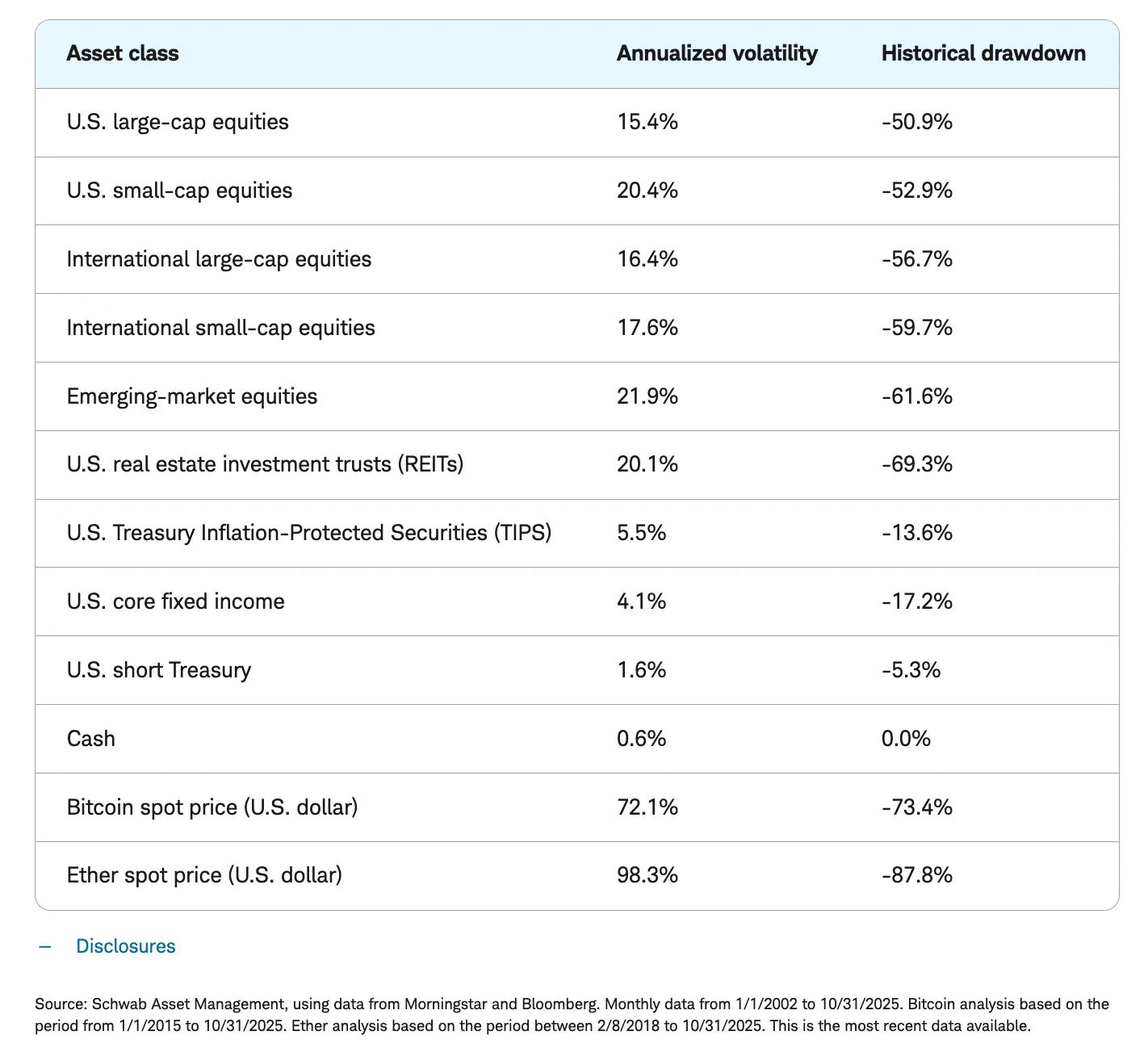
Ether, known for its heightened volatility, would see lower allocations: 0.1% for conservative and as high as 2.5% for aggressive portfolios. Schwab warns that if expected returns fall below 10%, investors may reconsider their crypto allocations entirely, even those willing to take on higher risks. With Bitcoin’s annualized volatility around 72% and Ether soaring nearly to 98%, understanding these metrics is vital for informed decision-making.
Analyzing Risks: The Risk-Based Approach
Conversely, the risk-based or risk budgeting approach concentrates on how much risk cryptocurrency adds to the overall portfolio. This method takes a more pragmatic look at how much of the total portfolio risk should be allocated to crypto. Schwab suggests assessing this risk across conservative, moderate, and aggressive portfolios by adjusting crypto allocations from the equity portion. For instance, in a conservative portfolio, a modest 1.2% allocation to Bitcoin or 0.9% to Ether might represent around 10% of the total risk.
In sharp contrast, moderate and aggressive portfolios could allocate 2.8% to 4% to Bitcoin and 2% to 2.9% to Ether while still maintaining a balanced risk profile. Schwab’s findings indicate that incorporating cryptocurrencies can offer diversification benefits, particularly when combined with traditional assets like stocks and bonds, thereby enhancing overall portfolio stability.
Strategies for Effective Portfolio Management
Integrating cryptocurrencies into an investment portfolio requires careful consideration, especially given their inherent volatility and risk. Schwab emphasizes that investors should not only focus on potential returns but also consider the implications of higher risk. As cryptocurrency allocations increase, even slightly, the overall portfolio performance becomes significantly more correlated with the performance of the crypto market.
Investors should regularly review their allocations to ensure they align with their risk tolerance and market views. In addition, setting specific investment goals can help guide decision-making processes, particularly when market conditions become uncertain.
Schwab’s Evolving Stance on Crypto
Interestingly, Charles Schwab’s perspective on cryptocurrency has evolved significantly over the years. The firm once regarded crypto as "purely speculative" back in 2019, but it has since recognized the asset class’s potential for diversification and growth. The firm is now rolling out "Schwab Crypto," a new account that will allow clients to buy and sell Bitcoin and Ether directly.
Currently, Schwab provides crypto exposure through exchange-traded products, crypto-related stocks, over-the-counter trusts, and futures for qualified accounts. This shift highlights how leading financial institutions are beginning to embrace cryptocurrencies as viable investment options, offering clients more avenues for diversification.
Final Thoughts on Crypto Investment Strategies
Investing in cryptocurrencies can be daunting due to their unpredictability and risk. However, by adopting either a return-based or risk-based strategy, investors can make informed decisions on how to allocate these assets within their portfolios. The key is to find a balance that meets individual risk tolerance levels and investment goals.
As the cryptocurrency landscape continues to evolve, staying abreast of trends and conducting thorough research will remain essential. Understanding the nuances and potential rewards of crypto investments can empower investors to make strategic decisions, ensuring that their portfolios remain resilient in today’s financial markets.
By utilizing the frameworks outlined by Charles Schwab and adhering to tailored investment strategies, individuals can effectively integrate cryptocurrencies into their portfolios, potentially enhancing returns while managing risk.