




Michael Saylor’s Bitcoin Acquisition Strategy: An In-Depth Look at MicroStrategy’s Recent Purchases
Michael Saylor’s company, MicroStrategy, has garnered significant attention with its aggressive Bitcoin acquisition strategy. Recently, the firm announced its eighth consecutive weekly Bitcoin purchase, bringing it tantalizingly close to its 100th overall purchase milestone. This article delves into the details of these acquisitions, the underlying strategies, investor sentiments about quantum computing threats, and the implications for MicroStrategy’s stock performance.
A Record-Breaking Bitcoin Purchase
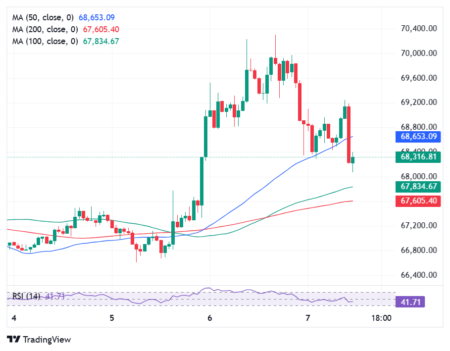
In its latest move, MicroStrategy, now branded as Strategy, acquired 2,486 BTC for $168.4 million, at an average price of $67,710 per BTC. This strategic purchase has catapulted the company’s total Bitcoin holdings to an impressive 717,131 BTC, acquired over time for a staggering $54.52 billion at an average price of $76,027 per Bitcoin. This consistent acquisition not only exemplifies the company’s long-term vision for Bitcoin but also highlights its commitment to consolidating its position as a major player in the cryptocurrency market.
Funding the Acquisition through Stock Sales
The recent Bitcoin purchase was funded through the sale of significant amounts of MSTR and STRC shares. Specifically, the company sold 660,000 MSTR shares and 785,354 STRC shares, raising net proceeds of $90.5 million and $78.4 million, respectively. This approach underscores Strategy’s unique reflection on utilizing traditional financial mechanisms to facilitate their cryptocurrency investments. Such moves point to a calculated strategy where the potential risks in Bitcoin investments are weighed against the liquidity events from stock sales.
Saylor’s Insight on Bitcoin Purchases
Michael Saylor, the visionary behind these acquisitions, hinted at the recent purchase via his Twitter account, stating "99>98," indicating that this acquisition was larger than the previous week’s buy. Since adopting Bitcoin as a treasury reserve in 2020, MicroStrategy has entered a new phase of crypto investment, evidenced by their 99th purchase. Investors have expressed their excitement about Saylor’s bold moves, reflecting a robust belief in Bitcoin despite fluctuating market conditions.
Addressing Quantum Computing Concerns
Despite the enthusiasm surrounding Bitcoin, some investors remain wary of external threats, notably the potential of quantum computing to destabilize the cryptocurrency landscape. Industry voices like Kevin O’Leary have underlined these concerns by warning of a potential Bitcoin crash due to this quantum threat. O’Leary noted that many institutional investors are hesitant to ramp up their allocation until this issue is adequately addressed, predicting that such commitments will remain below 3% until then.
In response to these threats, MicroStrategy has launched a Bitcoin Security Program aimed specifically at mitigating the risks posed by quantum computing. Saylor emphasized that, while the threat is real, it is still several years away from impacting the Bitcoin network significantly. This proactive stance suggests that Saylor is not only focused on immediate gains but also on the long-term viability of Bitcoin as a secure asset.
Stock Performance and Market Sentiment
Despite their consistent Bitcoin purchases, the performance of MicroStrategy’s stock (MSTR) has not mirrored the same upward trajectory. As of the latest data, MSTR is trading at approximately $129, which represents a decline of nearly 4% from last week and a significant drop of over 16% year-to-date. This puzzling trend indicates that market sentiment may not yet fully align with Saylor’s bullish perspective on Bitcoin. Investors may perceive the risks inherent in large cryptocurrency holdings as weighing heavier on the company’s overall stock value.
Conclusion: A Bold Bitcoin Strategy
As MicroStrategy approaches its 100th Bitcoin purchase, Michael Saylor’s strategy stands out in the cryptocurrency landscape. While investor concerns regarding quantum computing loom large, the company’s proactive measures offer a glimpse of confidence in Bitcoin’s future viability. As MicroStrategy continues to navigate both Bitcoin and traditional financial markets, its determined approach may serve as a benchmark for how other firms view cryptocurrency as an asset class. The coming months will be crucial to observe how Saylor’s acquisitions influence both his company’s stock performance and broader market attitudes toward Bitcoin in the face of emerging technologies.