



Understanding the Current Bitcoin Bear Market: Insights and Analysis
As concerns about the Bitcoin bear market continue to swell, analysts are closely monitoring the trends shaping this volatile cryptocurrency landscape. On-chain analyst Willy Woo has identified that Bitcoin (BTC) currently resides in Phase 1 of a more extensive downturn, amidst the ongoing market dip. With rising volatility and decreasing liquidity marking the scenario, Woo’s analysis indicates that Bitcoin is likely facing further stress. By utilizing internal flow models and volatility metrics, he suggests a more profound bear trend, highlighting the uncertainty that investors must navigate in these turbulent times.
The Bear Market Framework: Understanding the Phases
Willy Woo’s framework presents a comprehensive perspective on the Bitcoin bear market, outlining it in three distinct phases. He asserts that Bitcoin officially entered a bear market when volatility began to spike upwards. This rising volatility has continued to manifest, reinforcing Woo’s claim about the bearish strength. Traditionally, volatility peaks in the mid to late cycle before it begins to wane. However, Woo has noted that smaller peaks of volatility often arise near the macroeconomic bottom, indicating potential market capitulation. He stresses the importance of using multiple indicators, with liquidity and investor flow models serving as essential tools for making informed assessments during this bear market.
Phases of the Bitcoin Bear Market
According to Woo, Phase 1 commenced in Q3 of 2025, marked by a breakdown in Bitcoin liquidity that subsequently influenced the price to move lower. This breakdown is significant as Bitcoin tends to react more swiftly than traditional equities, given its status as a smaller, more sensitive asset class. As the bear market advances into Phase 2, a broader bearish trend in global equities is likely to emerge, signaling a diminishing risk appetite among investors. This phase is characterized by a delay in equities responding to market weaknesses, reinforcing Bitcoin’s price susceptibility.
In contrast, Phase 3 of Woo’s model emerges when liquidity begins to stabilize, and capital outflows reach their peak. Final capitulation, or the last wave of selling pressure, often occurs in this phase, culminating the bear market cycle and possibly setting the stage for a recovery. Understanding these phases can help investors make more informed decisions and strategize their positions more effectively amidst current market dynamics.
Reevaluating Price Predictions
Earlier, Willy Woo had projected Bitcoin prices could soar to between $200,000 and $300,000 in 2021. However, he has openly acknowledged that market dynamics, particularly within the derivatives arena, necessitated adopting more sophisticated models that incorporated various factors beyond basic on-chain data. The dramatic transformations in market structure have altered price behaviors, making previous projections appear overly optimistic. This recognition is crucial for investors to remain grounded and adaptable to rapidly shifting market conditions.
The Role of Demand and Liquidity
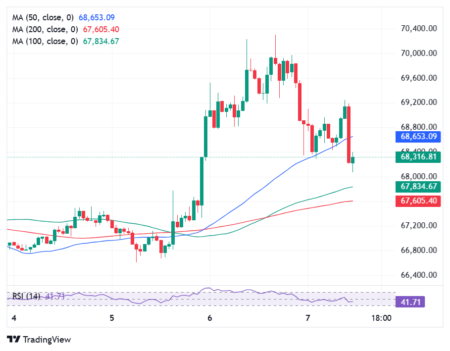
Data from Glassnode further illustrates the challenges facing Bitcoin in the current bear market. Recent insights reveal that every attempt to reclaim the $70,000 price level has met with demand exhaustion, indicating a struggle for sustained momentum. Notably, the market’s thin liquidity conditions have exacerbated this hurdle, making significant advances into the $70,000 to $80,000 range structurally challenging. This information highlights the importance of monitoring liquidity conditions in assessing Bitcoin’s near-term price movements and overall market health.
Meanwhile, crypto investor Ran Neuner has noted the lack of a definitive “blow-off top” or surge in retail-oriented euphoria. He points to fragmented narratives—including concerns about quantum risk and regulatory uncertainty—as significant factors influencing market sentiment. These narratives lead him to reduce exposure within the market and focus on a concentrated approach to the 11 positions he believes can withstand potential further downside. Wise diversification may prove vital during these uncertain times.
Quantum Computing and Market Sentiments
An emerging narrative discussed by Woo is the threat posed by quantum computing to Bitcoin’s security model. With discussions around the potential "Q Day"—a hypothetical moment when quantum machines might unravel current public-key encryption—investor sentiment has shifted significantly. As these risks gain greater attention, the long-standing correlation between Bitcoin and gold appears to be eroding, indicating that market participants are reconsidering traditional valuation metrics.
As investor awareness of these quantum risks grows, understanding their implications for Bitcoin’s future price dynamics becomes crucial. This shift in sentiment underlines the necessity for vigilance and foresight in the current bear market, as investors await how these technological advancements impact Bitcoin’s established narratives.
Conclusion: Staying Informed in a Volatile Landscape
In conclusion, the outlook for Bitcoin remains complex and multi-faceted as we navigate through this ongoing bear market. Willy Woo’s framework detailing the three phases offers valuable insights, encouraging investors to remain aware of the volatility and liquidity trends signaling further downward pressure. Glassnode data, along with insights into demand exhaustion and market conditions, significantly contextualizes the current situation.
As external factors like quantum computing risks reshape investor sentiment, the call for a well-defined, adaptable strategy becomes more pressing. Being informed and vigilant amid these uncertainties can equip investors with the necessary tools to navigate the dynamically shifting landscape. In this bear market, understanding multiple layers of data and articulating coherent strategies is paramount for those looking to weather the storm and seize future opportunities in the cryptocurrency domain.