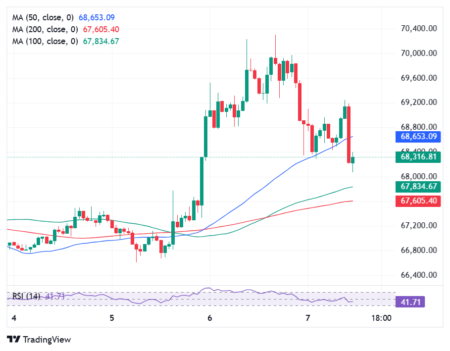





Bitcoin Price Analysis: Impact of U.S. Labor Data on BTC
In recent trading, Bitcoin (BTC) experienced a notable decline following the release of fresh U.S. labor data, which revealed fewer layoffs than anticipated. This situation has cast a shadow over hopes for imminent rate cuts by the Federal Reserve. Initial jobless claims for the week ending February 14 dropped to 206,000, marking a significant decrease compared to the expected 223,000. The implications of this decline have raised concerns in the cryptocurrency markets, particularly regarding Bitcoin’s price trajectory.
Market Reaction to Employment Data
The immediate aftermath of the jobless claims data saw Bitcoin’s price retreat to approximately $66,160, reflecting a 1.80% decrease over 24 hours. This decline was not entirely unexpected, as a broader pullback was already underway due to sentiments stemming from the recent Federal Open Market Committee (FOMC) meeting. Investors are now re-evaluating the likelihood of future rate hikes, especially as Bitcoin fell below the crucial $66,000 psychological barrier. The uncertainty surrounding monetary policy adjustments makes Bitcoin’s susceptibility to negative catalysts considerably heightened.
Continued Market Pressure Post-FOMC Meeting
Following the release of the FOMC minutes, which hinted at potential rate hikes, investors anticipated a bearish tone in the cryptocurrency sector. The jobless claims data contributed further to market anxiety, indicating inflation risks might compel the Federal Reserve to maintain higher rates for an extended period. This sentiment has overshadowed Bitcoin’s attempts to stabilize and contributed to its ongoing price decline. A notable element here is the drop in initial jobless claims by 23,000 from the previous week’s figures, which had been pegged at 227,000.
The Significance of Jobless Claims in the Crypto Market
Lower initial jobless claims generally signal a resilient labor market, reflecting strong employer demand and fewer layoffs. However, this positive economic news is paradoxically seen as detrimental for Bitcoin and risk assets. The market’s interpretation suggests that the need for rapid Federal Reserve rate cuts may be diminished, which typically increases the opportunity costs associated with holding non-yielding assets like Bitcoin. The dual effect of rising bond yields and a stronger U.S. dollar compounds this issue, making the crypto market more vulnerable.
Mixed Sentiments Among Analysts
Market analysts are split on the implications of this labor data for Bitcoin’s future. Lark Davis highlighted the discord between initial and continuing claims, pointing out that while initial claims fell short of expectations, continuing claims showed a rise. This discrepancy indicates that while fewer people are losing their jobs, those who are, struggle to secure new employment. Some analysts argue that continued negative labor conditions could eventually push the Fed toward rate cuts, which could provide support for risk assets, including Bitcoin.
Meanwhile, prominent figures in the Bitcoin community, such as MicroStrategy co-founder Michael Saylor, continue to express bullish convictions about the cryptocurrency. Despite the market’s adverse reaction to the labor data, Saylor reaffirmed his belief in Bitcoin, stating, "Never Been More ₿ullish." His comments underline a divide in sentiment within the crypto space, where some view these short-term fluctuations as temporary setbacks.
Potential Forward-Looking Statements
Bitcoin’s current price trajectory reflects the complexities intertwining economic indicators and investor sentiment. While the lower jobless claims indicate a strong labor market, they simultaneously introduce uncertainty about the Federal Reserve’s monetary policy approach. Without clearer signals of easing policies, Bitcoin and other cryptocurrencies are likely to face ongoing pressure. As geopolitical tensions, particularly between the U.S. and Iran, loom large, this adds an additional layer of complexity for investors evaluating Bitcoin’s future.
In conclusion, while Bitcoin’s recent price decline reflects immediate market reactions to labor data and Federal Reserve expectations, the long-term outlook remains contentious. Investors should stay informed and continually reassess market dynamics as they unfold. Only time will reveal the true impact of these economic indicators on Bitcoin prices and the broader cryptocurrency market.