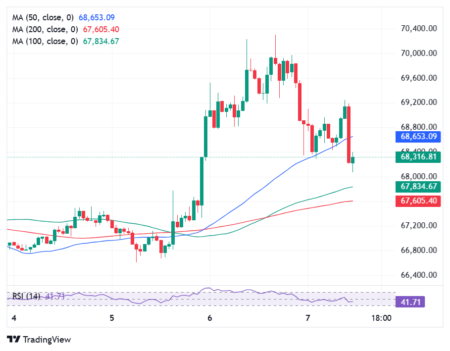





Bitcoin Faces Downside Pressure Amid U.S.-Iran Tensions
As geopolitical tensions escalate, Bitcoin is experiencing significant downside risks, particularly due to the potential for a U.S. military strike on Iran. President Donald Trump’s recent statements hint at military action intended to compel Iran to negotiate a nuclear agreement. This looming conflict is causing concerns in the crypto market, which is now on high alert for additional stressors that could lead to volatility in Bitcoin’s price.
Geopolitical Tensions Impacting Bitcoin
The prospect of U.S. military action against Iran suggests an increase in geopolitical instability, which historically tends to influence cryptocurrency markets. Reports indicate that Trump will decide his course of action within the next ten days, stressing the need for immediate responses to Iran’s nuclear ambitions. With American military assets like F-35 and F-22 jets repositioned to the Middle East and the potential deployment of a second aircraft carrier, the likelihood of heightened military conflict has surged. This evolving scenario has also contributed to the crypto Fear and Greed Index plunging into extreme fear territory, further complicating Bitcoin’s market outlook.
Key Support Levels Under Pressure
As the geopolitical situation unfolds, Bitcoin is testing critical support levels that could dictate its near-term trajectory. Analysts warn of a possible liquidation cascade for Bitcoin if prices fall below the $60,000 mark. Data from Polymarket suggests a 63% chance that a strike on Iran could happen by March 31st, adding urgency and uncertainty to the market environment. Price fluctuations driven by such external factors could lead to significant losses for investors if Bitcoin fails to stabilize above key support levels.
Whale Selling Pressure Contributing to Decline
Recent data from analytics platform CryptoQuant indicates that Bitcoin is facing mounting pressure from large holders, known as ‘whales.’ The crypto exchange whale ratio has reached an all-time high of 0.64, signaling intense selling activity. The top ten wallets now account for approximately 64% of recent exchange inflows, suggesting that large holders are looking to liquidate positions. Analyst Burak Kesmeci highlights that Bitcoin has dropped below crucial cost basis levels, marking a bearish phase that could see further price declines toward $58,700 and, potentially, $54,700 if downward momentum persists.
Unrealized Losses Indicate Market Sentiment
In conjunction with the selling pressures from whales, the sentiment in the market is increasingly negative. Current data shows that approximately 46% of Bitcoin in circulation is under unrealized loss—the highest level since late 2022. This scenario implies that many investors are holding positions at a loss, contributing to a bearish outlook. On-chain analyst Willy Woo warns that Bitcoin is merely at Phase 1 of this bear market cycle. There’s also a troubling increase in market volatility and a noted decline in liquidity, reinforcing concerns about Bitcoin’s ability to recover in the short term.
Failures to Surpass Resistance Levels
As observed by analytics firm Glassnode, Bitcoin’s struggles to maintain momentum toward the $70,000 mark underscore the challenges facing the asset. Despite several attempts since early February, the cryptocurrency has consistently failed to breach this psychological resistance level. The exhaustive demand appears to be a contributing factor, with over $5 million in realized profits per hour leading to sell-offs when Bitcoin approaches this threshold. The trend signals a broader sentiment among investors that could lead to further price declines, especially in the context of emerging geopolitical risks.
Conclusion: Navigating a Tumultuous Landscape
In summary, Bitcoin’s immediate future appears precarious amid escalating U.S.-Iran tensions and a bearish market sentiment characterized by whale sell-offs and high levels of unrealized losses. The combination of geopolitical uncertainty and on-chain data suggesting weak support levels are causing investors to tread carefully. As the situation develops, those monitoring the cryptocurrency landscape need to be vigilant and prepared for further fluctuations in price. Understanding these underlying dynamics will be crucial for anyone looking to navigate the complexities of investing in Bitcoin during these tumultuous times.