



Bitcoin ETFs Surge Amid Geopolitical Tensions: A New Era of Institutional Investment
In recent weeks, Bitcoin Exchange-Traded Funds (ETFs) have captured nearly $1.1 billion in net inflows, a stark turnaround after a prolonged period of outflows. This surge in demand coincided with rising geopolitical tensions, particularly following the Iran conflict. According to data from Glassnode, the shift indicates a stabilizing market as Bitcoin prices surged past the significant $70,000 mark, encouraging cautious institutional accumulation. This trend raises questions about how geopolitical factors can influence market dynamics, particularly within the cryptocurrency sector.
Shift from Outflows to Inflows: An Institutional Restart
Data from Glassnode clearly illustrates a marked change in Bitcoin ETF flows. The past weeks had seen a consistent outflow, casting doubt on the sustainability of Bitcoin’s market position. However, the recently noted 14-day netflow trend has turned upward, indicating a revival of interest. Analysts suggest that this reversal is a hopeful sign of renewed institutional appetite for Bitcoin as it reclaims the $70,000 price level. While demand among institutions is characterized as “tentative” rather than overtly aggressive, early signs of re-accumulation are slowly becoming more evident and underline a cautious yet strategic market engagement.
Record Inflows: A Positive Trend at Play
According to the SosoValue report, Bitcoin ETFs recorded two consecutive weeks of net inflows after enduring five weeks of losses. Specifically, the past three days alone saw an impressive inflow of over $1.1 billion, with $683 million of that amount occurring just this week. This trend signals a robust recovery trajectory for Bitcoin ETFs, bolstered by a fresh wave of institutional investment. Such notable inflows show that large investors are adjusting their strategies in reaction to the current geopolitical climate, thereby contributing to renewed market vigor.
Institutional Movement Led by Prominent Players
Leading the charge for institutional interest in Bitcoin ETFs is financial powerhouse BlackRock. The firm’s IBIT ETF saw an influx of $306.60 million on March 4, accounting for a significant portion of the recent inflows. Other major players in ETF issuances showed similar patterns, with Grayscale adding $54.10 million, Fidelity raising $48 million, and ARK 21Shares contributing $14.60 million. An interesting observation was made on how VanEck’s CEO predicted a gradual Bitcoin rally in 2026, attributing this bullish sentiment partially to the active role ETFs are playing in shaping market perceptions and valuations.
Rebound in Market Values Tied to ETF Investments
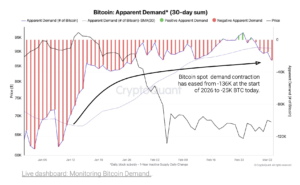
A report from CryptoQuant emphasized that substantial capital entered U.S. spot funds at the beginning of March, indicating a reinvigoration of market demand. As Bitcoin’s current price stabilizes around $71,189 — marking a 20% increase from its February low — the shift toward positive net flows has brought optimism into the ecosystem. Bloomberg ETF analyst Eric Balchunas observed that ten out of eleven Bitcoin ETFs recorded inflows on the same day, suggesting that institutional players are re-engaging with the cryptocurrency asset class just at the right moment.
Contrasting Trends: Bitcoin vs. Gold
Market analysts have also noted intriguing contrasts between Bitcoin and gold performance during this period of conflict. Notably, Bitcoin has gained approximately 12% since the onset of the Iran conflict, in stark contrast to gold, which saw declines. While some may be tempted to draw conclusions about the long-term sustainability of this trend, experts like Balchunas caution against premature assessments based only on short-term price movements. Similarly, market commentator Ash Crypto noted that although gold initially increased due to geopolitical uncertainties, Bitcoin’s subsequent recovery ultimately highlighted its potential resilience as an emerging asset class.
Looking Ahead: Future Implications for Bitcoin and ETFs
The recent uptick in institutional interest and the reported inflows into Bitcoin ETFs highlight a potential new phase for both Bitcoin and the cryptocurrency market as a whole. Would-be investors are beginning to recognize Bitcoin’s capacity to serve as a hedge in uncertain economic times. As geopolitical tensions evolve, it’s vital for market observers to monitor how these factors will continue to impact investor behavior and market dynamics moving forward. As institutions cautiously resume capital infusion into BTC, the implications for Bitcoin ETFs and their role in the crypto economy could reshape the investment landscape in significant ways.
In summary, Bitcoin ETFs are experiencing a notable upswing in inflows, primarily shaped by renewed institutional interest amid rising geopolitical tensions. As investment strategies adapt to current events, the potential for Bitcoin’s continuing rise remains promising, though it will be important to consider market volatility in the face of shifting geopolitical landscapes.