



U.S. PCE Inflation Data and Bitcoin’s Resilience Amid Economic Uncertainty
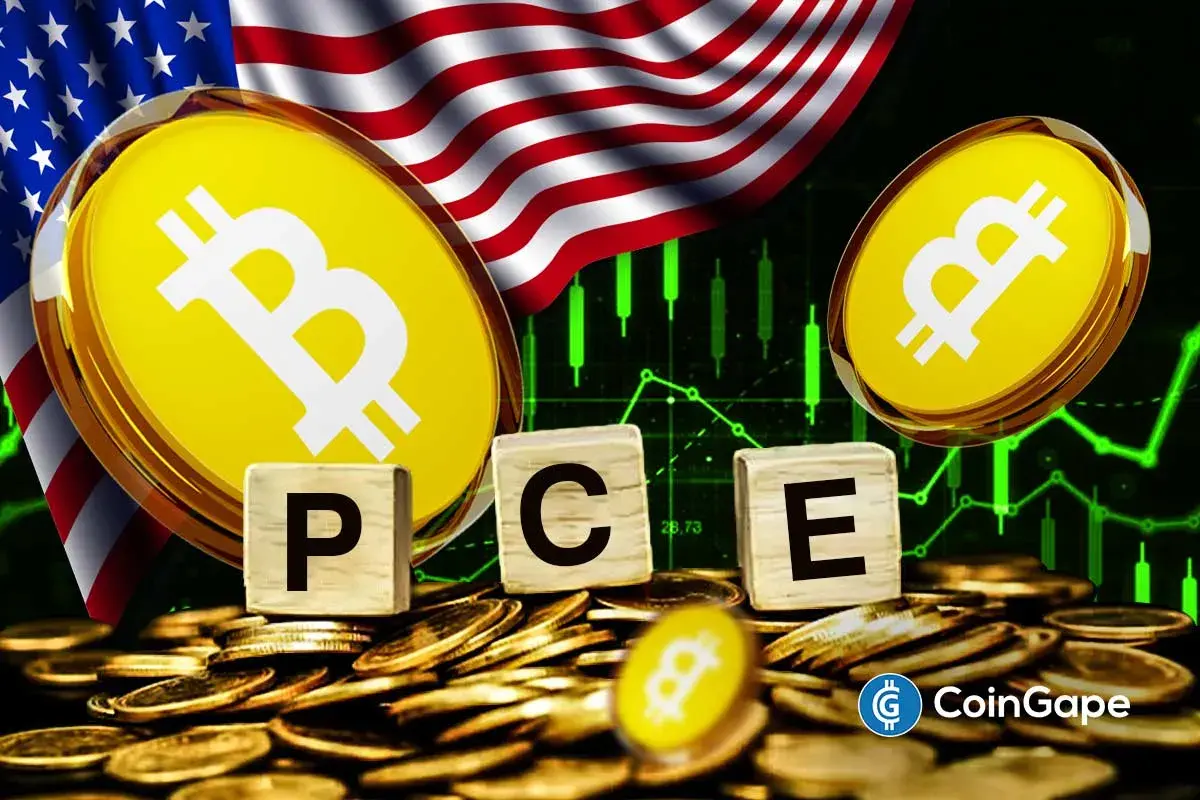
The recent release of the U.S. Personal Consumption Expenditures (PCE) inflation data has brought clarity to the economic landscape. According to the Bureau of Economic Analysis, PCE inflation has stabilized at 2.8% year-over-year (YoY) for February, aligning perfectly with market expectations. Furthermore, the month-over-month (MoM) index incremented by 0.4%, also meeting forecasts. Notably, core PCE inflation has cooled slightly to 3%, down from 3.1% in January, which reflects a healthy adjustment in inflationary pressures. This synchrony with projections signifies a solid macroeconomic environment, crucial for both traditional financial markets and emerging digital currencies like Bitcoin.
Amidst this inflation backdrop, Bitcoin has demonstrated remarkable resilience. Following the inflation data release, Bitcoin’s price jumped to approximately $71,200, rebounding from an intraday low of $70,500 as per TradingView data. This recovery is significant, especially considering it comes before escalating geopolitical tensions, specifically the U.S.-Iran conflict that commenced in late February. The leading cryptocurrency’s performance indicates that investors may view it as a hedge against inflation, further adding to its appeal as an alternative asset in uncertain times.
However, it’s critical to highlight that these inflation figures do not account for the recent U.S.-Iran war’s impact. As events unfold on the geopolitical stage, they could complicate the inflation outlook in the U.S. and consequently influence Federal Reserve policies. The correlation between global stability and domestic economic indicators underscores why market participants are closely monitoring developments in the Iran situation. Despite the current stability in the PCE data, uncertainty in the geopolitical realm might contribute to volatility in both traditional assets and cryptocurrencies.
In light of these factors, recent Federal Open Market Committee (FOMC) minutes indicate a cautious yet flexible stance from the Fed regarding interest rates. While officials have signaled a willingness to consider rate cuts in response to evolving economic conditions, there’s a consensus to reassess positioning based on inflation metrics. A majority of Fed officials have articulated that further rate hikes might be necessary if inflation persists well above the target rate of 2%. Such nuance reflects the central bank’s commitment to maintaining economic health in a rapidly changing environment.
As the market approaches the upcoming FOMC meeting scheduled for April 29th, the consensus among traders, as suggested by CME FedWatch data, points toward a 98.4% expectation for the Fed to maintain its current interest rates. This anticipatory stance presents both risks and opportunities for investors. For those who understand the interplay between inflation measures and Fed policy, navigating these waters could yield substantial rewards, especially in the cryptocurrency space where sentiment can shift rapidly.
In conclusion, the stabilization of PCE inflation at 2.8% contrasts with the backdrop of rising tensions due to the U.S.-Iran conflict, creating a complex landscape for policymakers and investors alike. Bitcoin’s recovery in response to these inflation figures points to its emerging role as a hedge against economic instability. As the Fed contemplates its next moves, clarity on interest rates will be crucial in shaping market trajectories. Therefore, remaining informed on both economic indicators and geopolitical developments will be essential for anyone looking to capitalize on current market conditions.