




Ethereum Accumulation: Analyzing Recent Whale Withdrawals and Market Dynamics
Recently, large Ethereum holders have made significant moves by withdrawing over 39,700 ETH—valued at approximately $75 million—from major exchanges. This activity highlights a robust accumulation trend, with notable transactions involving whales who removed substantial amounts from platforms like OKX, Bybit, Gemini, and Binance. For instance, 9,220 ETH was taken from OKX and Bybit, while Gemini saw 5,000 ETH withdrawn. Additionally, institutional firm Cumberland withdrew 23,000 ETH from Binance and Coinbase, reflecting a strategic shift toward longer-term holding.
The increase in ETH withdrawals is particularly important as it reduces the available supply on exchanges while indicating that major players are positioning themselves for future price appreciation. As of now, Ethereum trades around $2,089, with whale activity suggesting a deliberate effort to move assets into private wallets. The overarching question remains: can these tightening supply conditions contribute to a new recovery phase for Ethereum?
Ethereum’s Stability After Market Corrections
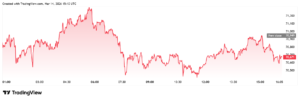
Following a sharp market downturn, Ethereum has started to stabilize, trading within a defined range of $1,807 to $2,152. The current price point of $2,089 places Ethereum near its mid-range resistance level. Previous bearish trends pushed Ethereum through multiple support zones until buyers successfully defended the crucial $1,807 zone, creating a foundation for potential recovery. However, any upward momentum continues to face resistance around the $2,152 level, which previously marked a breakdown point during Ethereum’s decline.
As traders observe Ethereum’s sideways trading movement, it becomes essential to monitor whether the market can gradually reclaim its lost ground. A failure to maintain support could jeopardize the consolidation structure, leaving room for further corrections. Still, key technical indicators hint at progressively stronger bullish pressures, suggesting that a recovery may indeed be on the horizon.
Technical Indicators Reflecting Bullish Sentiment
Several technical indicators seem to signal a shift toward bullish sentiment in the Ethereum market. Notably, the Stochastic RSI surged to peaks of 97.97 and 90.52, indicating heightened buying activity following Ethereum’s stabilization phase. Such elevated readings typically suggest robust demand dynamics on the horizon. Similarly, the Parabolic SAR reoriented below the price near $1,965, indicating that short-term trend pressures are favoring buyers.
When both of these indicators align in this manner, traders commonly interpret the situation as an early signal for a potential recovery phase. The convergence of enhancing indicators and whale withdrawals emphasizes that larger market forces might be at play regarding Ethereum’s price trajectory.
Demand Dynamics in Spot Markets
Market order flow analyses have indicated rising demand in Ethereum’s spot markets. The Spot Taker CVD, assessed over the last 90 days, shows that buyers have begun to dominate in executing market orders compared to sellers. This transition towards a higher volume of market orders signifies immediate demand, contrasting with passive limit orders. When aggressive buying occurs alongside significant exchange withdrawals, it often implies unified accumulation behavior among investors.
Large traders frequently pair spot purchases with off-exchange storage strategies during accumulation phases. Therefore, the interplay between increased taker buy pressure and declining exchange balances may progressively tighten the circulating supply of Ethereum across various trading platforms. This compression in supply dynamics could lead to upward price movements if sustained over time.
The Importance of Liquidity Clusters
Insights gleaned from derivatives data also reveal crucial dynamics influencing Ethereum’s upcoming price structure. Notably, the Binance liquidation heatmap has highlighted a substantial liquidity cluster near the $2,150 level, situated just above the current market price. Such liquidity clusters exist in areas where forcibly liquidated leveraged positions might occur as the price approaches. These zones often compel markets to gravitate towards them due to the increased trading activity they generate.
Considering Ethereum’s current price of $2,089, the $2,150 liquidity region lies within striking distance. If buying pressure intensifies and prices climb towards this level, it could prompt cascading liquidations, amplifying volatility in the market. However, it’s essential to note that sellers may fiercely defend this zone, given the significant concentration of leveraged positions poised for liquidation.
Conclusion: A New Accumulation Phase Emerging
In summary, substantial whale withdrawals exceeding 39,700 ETH, an uptick in spot demand, and bullish technical indicators all point towards Ethereum entering a vital accumulation phase. The liquidity cluster at the $2,150 mark emerges as a crucial target for traders, given the current price dynamics. If buyers can maintain their support levels and enhance demand further, Ethereum may well find itself on a trajectory towards this liquidity zone as the broader market pursues concentrated leveraged positions.
Final Thoughts
Whale accumulation is effectively tightening supply on exchanges while buyers reclaim control across vital support zones. A concentration of liquidity above current price levels may stimulate further price expansion if sustained demand continues to manifest. As a developing story, Ethereum’s market dynamics warrant close attention from investors and traders alike.