


U.S. Naval Strategy in the Strait of Hormuz: Implications for Bitcoin and Global Markets
U.S. President Donald Trump has announced significant plans for the deployment of U.S. warships alongside allied nations in the strategic Strait of Hormuz. This decision comes in response to Iran’s attempts to disrupt maritime navigation in this critical oil transit route, which is essential for global energy security. Trump’s post on Truth Social detailed how various countries, particularly those vulnerable to Iran’s maneuvers, will collaborate with the U.S. to ensure the safety and openness of this vital chokepoint. As a consequence of this announcement, Bitcoin experienced a market surge, demonstrating the interconnectedness of geopolitical events and the crypto landscape.
In his statement, Trump asserted, “We have already destroyed 100% of Iran’s military capability," while recognizing the potential threats posed by Iran’s remaining assets, including drones, mines, and missiles. The president stressed the importance of international cooperation, hoping for contributions from nations such as China, Japan, South Korea, the UK, and others affected by the instability in the region. By ensuring naval security in the Strait, the U.S. aims to alleviate pressures on oil supply routes, which directly influences global oil prices—a factor that often correlates with Bitcoin’s market performance.
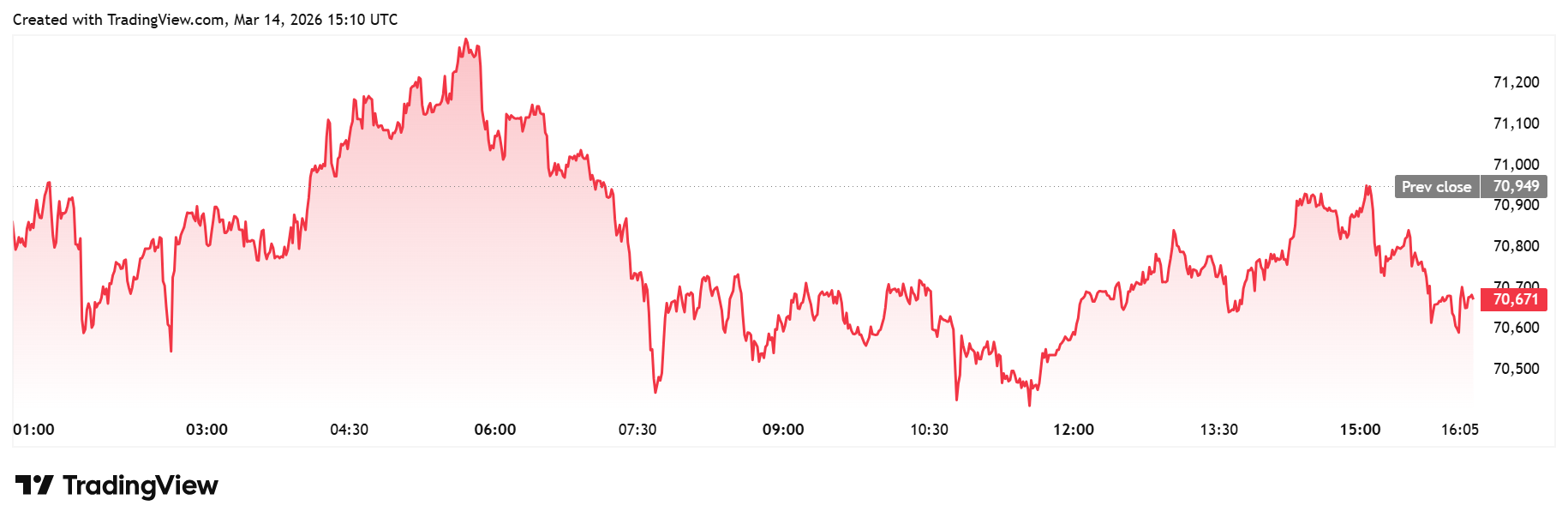
Following Trump’s announcement, Bitcoin saw a remarkable rise, climbing to approximately $71,000 before slightly retracting to around $70,000. This volatility reflects market speculations surrounding the implications of geopolitical developments on asset prices. With the potential for a stable oil environment, many investors speculate that the relationship between oil prices and Bitcoin could foster a more resilient cryptocurrency market.
The proposal for an international naval presence is intended to establish a strategic deterrence against Iran’s hostile actions. Trump indicated a strong offensive stance, asserting that the U.S. would “bomb the hell out of the shoreline” and target Iranian naval assets. Such aggressive posturing underscores the fragility of the region’s stability, a factor that can lead to significant fluctuations in oil prices, thereby impacting Bitcoin and other cryptocurrencies.
On a related note, the crypto market faced additional pressure following recent military actions by the U.S. against Iran’s Kharg Island. Iran’s response included threats to enhance its military capabilities, causing immediate uncertainty in the financial markets. As geopolitical tensions mount, the crypto realm often mirrors these dynamics, providing insights into investor sentiment and market trends that can impact Bitcoin’s valuation.
Adding a further layer of complexity to the geopolitical landscape, Israel and Lebanon are poised to engage in direct talks with assistance from U.S. Envoy Jared Kushner. This development, reported by Times of Israel, signals a potential thaw in relations and a move towards diplomatic resolutions. The discussions, anticipated to occur either in Paris or Cyprus, aim to resolve longstanding conflicts while inviting international facilitators. The positive shift in dialogue can improve market sentiments, which is favorable for the Bitcoin price and the broader crypto market amid an otherwise volatile political environment.
In conclusion, U.S. plans to deploy warships in the Strait of Hormuz hold significant implications for global oil markets, Bitcoin, and geopolitical stability. The prospect of collaboration with international partners to safeguard this crucial pathway enables a smoother flow of oil, potentially stabilizing prices and, in turn, bolstering the cryptocurrency market. As events unfold, it remains essential for investors to closely monitor the developments in both the geopolitical sphere and the financial markets, particularly as Bitcoin continues to react to news and sentiments stemming from these complex international dynamics.