



The Ethereum Foundation’s New Strategic Plan: Ensuring Longevity and User Empowerment
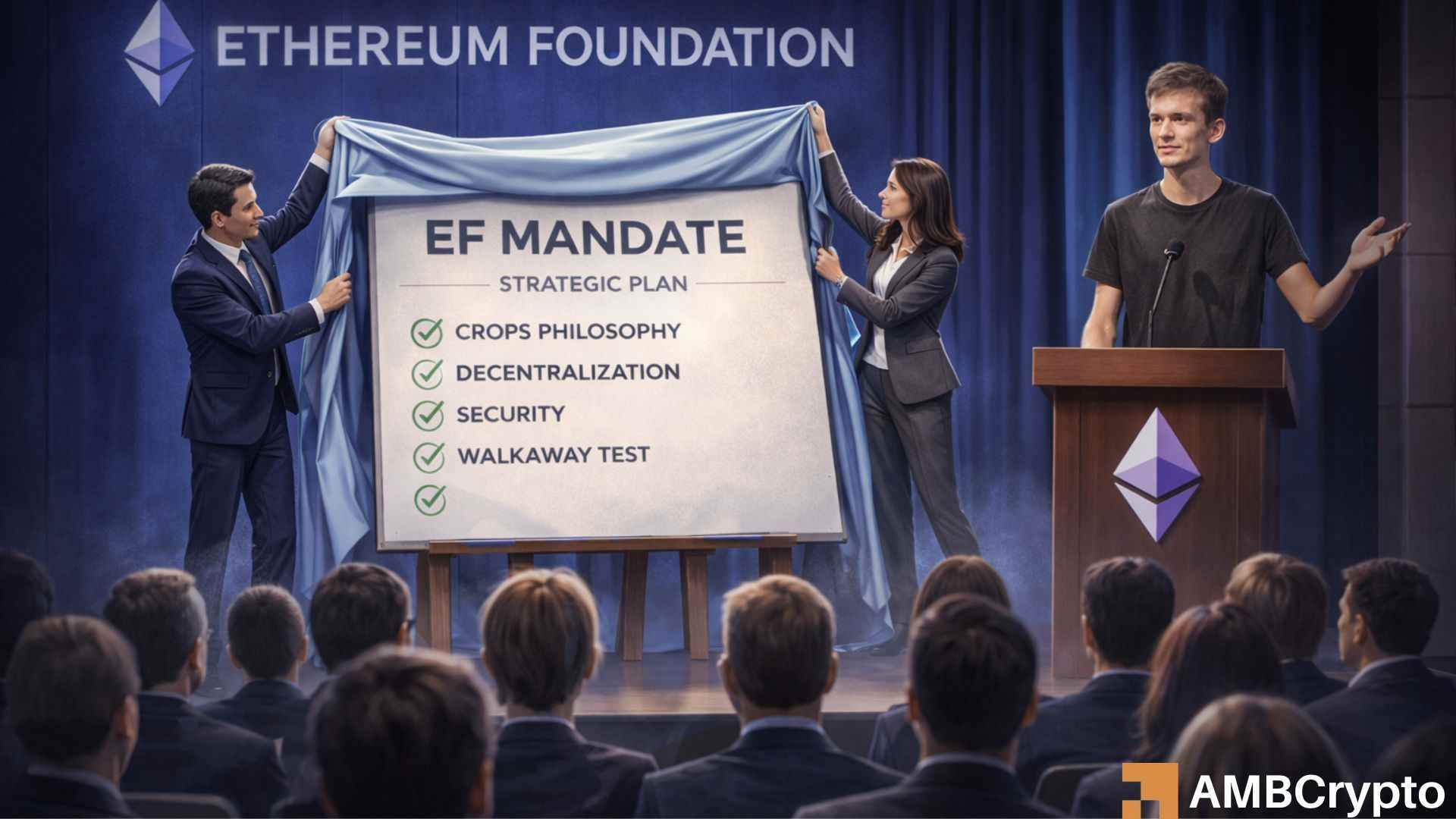
The Ethereum Foundation (EF) has recently announced a pivotal strategic initiative aimed at safeguarding the Ethereum protocol’s continuity, even in a scenario where the foundation may no longer exist. This plan, known as the ‘EF Mandate,’ serves as a comprehensive framework outlining the foundation’s long-term objectives while introducing a philosophy aimed at preserving Ethereum as a fundamental bastion of individual liberty in an increasingly centralized world.
The CROPS Framework: A Pillar of Ethereum’s Future
Integral to the EF Mandate is the CROPS framework, which emphasizes Ethereum’s commitment to being censorship-resistant, open-source, private, and secure. Vitalik Buterin, Ethereum’s co-founder, asserts that the CROPS philosophy is essential for fostering user self-sovereignty, ensuring individuals have control over their assets, identities, and online activities without reliance on centralized entities. This framework not only safeguards Ethereum’s decentralization but also augments privacy and security at the protocol level, while simultaneously enhancing user experiences and mitigating risks of scams and extraction at the access level.
Expanding Stewardship for Decentralization
Buterin elaborated that the EF currently stands as Ethereum’s primary steward, but the new mandate envisions a broader coalition of stewards to ensure the protocol’s future viability. The advocacy for decentralization is vital, especially in light of what is termed the "walkaway test," which assesses the blockchain’s sustainability without intervention from centralized authorities. By promoting a multi-steward approach, the EF aims to reinforce the protocol’s resilience and decentralized nature, ensuring it can withstand the test of time even in the absence of its original founding organization.
Contextual Changes and Leadership Transitions
The roll-out of the EF Mandate coincides with the recent resignation of former EF Co-executive Director Tomasz Stańczak, highlighting an evolving leadership dynamic within the foundation. There has also been a strategic shift away from focusing solely on Layer-2 (L2) solutions, which have been prevalent in discussions surrounding Ethereum scalability. While Stańczak welcomed the EF Mandate, he expressed concerns regarding the pace of its implementation. In contrast, Buterin responded by emphasizing the foundation’s commitment to proactive, expedited action in realizing its vision.
Implications for the Ethereum Token (ETH)
The ongoing transformation within the Ethereum ecosystem raises questions concerning the broader implications for the native cryptocurrency, ETH. The Ethereum roadmap is notably fluid, and analysts suggest that this inconsistency might not bode well for ETH’s market performance. As of now, ETH is trading within a relatively narrow band of $1.8K to $2.1K, a range it has maintained since February. Since last October, the altcoin has experienced over $15 billion in on-chain capital outflows, leading to concerns that without a robust recovery in this metric, a substantial breakout rally for ETH may remain elusive in the near future.
The Future of Ethereum: A Manifesto for User Freedom
The EF Mandate, described as "part constitution, part manifesto, and part guide," encapsulates the foundation’s dedication to preserving user freedom and enhancing security and privacy within the Ethereum ecosystem. This strategic document underscores a commitment not only to the current user base but also to the long-term vitality of the Ethereum network as a whole. As Ethereum continues to navigate an ever-changing landscape, the effective implementation of the EF Mandate could be crucial for maintaining its status as a leader in blockchain technology and a sanctuary for decentralized finance.
Conclusion: A Defining Moment for Ethereum
In summary, the Ethereum Foundation’s recent strategic initiative symbolizes a broader ambition to recognize and protect individual freedoms within an evolving landscape of digital finance. While the roadmap ahead may present challenges, particularly concerning ETH’s price stability and market perception, the foundation’s proactive measures aim to ensure that Ethereum remains a decentralized, user-centric platform. The next steps taken by the EF could significantly shape the trajectory of not only Ethereum but also the future of decentralized technologies. As the crypto community watches closely, the success of this initiative could redefine what it means to achieve true decentralization in the blockchain space.