



Congressional Debate on Federal Reserve Digital Currency: A Turning Point
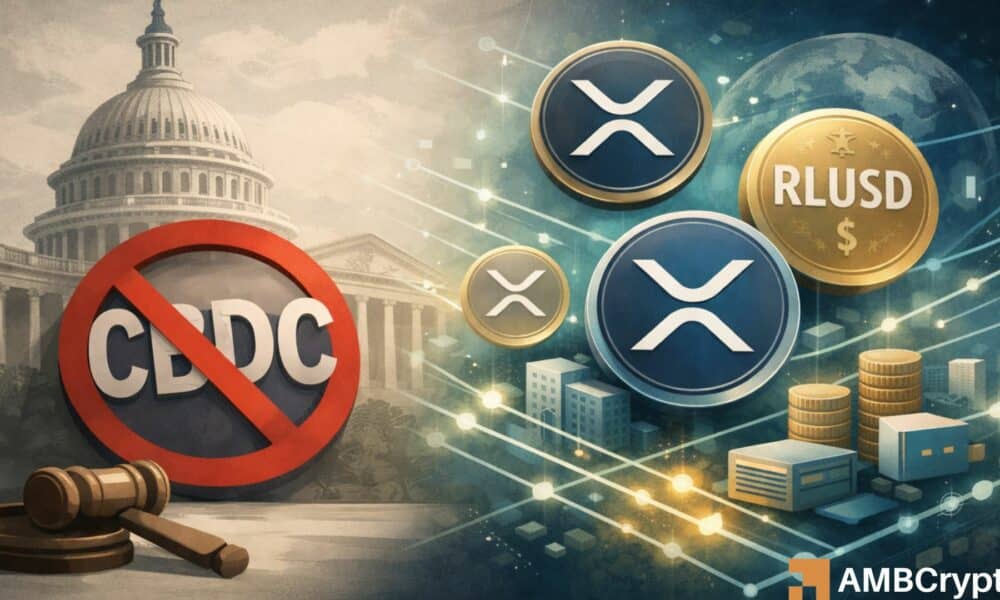
The U.S. congressional discussions regarding a Federal Reserve digital currency (CBDC) have reached a crucial juncture as lawmakers push for stricter regulations surrounding its development. Recent developments indicate an increasingly concerted effort among legislators to restrict the advancement of a CBDC, reflecting mounting political opposition to the idea of a government-issued digital dollar. A significant move came from Representative Michael Cloud, who sent a letter urging congressional leaders to bolster prohibitions on CBDC initiatives within the upcoming 21st Century ROAD to Housing Act.
Initially, the Senate’s proposal included a temporary prohibition on CBDC activities, extending until December 2030. However, several lawmakers argue that this proposed timeframe weakens previous attempts to institute a more permanent ban on government-issued digital currencies. This recent push aligns with H.R.1919, the Anti-CBDC Surveillance State Act, which has gained bipartisan support and passed the House. The simultaneous attendance of 14 representatives who signed the letter underscores a growing resistance against a central bank digital currency, putting congressional members in a pivotal position to shape the future of monetary policy in the U.S.
While the American political landscape is preparing to take a stand on CBDCs, global experimentation with these digital currencies is rapidly advancing. Currently, around 137 jurisdictions are exploring digital currency frameworks, and 49 of those are already testing active pilot programs. This worldwide trend adds pressure on U.S. lawmakers to clearly define their stance, particularly as the overall preference appears to lean towards private infrastructure over federal initiatives. The acceleration of global CBDC experimentation serves as a backdrop to the current debates in Congress, making the stakes even higher for a clearer policy direction.
In parallel to the congressional developments, the XRP Ledger (XRPL) has experienced a notable resurgence in transaction activity. After a period of steady decline that began in December 2024, recent data reveals that daily transactions have averaged approximately 2.5 million. This uptick suggests an encouraging shift in network engagement, particularly concerning payments and tokenized asset transfers, contrasting with typical bearish market patterns. Historically, lower transaction counts often indicate waning market participation, but this new reversal hints at a reinvigorated interest in the XRPL ecosystem.
The momentum on the XRPL is further fueled by a rise in tokenization activities, where the Represented Asset Value has climbed to about $1.49 billion, coupled with an increase in Distributed Assets Value to roughly $453 million. Notably, in a mere 30 days, RWA (Real World Asset) transfer volumes on the network surged by 1,282% to an impressive $139.85 million. This growth reflects a burgeoning interest from issuers seeking to explore commodities, private credit, and other alternative assets. While Ethereum (ETH) continues to dominate the institutional tokenization arena, the increasing transaction volumes on XRPL indicate the network is making headway in attracting early-stage institutional experimentation and broader financial involvement.
Stablecoin expansion is another vital element shaping liquidity flows within the XRPL ecosystem. The emergence of the Ripple USD (RLUSD) stablecoin has proven especially significant, boasting a market capitalization of approximately $1.589 billion—about 83% of XRPL’s total stablecoin supply. The liquidity imprinted within XRPL’s native exchange systems significantly enhances operational efficiencies by facilitating low-cost settlements and programmable market liquidity through pairs like RLUSD/XRP. In a broader context, the global market for regulated stablecoins has exceeded $313 billion, further solidifying the case for private blockchain networks in the realms of payments and tokenized financial markets.
In summary, the current trajectory of transaction growth on the Ripple network and an expanding array of tokenized assets illustrates a shift towards heightened experimentation with the XRPL as a viable infrastructure for both payments and tokenized finance solutions. The ramifications of the U.S. congressional debates over CBDC policy, alongside the burgeoning liquidity provided by stablecoins like RLUSD, signal a critical juncture in the evolving landscape of digital dollars and the future of blockchain technology. The interplay between governmental regulation and the private sector’s innovations may define the path forward for digital currency in the United States. As discussions unfold, stakeholders will keenly observe how these dynamics are navigated and which approach will ultimately dominate the digital currency narrative in American finance.