



Revolutionizing DAO Participation: Buterin’s AI Voting Proposal
Vitalik Buterin, the co-founder of Ethereum, has recently highlighted a pressing issue within Decentralized Autonomous Organizations (DAOs): low voter participation. Amidst concerns of centralization in decision-making processes, Buterin’s innovative solution proposes the integration of Personal AI Agents to streamline and enhance voter engagement.
The Participation Problem in DAOs
DAO governance is hindered by the overwhelming complexity of proposals requiring critical deliberation. Most individuals lack the time or expertise to vote on numerous intricate issues, leading to the concentration of voting power among a few large token holders. Buterin argues that traditional solutions like delegation can disempower users further, as the essence of democracy and decentralization gets lost. His emphasis on improving participation rates underscores the need for immediate action to preserve the integrity of DAOs.
Empowering Personal AI Agents
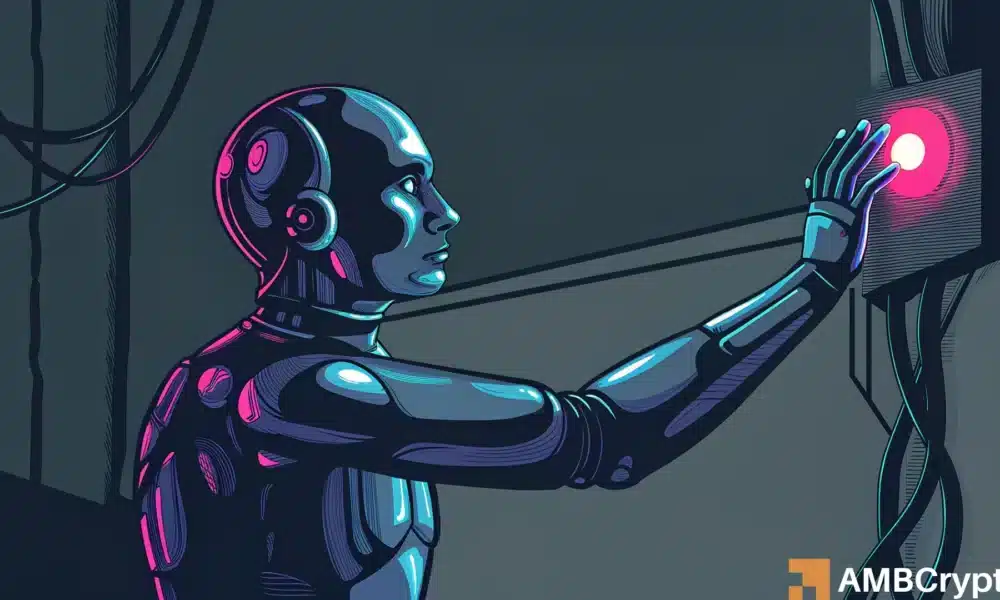
Buterin’s proposal hinges on the idea of personal AI agents trained specifically on each user’s past decisions, opinions, and communications. These agents would autonomously cast votes on DAO proposals mirroring the voting preferences of their human counterparts. By amalgamating individual data, these AI models can empower users to engage without the burden of constant decision-making. The vision of using personal AI agents represents a significant leap toward enhancing the democratic processes within DAOs.
Privacy-Centric Decision Making
A critical aspect of Buterin’s framework is ensuring that users do not have to compromise their privacy for convenience. The AI agents would operate within secure environments, such as trusted execution environments and utilizing multi-party computation, to safeguard personal data. This approach addresses privacy concerns that many users may have, thus fostering broader participation without the fear of information breaches or exploitation.
Zero-Knowledge Proofs for Voter Integrity
To further protect voter identity, Buterin proposes the use of zero-knowledge proofs. This advanced cryptographic method would enable users to validate their eligibility to vote while keeping their wallet addresses and individual choices confidential. This innovation can prevent risks associated with coercion, bribery, or the potential mimicry of votes cast by larger token holders, ultimately enhancing voter autonomy and trust in the process.
Streamlining Governance with AI
Beyond securing user privacy, Buterin’s AI agents could take on routine voting tasks and alert users only when significant decisions arise, effectively reducing the noise of less important proposals. Additionally, Buterin considers implementing prediction markets to combat spam proposals. In this scenario, AI agents would support credible proposals and disregard weak or irrelevant ones, optimizing the decision-making process and conserving user engagement for meaningful contributions.
Conclusion: The Future of DAOs and AI Integration
Vitalik Buterin’s visionary proposal for AI-driven voting within DAOs could redefine the landscape of decentralized governance. By adopting personal AI agents widely, DAOs may overcome participation challenges, ensuring that decision-making processes become more scalable and genuinely decentralized. As we stand at the crossroads of technology and governance, embracing such innovations might be key to unlocking the full potential of DAOs.