



South Korea’s Economic Revival: President Lee’s Pro-Crypto Reforms
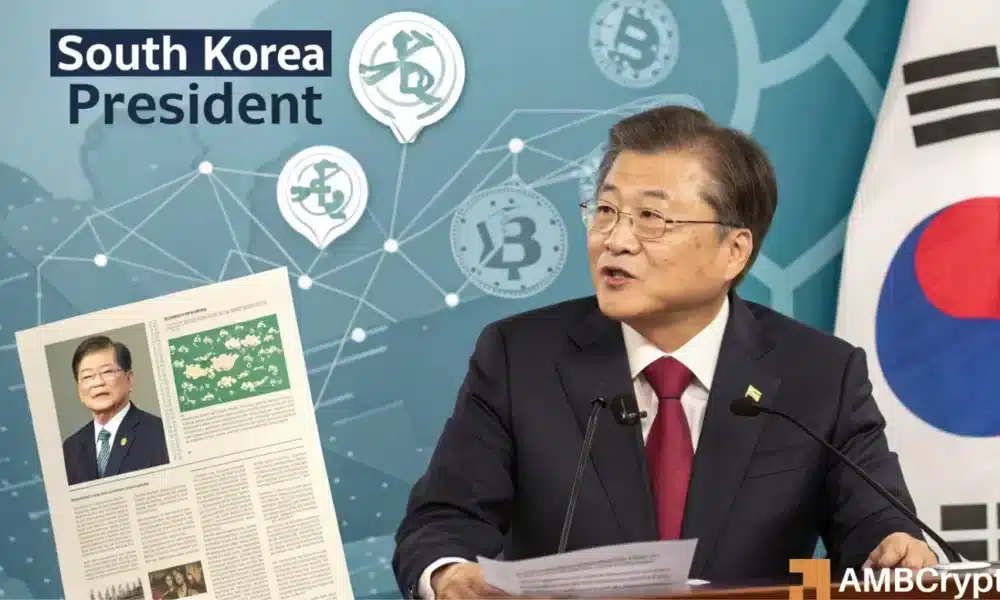
President Lee Jae-myung has made significant waves since his inauguration, quickly making it clear that revitalizing South Korea’s economy is his foremost priority. His government is poised to implement pro-crypto reforms alongside a comprehensive fiscal stimulus package aimed at alleviating financial strain on households. This bold approach follows a period of political instability marked by the impeachment of former President Yoon Suk Yeol, whose attempts to impose martial law faced widespread criticism. Although Lee’s inaugural address did not explicitly mention cryptocurrencies, his campaign highlighted a clear intention to integrate digital assets into South Korea’s economic strategy.
Lee’s Vision for Digital Assets
Lee’s agenda signals an ambitious plan to turbocharge South Korea’s digital asset strategy. He intends to revitalize initiatives from the Democratic Party’s Digital Asset Committee, particularly aiming to advance the long-awaited Digital Asset Basic Act (DABA). This act seeks to create a formal regulatory framework for digital assets, a task his predecessor left unfulfilled. Lee is also focused on legalizing spot cryptocurrency exchange-traded funds (ETFs), which are currently banned, and enabling investments in digital assets by the National Pension Service. Notably, the Financial Services Commission has already initiated a phased onboarding plan for institutional players, demonstrating readiness to welcome significant investment into the crypto space.
A Strong Fiscal Stimulus Package
To bolster economic recovery, Lee has announced a bold fiscal stimulus exceeding 30 trillion won, approximately $22 billion. This response comes amid lowered growth projections for the South Korean economy, revised to just 0.8% in May from an earlier forecast of 1.5%. The urgency of this move is echoed by Kim Min-seok, Lee’s nominee for Prime Minister, who has warned that current global economic challenges could surpass the severity of the 1997 Asian financial crisis. Support for these initiatives has also emerged across party lines, with both Lee and his election rival, Kim Moon-soo, emphasizing the necessity of immediate action to stimulate the economy.
A Shifting Political Landscape
The evolving political stance on cryptocurrency appears to mirror a broader transformation in public sentiment. Digital assets have gained traction as a significant electoral issue, reflecting changing voter priorities. Prominent figures in the technological community, like Sangmin Seo of the Kaia DLT Foundation, have emphasized that crypto is seen as a key narrative for garnering voter support. This movement positions cryptocurrencies as an alternative national growth engine, alongside traditional sectors like AI and semiconductors. South Korea’s political landscape is increasingly recognizing that a robust digital asset framework could not only enhance innovation but also create new economic opportunities.
Global Influences and Strategic Alliances
President Lee’s pro-crypto reforms are likely also informed by global trends. The renewed pro-crypto stance in the U.S., especially under Donald Trump’s influence, may resonate throughout international political arenas. As more global leaders adopt a favorable view on cryptocurrencies, Lee may see an opportunity for South Korea to align itself with progressive economic policies. Embracing digital assets could not only catalyze innovation but also position South Korea favorably on the global stage as countries vie for leadership in the burgeoning crypto market.
Conclusion: The Path Ahead
As President Lee Jae-myung embarks on his ambitious plans to integrate digital assets into South Korea’s economy, the potential for transformative growth is palpable. His focus on pro-crypto reforms, coupled with a significant fiscal stimulus, indicates a strategic pivot that could reshape South Korea’s economic trajectory. This approach reflects both domestic priorities and global influences, pointing towards a future where digital currencies play a vital role in economic policy. As both political and public sentiment adapts to this new narrative, the implications for South Korea’s economy and its position in the global market remain substantial. The unfolding developments in the coming months will undoubtedly be closely monitored, not just domestically but around the world, as South Korea navigates its path toward economic revitalization in a digital age.