



Navigating the Future of the Crypto Market Structure Bill Ahead of the 2026 Midterms
As the landscape of cryptocurrency continues to evolve, the Crypto Market Structure Bill is at the forefront of discussions within the financial and political realms. With the 2026 midterm elections looming, the path to passing this legislation has encountered potential obstacles, creating concerns about its timely enactment. Scott Johnsson, a General Partner at Van Buren Capital, has remarked on the delayed markup of the bill, suggesting that Senate Democrats may have strategic reasons for prolonging negotiations until after the elections. This article delves into the complexities surrounding the bill, its key contentious issues, and the potential outcomes as political dynamics shift.
Strategic Delays: A Calculated Move?
The postponement of the bill’s markup to January raises questions about the intentions of Senate Democrats. Johnsson highlighted the possibility of delaying these discussions until late Q1 or beyond the midterms. By doing so, Democrats could project a façade of cooperation with the crypto industry, all while protecting their relationships with banks and the party hierarchy. If negotiations continue into or past the elections, the sector could find itself in a precarious situation where the desired policy outcomes may wane considerably. This tactic not only reflects the political maneuvers at play but also underscores the complexity of balancing industry interests against traditional financial entities.
The Key Contentious Factors
In mid-December, notable figures in the cryptocurrency space met with Senator Tim Scott, the Republican chair of the Senate Banking Committee, to discuss the future of the bill. Despite the delayed markup, there was a cautiously optimistic sentiment among those present. Significant contentious issues have emerged, primarily surrounding DeFi (Decentralized Finance) oversight, stablecoin rewards, and ethical concerns tied to former President Trump’s family’s cryptocurrency interests. Traditional financial institutions, like Citadel Securities, advocate for stringent regulations in the DeFi arena while the crypto industry pushes for exemptions. Meanwhile, controversies persist over stablecoin rewards, with banking interests lobbying against what they perceive as loopholes benefiting the crypto sector.
The Banking Lobby’s Opposition
As the battle for legislative control intensifies, the banking lobby is bracing for a significant confrontation. With plans to invest over $100 million in electing pro-bank candidates, the lobbies face an uphill battle against the growing influence of cryptocurrency contributions. James Seyffart, a Bloomberg ETF analyst, emphasized the potential turmoil ahead, encapsulating the struggle between traditional banking interests and the burgeoning crypto market. The upcoming midterms are shaping up to be a pivotal point for both sides, further complicating the legislative process surrounding the Crypto Market Structure Bill.
The Dual Paths of Legislation
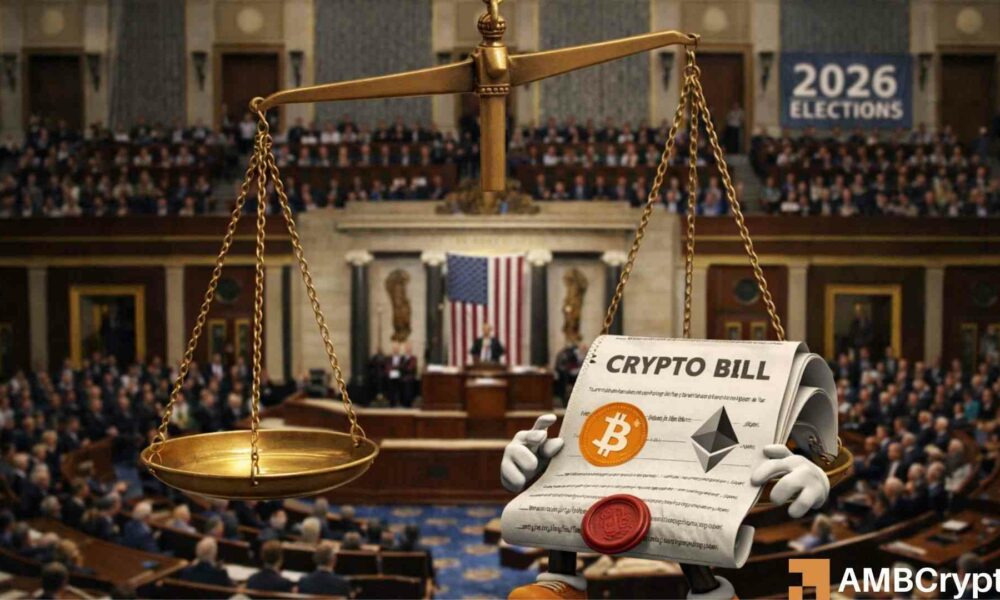
The Crypto Market Structure Bill comprises two distinct versions: the CLARITY Act and the Responsible Financial Innovation Act (RFIA). While the RFIA awaits its markup before heading to a Senate floor vote, it will ultimately need to be reconciled with the House version to become law. The intricacies involved in merging these legislations present their own challenges, especially as they navigate the political landscape leading up to the midterms. Despite the turbulence, analysts speculate a 77% chance that the bill will successfully become law before 2027.
The Challenge Ahead
The future of the Crypto Market Structure Bill is clouded with uncertainty. While Democratic strategies may stall legislative momentum, the bill holds significant importance for the future of cryptocurrency regulation in the U.S. The balance of power is in flux, and the outcome will likely depend on how effectively the crypto sector can advocate for its interests amid intense lobbying from traditional financial players. If the bill stalls past the midterms, it could hinder the industry’s pursuit of favorable regulatory conditions, complicating the future dynamics of the U.S. crypto market.
Conclusion: A Delicate Balance
In conclusion, the journey towards passing the Crypto Market Structure Bill is fraught with political maneuvering and strategic calculations. While there are indications of potential delays until after the 2026 midterms, the odds of successful passage remain reasonably high. The outcome will not only shape the regulatory framework for the crypto industry but also reflect the ongoing battle between traditional finance and emerging digital assets. As the landscape continues to evolve, stakeholders will need to remain vigilant, adapting to the fluctuating political environment that will ultimately determine the future of cryptocurrency regulations.