



Cardano’s Struggles: A Year of Declining Performance and Market Concerns
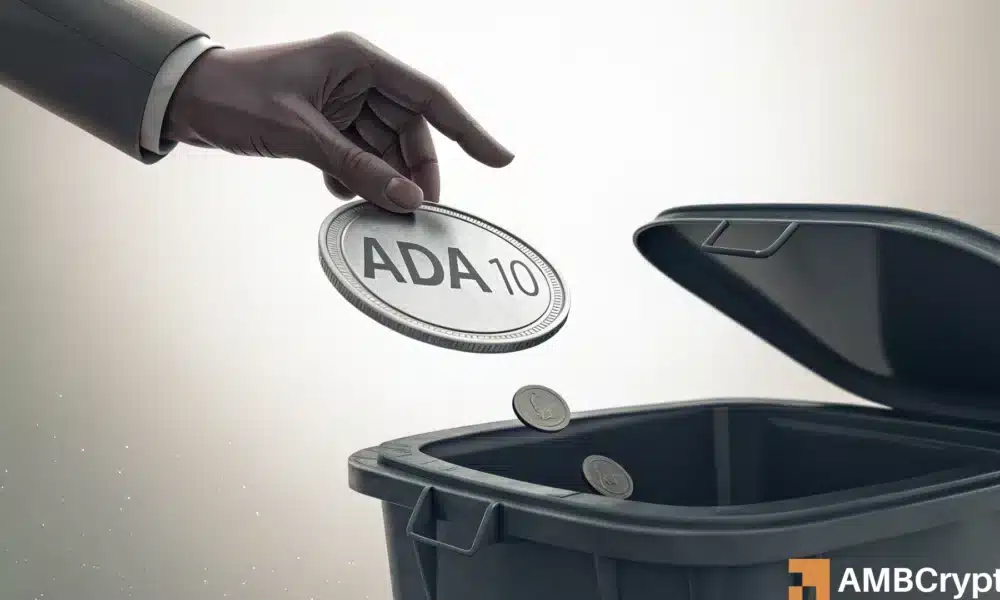
It’s been over a year since the election cycle that triggered a bullish rally in the crypto market. While many altcoins have weathered the storm of fear, uncertainty, and doubt (FUD) along with unexpected market fluctuations, Cardano (ADA) has experienced a stark decline. Following a disappointing performance in the third and fourth quarters, ADA has reverted to its pre-election levels, effectively erasing all gains from the past year and hovering around a crucial support level at $0.30. This downturn signifies not just market volatility but a deeper issue within Cardano’s ecosystem, calling into question its sustainability and future growth potential.
Market Cap Decline and Comparisons
The adverse market conditions for Cardano are evident in its diminishing market capitalization. According to CoinMarketCap, ADA has lost a staggering $25 billion in value since the start of 2025, representing a 64% decline and bringing its current valuation down to approximately $14 billion. To put this in perspective, consider Dogecoin (DOGE), which has managed to limit its drawdown to just 50%. This comparison highlights Cardano’s significant underperformance relative to its peers, including a memecoin. Given the shrinking gap between Cardano and Bitcoin Cash (BCH), questions arise regarding how much longer ADA can retain its 10th position in the cryptocurrency rankings before succumbing to BCH’s resurgence.
Fundamental Weakness and User Engagement
ADA’s technical struggles are feeding into its fundamentals, with a noticeable lack of user engagement that raises additional concerns. Recent network upgrades have not translated into increased activity, as reported by DeFiLlama. Active addresses on the Cardano network, which peaked at around 93,000 during the election, have since plummeted to under 25,000. This drop indicates a severe reduction in enthusiasm from investors and users alike, contributing to a muted fear of missing out (FOMO) that is crucial for driving engagement and investment in the platform.
Competition from Emerging Players
Compounding Cardano’s challenges is the rise of competing projects such as Sui (SUI). Analysts have noted that Sui’s total value locked (TVL) is 4.5 times that of Cardano’s, even though SUI has about one-third of ADA’s market capitalization. This stark discrepancy raises questions about Cardano’s perceived value compared to its rivals and suggests that Cardano may be overvalued in the current environment. As more investors look to capitalize on emerging projects, the demand for ADA could further dwindle, leading to a re-evaluation of its market position.
Whale Activity and Market Sentiment
Whale behavior is also reflecting broader market sentiments around ADA. Reports indicate that significant holders have offloaded 120 million ADA in just two months, coinciding with a drop from its peak of $0.80. This surge in selling pressure underscores the increasing difficulty that Cardano faces in holding this critical support level. It highlights a cascading effect where weak fundamentals and diminishing market confidence contribute to ADA’s declining value, creating an environment that may lead to longer-term stagnation or further losses.
Final Thoughts: An Uncertain Future for Cardano
In summary, Cardano’s recent performance has raised significant concerns. The digital asset has failed to maintain its election-cycle gains, showing weakened user activity, stagnant TVL, and diminished FOMO which underscore both technical weaknesses and fundamental shortcomings. The ongoing selling pressure from whales, coupled with perceptions of overvaluation relative to competitors, puts ADA’s position in the cryptocurrency hierarchy increasingly at risk. Without substantial changes in user engagement and market sentiment, Cardano may soon lose its footing in the critical rankings of the cryptocurrency landscape.