


The FDIC’s Groundbreaking Move: A New Era for Stablecoins in the U.S. Banking System
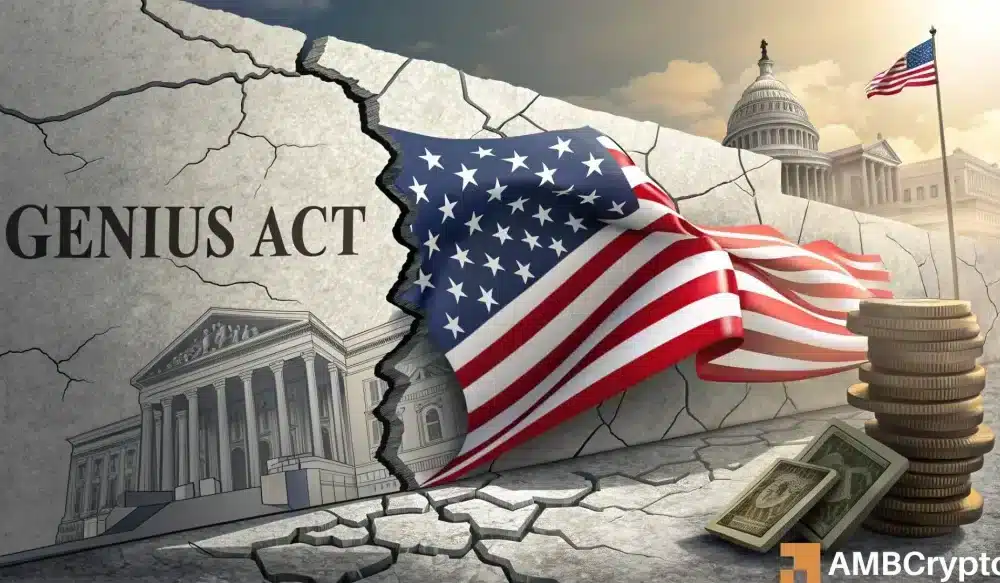
For years, the U.S. banking system and stablecoins operated in polar realms: one under the watchful eyes of the Federal Deposit Insurance Corporation (FDIC), and the other in the unregulated landscape of decentralized finance. This divide has recently been bridged by the GENIUS Act, signed into law earlier this year. With this act, the FDIC moves from being a mere observer to the architect of a regulatory framework that invites the U.S. dollar to coexist directly on the blockchain, supported by the banking infrastructure. This historic shift represents a major evolution in both the banking and cryptocurrency sectors.
Understanding the FDIC’s New Stablecoin Framework
On December 16, the FDIC unveiled a groundbreaking proposed rule outlining the first-ever instructions for banks looking to issue dollar-backed stablecoins. This isn’t a simple regulatory adjustment; it signifies a robust invitation for traditional finance to embrace digital assets. Counsel Nicholas Simons encapsulated this well, emphasizing the importance of safety and soundness in the payment stablecoin landscape while minimizing regulatory burdens. Essential to the new framework is the requirement for banks to establish dedicated subsidiaries, insulating digital asset volatility from their core banking operations.
Compliance Measures for Banks
To align with these new FDIC standards, banks must clarify ownership structures and produce audited statements ensuring that each digital dollar is indeed backed by either cash or U.S. Treasuries. This falls under the GENIUS Act’s classification of "Payment Stablecoins," which occupy a unique position in legal terms—they can facilitate payments but do not qualify as legal tender or traditional deposits. This nuanced classification allows the FDIC to regulate digital payments without the need to overhaul current deposit insurance regulations, making the transition smoother for financial institutions.
Consequences of Non-Compliance
Under the new rules, the FDIC is mandated to act with urgency, with a tight deadline of 30 days to verify applications and 120 days to reach a final decision. Failure to respond within these timeframes leads to automatic approval of applications by “operation of law,” countering the frustrating delays often experienced in the crypto sector. To facilitate compliance, banks are gearing up their subsidiaries for rapid adjustments. The introduction of a temporary 12-month safe harbor period acts as a "soft launch"—allowing early adopters to iron out issues while enjoying limited regulatory waivers.
The Competitive Landscape of Stablecoins
As the FDIC lays the groundwork for regulatory frameworks, private companies are swiftly advancing their positions in the stablecoin payment landscape. Visa has integrated Circle’s USDC into its U.S. network, allowing for instantaneous 24/7 settlements and challenging conventional financial timelines. Analysts project that stablecoin transactions could reach an astonishing $50 trillion annually by 2030, potentially tripling Visa’s projected volume for 2024. Meanwhile, Mastercard is making significant moves of its own, investing $2 billion in the acquisition of Zero Hash to enhance its capabilities in this rapidly evolving space.
Stablecoin Trends in the U.S. Market
The trajectory of stablecoins has transformed them from niche trading instruments into a viable global settlement layer, boasting over 200 million unique holders. On-chain transaction volumes are increasingly becoming resilient to broader market volatility, signifying robust growth in their adoption. By the time the GENIUS Act is fully operational in 2027, the previously clear demarcation between a “crypto network” and a “financial rail” may dissipate, resulting in a more integrated financial ecosystem.
Conclusion: A Clear Path Ahead for Banks and Fintechs
The FDIC’s new regulatory framework marks a pivotal juncture, firmly establishing the digital dollar within the U.S. banking framework. The strict timelines and automatic approval processes raise the stakes for regulators, ensuring that prior delays do not hinder innovation in the stablecoin space. The message is clear: the digital dollar is not merely on the horizon; it has already arrived, reshaping the landscape for banks and fintechs alike. Institutions that embrace this shift will be at the forefront of an evolving financial landscape, tapping into new opportunities while ensuring compliance in this age of digital currency.