



The Rising Institutional Interest in Ripple’s XRP: A Deep Dive
The market narrative surrounding Ripple’s XRP has seen a notable shift towards increased participation from traditional financial institutions. This change has been catalyzed largely by the introduction of spot XRP ETFs, which were launched in late 2025 and have since attracted approximately $1.4 billion in cumulative inflows. As of now, assets under management for these ETFs are approaching between $1 billion and $1.2 billion. Goldman Sachs is taking the lead in institutional investment, with around $153.8 million allocated to four different ETF products. This impressive figure accounts for nearly 73% of the $211 million collectively held by the top 30 financial institutions involved.
Institutional participation is crucial not only for capital inflows but also for market liquidity enhancement. Firms such as Millennium Management and Citadel may have smaller allocations, yet they play a vital role in diversifying investment portfolios and managing risks effectively. As the popularity of these investment products grows, we can expect to see institutional capital gradually deepen the liquidity in the XRP market. This is crucial for the long-term viability and stability of XRP as it continues to compete in an evolving digital asset landscape.
Growth of the XRP Ledger (XRPL) and its Implications
The XRP Ledger (XRPL) has also been experiencing substantial growth, further cementing the narrative of increasing adoption. On-chain activity has indicated a consistent upward trend, with daily transactions now approaching an impressive 951,682. Out of these, 463,661 payments are steering the settlement activities, underscoring a rising demand for swift and efficient cross-border transactions facilitated by XRP. Notably, transaction throughput remains stable, with ledgers closing every 3.88 seconds and facilitating approximately 28.32 transactions per second—factors that contribute to XRP’s attractiveness for both retail and institutional investors.
Network participation is broadening as well, with active accounts nearing 7,465 and over 1,000 new accounts being created recently. This steady increase reinforces XRP’s stature as a viable option for digital transactions and enhances its adoption narrative. Furthermore, the tokenization activity also supports this trend; decentralized exchange (DEX) trading has seen daily volume reach $3.75 million, resulting in a total value locked (TVL) climbing to $48.97 million. A stablecoin supply lingering around $381 million adds another layer of liquidity, essential for diverse applications across the ecosystem.
A Transitioning Institutional Landscape
While XRP integration into the market appears promising, institutional positioning remains relatively nascent. The top 10 wallets for XRP control roughly 19% of the circulating supply, much of which is associated with exchange custody and Ripple’s escrow holdings. This situation demonstrates that a significant portion of XRP is not immediately available for trading, suggesting a long-term view among institutional investors. Furthermore, exchange liquidity has become tighter, with Binance’s reserves dropping to approximately $2.7 billion—marking a 10-month low. This decline in supply indicates that a segment of XRP is transitioning into longer-term custody, further solidifying the strategic positions of institutions.
Moreover, derivatives activity adds another layer to this analysis. XRP futures open interest has fluctuated between $2.4 billion and $2.8 billion, while funding rates have remained predominantly negative in the past sessions. This consistent hedging pressure ensures that leverage remains balanced in the market arena. Collectively, the tightening supply on exchanges coupled with cautious derivatives positioning hints at an underlying preparation for a potentially stronger demand cycle in the near future—one propelled by heightened institutional interest and growing user adoption of related technologies.
Future Prospects for XRP
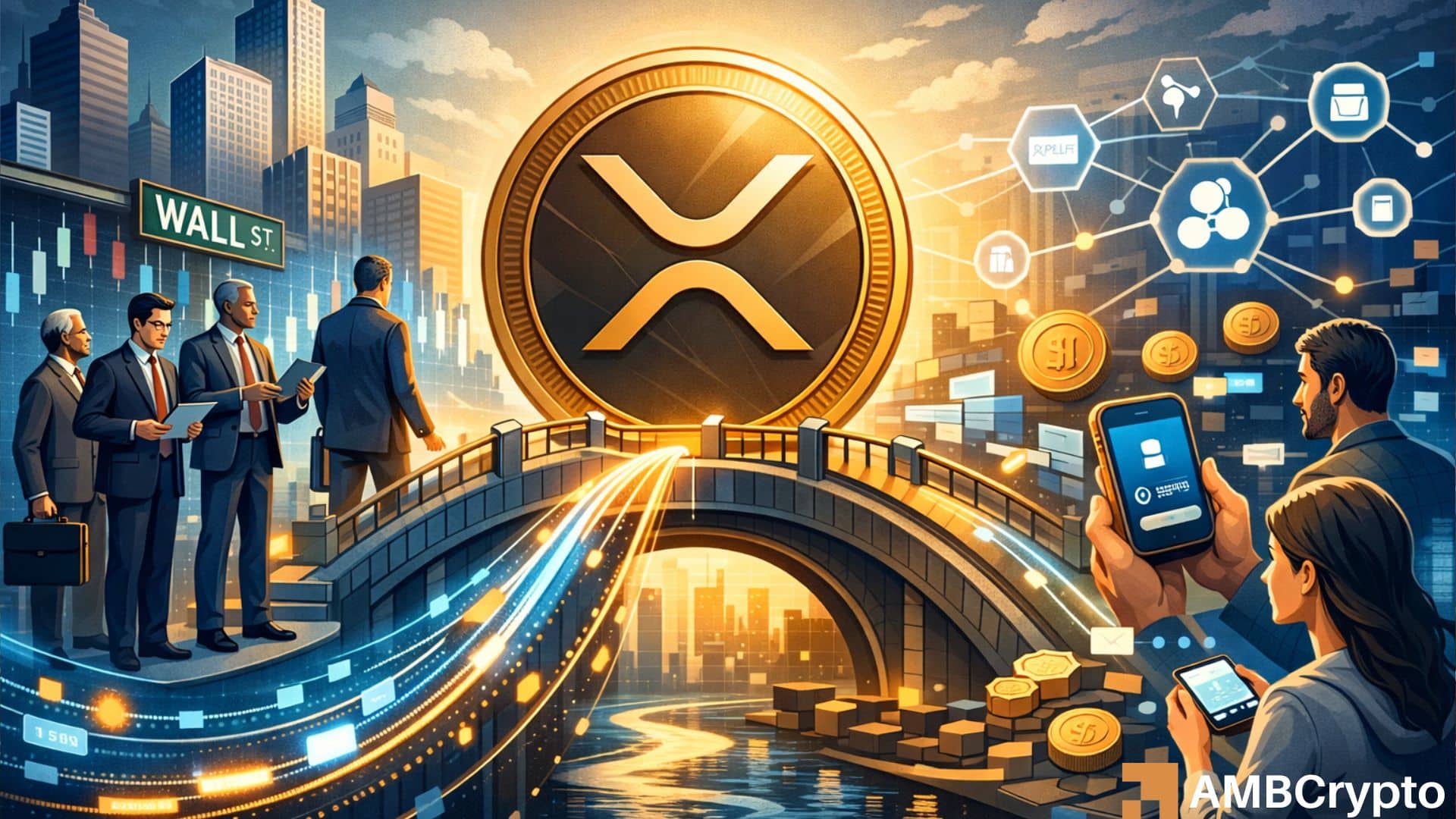
The combination of strong institutional interest, particularly from financial heavyweights like Goldman Sachs, alongside the rising adoption of technologies such as the Xaman Wallet, suggests that Ripple’s XRP might be entering a dual-demand phase. If capital inflows continue to grow in tandem with an increasing number of daily transactions and network usage, XRP stands on the brink of a broader institutional-retail expansion cycle. This could serve as a defining transition point for the ecosystem, fostering a more entrenched role for XRP in the digital asset landscape.
What’s particularly noteworthy is the alignment of institutional and retail markets. As institutions stake their positions and retail users expand their participation, XRP could witness an upward trajectory in value and usability. This synergy could pave the way for a self-reinforcing ecosystem, making XRP not only a digital currency for trading but also a viable alternative for various practical applications, such as remittances and decentralized finance (DeFi).
Conclusion
In summary, the landscape for Ripple’s XRP is witnessing transformative changes driven by increasing institutional involvement and growing network adoption. With significant ETF inflows, a robust XRPL, and strong futures hedging, the stage is set for a new era in which XRP could play a pivotal role in bridging traditional finance and digital assets. As XRP continues to develop and build towards a more sophisticated ecosystem, the potential for long-term utility and liquidity only enhances its attractiveness for both institutions and retail investors alike. Future developments in the XRP landscape could ultimately make it a prominent player within the broader cryptocurrency market.