


Lombard Finance (BARD) Experiencing Major Price Surge: What it Means for Traders
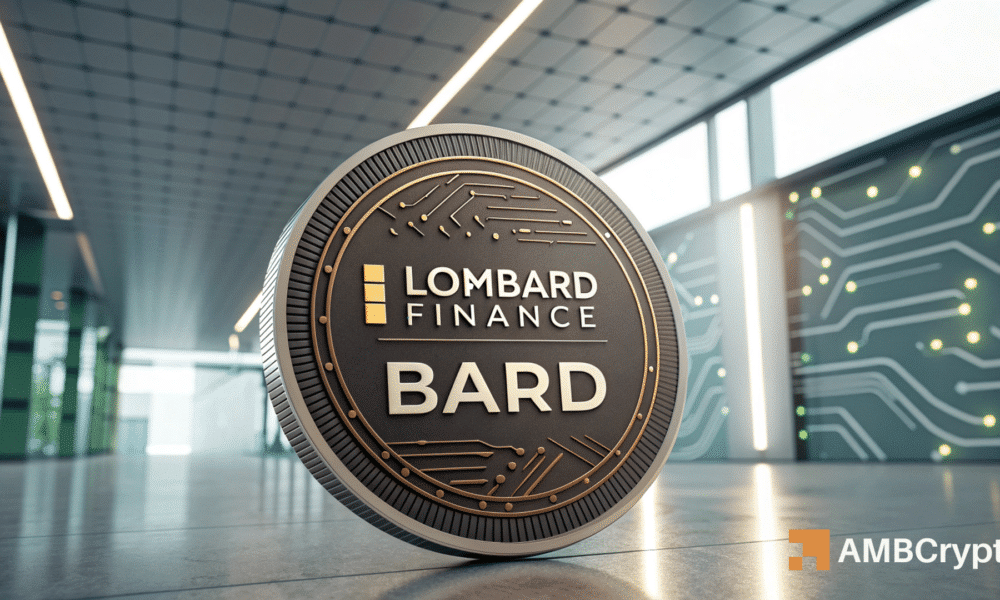
Lombard Finance’s cryptocurrency, BARD, has recently seen a substantial price increase of 39%, making it the second-highest gainer among the top 200 coins. This remarkable surge brings the price past the $1.50 mark, energizing both investors and traders alike. Daily trading volume has also tripled to approximately $278 million, indicating strong market interest. However, as the price continues to rise, traders must remain vigilant about potential risks contributing to a bearish sentiment among market participants.
Rising Concerns: Potential Sell Pressure Looming
As prices climbing higher often attract profit-taking, recent on-chain data suggests that sell pressure may indeed be on the horizon for BARD. Notably, wallets associated with the Lombard Finance project have made substantial movements of BARD tokens into centralized crypto exchanges such as Binance, HTX, and Bitget. The team has deposited BARD tokens worth $824K, $266K, and $767K respectively, totaling over $1.85 million transferred to exchanges. This activity raises eyebrows; traders speculate that these movements could indicate the team’s intention to sell, particularly as wallets reach an all-time high balance of approximately 93 million BARD tokens.
Understanding Price Action: Bearish Divergence in Play
BARD’s price action continues to break barriers, with a recent consolidation phase starting in October. The price has witnessed significant fluctuations as it surpassed the previous all-time high of $1.50. The Moving Average Convergence Divergence (MACD) line currently at 0.109 shows that short-term momentum lies with the bulls, while the histogram bars support this upward movement. However, the decline that started after hitting a peak at $1.69 hints at potential retracement, suggesting that traders are beginning to sell off their holdings. This is further backed by a bearish divergence, with the price rising while the Accumulation/Distribution indicator declines, standing at -291 million, signaling an ongoing distribution.
Trader Behavior Shift: Long/Short Ratio Declines
In response to these recent price movements, trader behavior has also shown significant shifts. The Long/Short Ratio, which typically indicates market sentiment, dropped sharply from a high of 1.5 to 0.87 within just two days according to data from CoinGlass. This change paints a picture of increased selling pressure as investors look to cash out at the current price level. In contrast, a majority of traders on platforms like Binance witnessed this ratio hit around 0.91, while it plummeted to 0.61 on OKX. As participants shift from buying to selling, the market sentiment suggests a potential reversal in price dynamics.
Mixed Signals: Room for Future Gains
Despite the concerning signs, overarching market conditions indicate that BARD may continue its rally. Not all traders are turning bearish; in fact, top traders on Binance appear to be capitalizing on the upward momentum, with their Long/Short Ratio sitting at an optimistic 1.44. This mixed signal suggests that while some traders are locking in profits, others are pouring their investment into BARD, believing that further price gains are in store. Hence, caution should be taken while navigating the current market landscape, as both bullish and bearish influences coexist.
Conclusion: Navigating the Future of BARD
In summary, Lombard Finance (BARD) is experiencing a significant price surge, but the accompanying sell pressure from team-held tokens raises concerns among investors. The market’s behavioral shifts towards profit-taking, backed by bearish divergence indicators and a declining Long/Short Ratio, point to the potential for a short-term reversal. Traders must weigh these various signals carefully while remaining aware of the potential for further bullish movements, guided by the diverse strategies employed by different market participants. For those looking to invest or trade in BARD, ensuring a cautious and informed approach is key to navigating these fluctuating conditions.