




VIX Climbs to Highest Close Since 2025: Analyzing Market Volatility and Economic Impacts
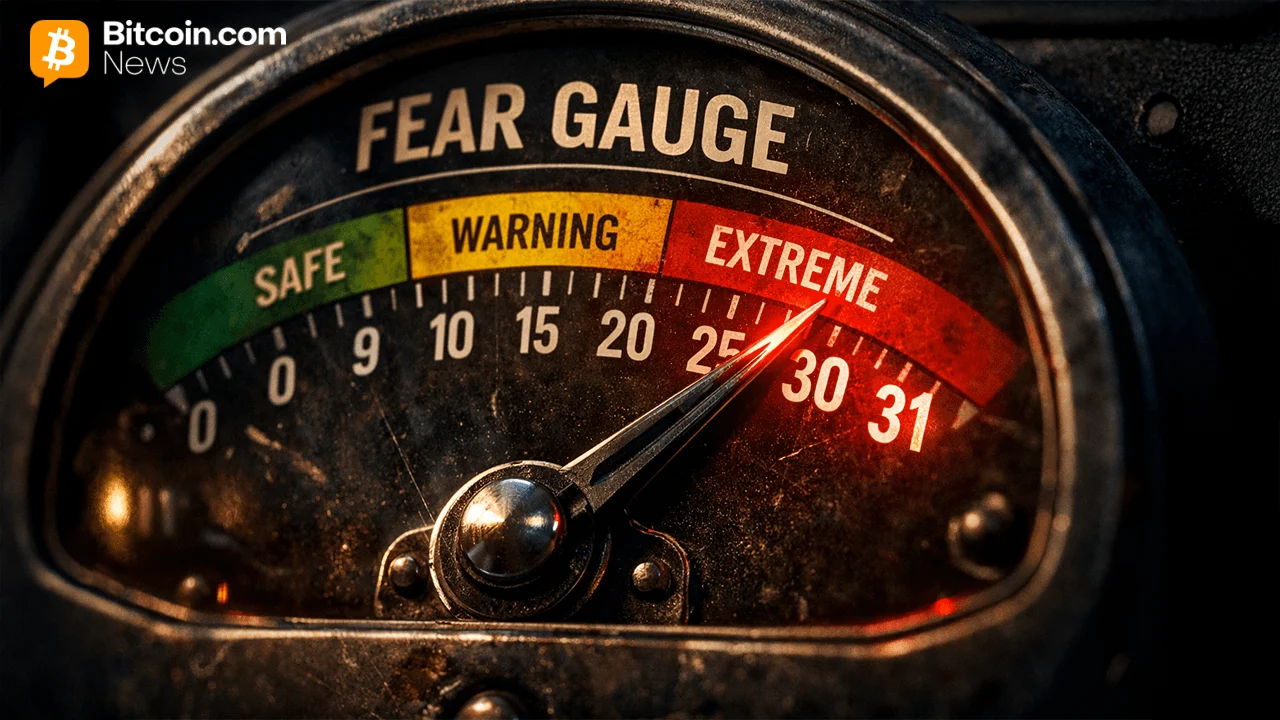
The recent surge in the Cboe Volatility Index, commonly known as the VIX, to a closing value of 31.05 marks its highest level since 2025. The VIX is a critical measure that reflects the expected volatility in the S&P 500 over the next 30 days, with readings above 30 indicating that traders foresee considerable fluctuations in the stock market. This spike, which amounts to an increase of 3.61 points during the session, highlights ongoing concerns in the financial landscape, particularly due to geopolitical tensions and economic uncertainties. Notably, the VIX has closed above 25 for four consecutive weeks, the longest such streak since 2022, indicating sustained market unease.
Factors Driving Elevated Volatility
The current elevated VIX is primarily driven by ongoing conflicts in the Middle East, particularly the military actions involving the U.S. and Israel against Iran. These developments, which escalated in early March 2026, have raised concerns about oil supply disruptions in the Strait of Hormuz—a crucial passage for approximately 20% of the world’s oil supply. The consequent anxiety is reflected in the options markets, where there is heightened open interest and skew. Traders are actively seeking downside hedges, indicating a cautious sentiment as they prepare for potential market turbulence in April.
Impact on Oil Prices and Inflation
Reflecting the rising tensions, crude oil prices have remained volatile, oscillating between $99 and $115 per barrel, down from previous highs over $120. The recent shipping patterns reveal a notable decrease in transit activity through the Strait of Hormuz, further fueling supply concerns. Consequently, the upward pressure on energy costs is becoming increasingly apparent, leading to a ripple effect on transportation, production, and consumer prices within the U.S. Inflation data, influenced by higher energy costs, complicates the Federal Reserve’s monetary policy, requiring them to navigate carefully amidst the shifting economic landscape. As a result, market expectations have shifted, with fewer rate cuts anticipated for 2026.
Federal Reserve’s Dilemma and Market Outlook
In light of the inflationary pressures linked to oil prices, the Federal Reserve faces a complex challenge. Higher energy costs may necessitate maintaining elevated interest rates longer than previously anticipated, creating a mixed environment for investments, especially gold. Historically, higher rates lead to increased opportunity costs for holding non-yielding assets like gold, though the current market sentiment leans towards safe-haven demand. As of late March, gold prices fluctuated between $4,400 and $4,600, inching closer to Citigroup’s $5,000 target set earlier this year, driven by persistent demand in uncertain times.
Precious Metals and Investor Sentiment
While gold shows resilience amid geopolitical pressures and inflation worries, silver has not fared as well. After peaking earlier in the year near $90 to $100 per ounce, it has retreated to approximately $69.82, influenced by industrial demand sensitivity and profit-taking measures. Citigroup’s forecast for silver reaching $100 by the end of Q1 did not come to fruition, highlighting the complexities that define the precious metals market. Nevertheless, the current risk-off sentiment continues to support gold’s position, suggesting that both precious metals and volatility hedges remain sought after in the current environment.
A Cautious Stance Going Forward
Looking ahead, JPMorgan characterizes its outlook as “wait-and-see” regarding the evolving economic landscape. With inflation currently at 2.4%, slightly above the Federal Reserve’s target of 2%, and a stable labor market, the new incoming Fed Chair, Kevin Warsh, is expected to influence policy through his communication and signals. Fixed-income markets are already responding, evidenced by a flatter yield curve that indicates expectations for an extended period of high rates. Although strategic petroleum reserve releases have provided temporary relief for oil prices, the underlying supply concerns persist.
Conclusion: Monitoring Market Conditions
As geopolitical tensions continue, investors are closely monitoring oil flow data, Federal Reserve communications, and developments regarding the Strait of Hormuz to gauge potential market impacts. Historically, VIX spikes above 30 can indicate short-lived volatility if the triggering events resolve promptly. However, a prolonged conflict or sustained disruptions could lead to downward revisions in growth forecasts for 2026. In this complex environment, the demand for precious metals and volatility hedges is expected to remain strong as the market navigates the uncertainties ahead.
FAQ
What does a VIX reading above 30 mean?
A VIX above 30 signals that options traders expect significant volatility in the S&P 500 over the next 30 days.
Why is gold near $4,500 in March 2026?
Gold’s price is supported by safe-haven demand driven by geopolitical conflicts, oil price pressures, and inflation concerns.
Will the Federal Reserve cut rates in 2026?
Current projections by JPMorgan indicate only one 0.25 percentage point rate cut by year-end, although inflation stemming from oil prices could delay this move.
How does the Strait of Hormuz affect U.S. inflation?
Disruptions in the Strait of Hormuz, through which about 20% of global oil supply flows, lead to higher energy prices, significantly impacting U.S. consumer prices.