




Bitcoin Stabilizes Amid Key Monetary Policy Decisions
As Bitcoin hovers in the mid-$70,000 range, traders are bracing for a significant period of global monetary policy decisions, revealing early stabilization signals in the crypto markets. After a recent dip to around $66,000, Bitcoin has seen a rebound, edging back toward $76,000. This recovery is supported by consistent spot buying and renewed institutional inflows. Market data indicates that the aggressive selling pressure from earlier in the quarter is easing, even though investor conviction remains measured. Glassnode’s analysis shows a positive shift in momentum and spot demand, pointing to a return of buy-side pressure combined with accelerated ETF inflows.
Institutional Demand and Its Effects
Institutional demand for Bitcoin is resurging as a key market driver. Spot Bitcoin ETFs have recorded sustained inflows, including $202 million on March 16, as reported by SoSoValue data, notably led by BlackRock’s IBIT. This influx is a marked change after an extended period of outflows and suggests that corporate buyers are actively bolstering their positions. This steady institutional bid is providing stability in the midst of a volatile macroeconomic landscape characterized by risk events such as the Federal Reserve’s FOMC meeting and monetary policy adjustments from the Bank of Japan, European Central Bank, and the Bank of England. Furthermore, Bitcoin has shown initial signs of decoupling from traditional equities, maintaining its strength amidst geopolitical concerns and inflation pressures that are impacting conventional markets.
The Impact of Macroeconomic Conditions
Analysts have noted that Bitcoin’s performance during these macroeconomic uncertainties mirrors previous tightening cycles where it found support ahead of risk assets. According to Bitfinex analysts, Bitcoin appears to be establishing stability, resting in the low-$70,000 range despite external shocks. They highlight the resistance range between $74,000 and $76,000, which may present challenges unless the Federal Reserve indicates a shift in policy. Lacie Zhang from Bitget Wallet emphasizes that central banks are unlikely to change course abruptly, suggesting that tight liquidity conditions will not hinder institutional accumulation. She posits that when rate cuts eventually occur, they will likely rejuvenate liquidity and foster increased risk appetite, potentially channeling significant capital inflows into crypto markets.
Cross-Asset Dynamics Evolve
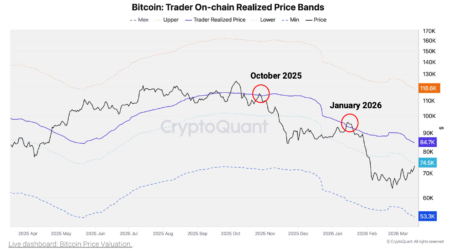
Recent trends indicate that Bitcoin is currently outperforming gold, marking a significant shift in cross-asset dynamics. The correlation between the two assets has turned positive after a period of divergence, with options markets signaling underpricing of volatility relative to historical patterns. Moreover, structural indicators suggest that accumulation is on the rise. Metrics such as declining exchange balances, increasing whale holdings, and the re-emergence of long-term investors highlight a potential bullish environment. Indicators like realized prices and Market Value to Realized Value (MVRV) suggest that Bitcoin is nearing a late-cycle phase, historically associated with renewed buying interest.
Improving Derivative Conditions
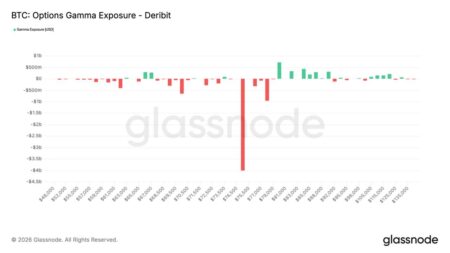
The conditions in Bitcoin’s derivatives markets have also shown notable improvement. Open interest is escalating without excessive leverage, which bodes well for future price performance. Implied volatility has dipped below realized levels, a historical setup that often precedes stronger returns. However, market participants remain cautious regarding macroeconomic uncertainties. The Federal Reserve is widely anticipated to hold interest rates steady, but any future guidance could significantly influence market sentiment, especially with soaring energy prices contributing to inflation expectations. Historically, Bitcoin has struggled following Fed meetings, but the current situation presents a different landscape. With leverage considerably reduced earlier this year, a policy-driven sell-off may prompt renewed buying rather than a deeper market pullback.
Future Outlook for Institutional Participation
While institutional forecasts remain divided, there are optimistic long-term projections for Bitcoin. Citigroup has recently reduced its 12-month targets for Bitcoin and Ether due to delays in U.S. crypto legislation. However, many industry executives continue to draw parallels between Bitcoin and gold, suggesting that Bitcoin could eventually reach valuations of $1 million. As the market evolves, the growing institutional presence and macroeconomic developments will likely influence Bitcoin’s trajectory, with a notable focus on how central banks respond to ongoing geopolitical tensions. Continuous observation of market sentiment, regulatory developments, and institutional behaviors will be imperative as Bitcoin seeks to solidify its position in the global financial landscape.