



Escalating Tensions: Trump’s Military Actions and the Impact on Bitcoin
As geopolitical tensions rise, U.S. President Donald Trump has made headlines by signaling an escalation in military actions against Iran. Announcing potential plans to target previously untouched regions and groups, Trump’s recent statements suggest a commitment to a more aggressive posture as the U.S.-Iran conflict enters its second week. This shift not only has implications for international relations but also for financial markets, particularly cryptocurrency, as Bitcoin experiences selling pressure amidst the ongoing crisis.
Trump’s Hardline Stance on Iran
In a bold statement shared on Truth Social, President Trump asserted the U.S. will "hit Iran very hard" in what appears to be the next phase of military engagement. He emphasized that areas and groups not previously targeted are now under serious consideration for potential destruction due to "Iran’s bad behavior." Such declarations pivot the U.S. approach from defensive to offensive, raising the stakes in an already fraught situation. Moreover, Trump claimed that Iran’s decision to halt attacks on Gulf states—conditional on U.S. military actions from those nations—was a direct result of pressure from U.S. and Israeli forces.
Unlikely Diplomatic Solutions
The prospect of negotiations appears dim as Iranian President Masoud Pezeshkian asserted that Iran would not capitulate, especially considering Trump’s insistence on unconditional surrender as a prerequisite for any deal. This enduring refusal on both sides compounds the conflict, suggesting that military escalation may overshadow diplomatic routes. As a result, observers and analysts are preparing for a prolonged engagement, with implications for both global security and economic stability.
Crypto Markets Feeling the Pinch
Amidst the U.S.-Iran conflict, cryptocurrency traders are adjusting their expectations, bracing for a war that shows no signs of de-escalating. Polymarket data indicates only a 25% likelihood of a ceasefire by the end of the month, fostering an atmosphere of uncertainty in the financial markets. As the conflict disrupts traditional sectors, the cryptocurrency domain—particularly Bitcoin—is grappling with the fallout as investors weigh risks and volatility.
Oil Prices and Economic Woes
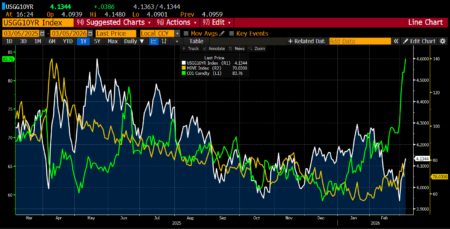
Oil prices have spiked, surpassing $90 per barrel—a notable first since the beginning of 2023. This increase in energy costs raises concerns about inflation, creating a ripple effect that negatively impacts risk assets, including cryptocurrencies. Analysts predict that oil prices may climb even higher, potentially breaching the $100 mark, as the conflict continues. Such developments can exacerbate market apprehensions and lay the groundwork for further declines in speculative assets like Bitcoin.
Bitcoin’s Recent Price Movements
In the face of escalating geopolitical tensions and rising oil prices, Bitcoin has encountered renewed selling pressure, primarily from short-term holders. Following a brief recovery that saw Bitcoin reach its one-month peak of $74,000, many investors are quick to take profits, contributing to its subsequent downturn to around $68,000. Short-term holders have offloaded over 27,000 BTC to exchanges, marking significant trading activity amid the turmoil.
The Future Landscape for Crypto
Despite Bitcoin’s recent fluctuations, the only short-term holders who can capitalize on profits did so during the month when prices were lower—indicating a precarious environment for prospective investors. With renowned analysis tools like CryptoQuant and Santiment highlighting significant selling from both short-term holders and whales, the outlook for Bitcoin remains uncertain. As geopolitical dynamics shift and oil prices continue to exert pressure on the market, the cryptocurrency landscape could face turbulent times ahead.
In summary, as President Trump gears up for heightened military engagement with Iran, both geopolitical tensions and market instability are poised to affect various asset classes. Traders and investors must navigate this challenging landscape, keeping a watchful eye on price movements and the broader economic ramifications of the ongoing conflict. With Bitcoin now seemingly at the mercy of external pressures, its future trajectory will likely hinge on developments in the U.S.-Iran situation and the global economic outlook.