




Understanding the Impact of U.S. Jobs Data on Bitcoin Prices
Recent U.S. jobs data unexpectedly exceeded market expectations, showcasing a complex interaction between employment figures and cryptocurrency prices, particularly Bitcoin (BTC). The release of the Bureau of Labor Statistics (BLS) data revealed that the U.S. added 64,000 jobs in November, surpassing expectations, which estimated only 50,000 new jobs. This development tends to indicate a strengthening labor market, but the concurrent rise in the unemployment rate to 4.6%, the highest since September 2021, introduced mixed signals that have kept market participants guessing.
Analyzing Nonfarm Payrolls and Their Implications
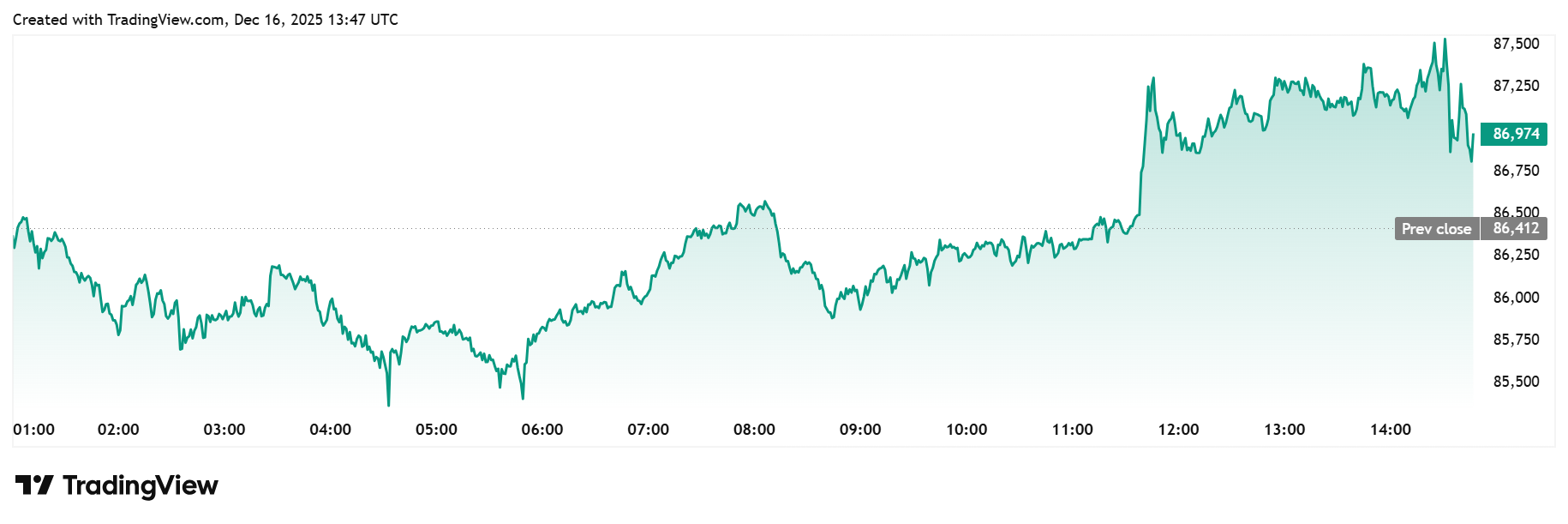
The job growth reported for November is critical, especially following a loss of 105,000 jobs in October, which was itself a drop from the 119,000 jobs added in September. While a higher-than-expected addition of jobs can be viewed positively, it often signifies an increased likelihood of monetary tightening, which is generally a bearish signal for Bitcoin and the broader cryptocurrency marketplace. As traders eagerly assess these statistics, Bitcoin initially rose above $87,000, only to retreat to approximately $86,800 shortly afterward.
The Role of Unemployment Rates
The unemployment rate’s rise to 4.6% introduces another layer of complexity. While a robust job market typically curtails inflation—which could influence the Federal Reserve’s decisions surrounding interest rates—an increasing unemployment rate suggests underlying weaknesses in the labor market. This duality in the jobs report makes market reactions particularly volatile as traders assess the implications for monetary policy.
Fed Interest Rates and Market Sentiment
Adding to the complexity is the recent pronouncement from the Federal Reserve regarding interest rates. Following the latest FOMC meeting, Fed Chair Jerome Powell hinted that while they are currently maintaining rates, future cuts may not be on the immediate horizon. This indicates a delicate balancing act faced by the Fed as they weigh employment data against inflation metrics—essentially, deciding whether to prioritize labor market recovery or tackle rising prices. The current jobs data adds a layer of uncertainty into this equation.
The Road Ahead: Focus on CPI Data
As the market digests these mixed signals, all eyes now turn toward the Consumer Price Index (CPI) data scheduled for release on December 18. This impending report could shed light on the inflation landscape and provide much-needed clarity for the Fed in the lead-up to their January FOMC meeting. With discussions continuing about the Fed’s focus between employment and inflation, the CPI report will be pivotal in shaping future monetary policy, critical for Bitcoin and the entire crypto ecosystem.
Conclusion: Navigating the Uncertain Waters Ahead
Ultimately, the U.S. jobs data encapsulates a pivotal moment in economic indicators that will dictate near-term market movements, including for Bitcoin. As the market reacts to the intertwined narratives of job growth and unemployment, traders remain on high alert, adapting their strategies to both labor market conditions and potential shifts in monetary policy. For investors in cryptocurrencies, understanding these economic metrics is essential to navigate the fluctuating landscape. As we move toward critical data releases in the coming weeks, keeping a close watch on both jobs and inflation statistics will be key to predicting Bitcoin’s next moves.