




BlackRock Transfers Bitcoin and Ethereum to Coinbase Amid Market Turmoil
In a significant moment for the cryptocurrency market, BlackRock, the world’s largest asset manager, has moved notable quantities of Bitcoin (BTC) and Ethereum (ETH) to Coinbase. This transaction, which transferred 1,134 BTC valued at approximately $101 million and 7,255 ETH at an estimated $22 million, comes on the heels of substantial outflows from BTC and ETH exchange-traded funds (ETFs) recorded on December 31. This maneuver highlights the current market volatility and reflects broader concerns surrounding institutional investment in digital assets.
BlackRock’s Strategic Move Amid ETF Outflows
As reported by Arkham, the timing of BlackRock’s transfer is critical, occurring just after particular ETFs experienced outflows totaling $99.05 million for BTC and $21.5 million for ETH on the last day of 2023. On that day alone, Bitcoin ETFs reported a net outflow of approximately $348.10 million, while Ethereum ETFs recorded about $72.06 million. The transfer to Coinbase is perceived as a strategy to potentially offload some of these assets back into the market, perhaps anticipating continued selling pressure due to the ongoing outflows. This situation has caused a ripple effect, raising concerns among investors and analysts alike.
Market Reaction to Options Expiry
Compounding the volatility is the expiry of $2.2 billion in cryptocurrency options today, including BTC, ETH, XRP, and Solana. The options expiration introduces uncertainty, with a max pain point for Bitcoin options pegged at $88,000. Such dynamics typically lead to increased price fluctuation as traders adjust their positions and strategies ahead of these deadlines. Analysts express concern that the ongoing market conditions—heightened by large-scale selling—could result in Bitcoin slipping below crucial psychological thresholds, potentially challenging the $90,000 mark and even leading to a drop towards the $50,000 range.
Lack of Institutional Demand for Bitcoin
While the selling pressure from BlackRock and other institutions raises eyebrows, on-chain analytics from Glassnode indicates that institutional demand for Bitcoin and Ethereum has yet to recover. Their analysis shows that the 30-day simple moving average (SMA) of net flows for both cryptocurrencies remains negative, suggesting that institutional investors are still hesitant to re-enter the market. This lack of renewed demand is concerning, particularly for those hoping for a rebound in prices—an aspect that could deter retail investors from making significant moves.
Long-Term Holders Buck the Trend
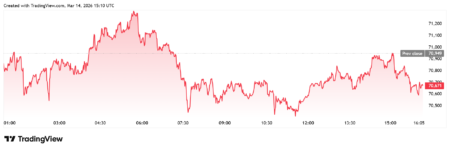
Despite the prevailing outflow trend, another perspective emerges: long-term holders of Bitcoin appear unfazed. According to market analysis, long-term BTC holders are not selling off their assets, even in light of BlackRock’s strategic withdrawals. This trend indicates a degree of confidence among existing holders, resisting the notion of panic selling. As of now, Bitcoin has achieved an intraday high of over $89,600, recovering from a low around $88,300. This resilience among long-term investors may serve as a stabilizing factor in an otherwise turbulent market.
Broader Market Impacts and Future Expectations
The recent movements have also contributed to a slight uptick in the overall cryptocurrency market, with total market capitalization surpassing $3 trillion. Some altcoins, such as PEPE, have even shown noteworthy gains, offering a glimmer of hope amid the broader downturn impacting major assets. However, the prevailing sentiment remains cautious as market participants await clearer signals of renewed institutional interest in Bitcoin and Ethereum. Without a significant influx of capital or a shift in sentiment, the potential for continued fluctuations and challenges in reclaiming foundational price levels like $90,000 remains looming.
In summary, as BlackRock transfers Bitcoin and Ethereum to Coinbase amid substantial ETF outflows and an impending $2.2 billion options expiry, the market sits on edge. The lack of institutional demand juxtaposed with the solidity of long-term holders provides a complex outlook. All eyes will remain on the market’s response in the coming weeks as traders and investors navigate the evolving landscape.