




Binance Surpasses CME as Leading Exchange for Bitcoin Futures: Implications and Trends
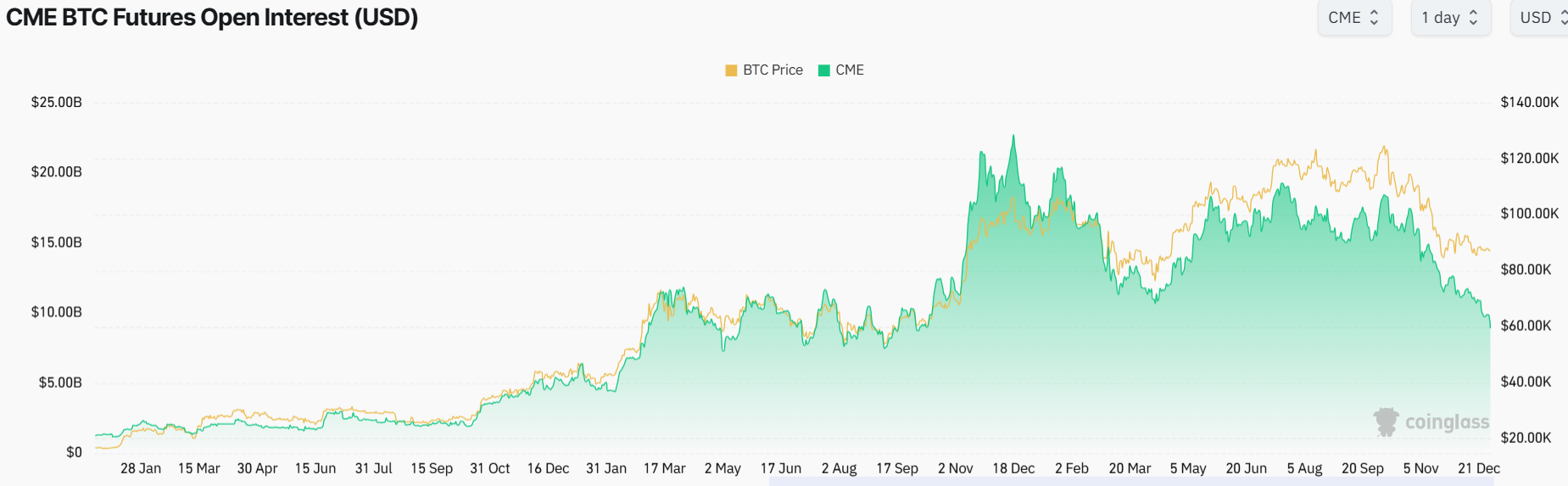
The cryptocurrency landscape has witnessed a significant shake-up as Binance has overtaken the CME Group to become the largest platform for Bitcoin futures open interest. This development highlights shifting dynamics in the trading environment, particularly amidst a backdrop of declining institutional interest. As per CoinGlass data, Binance’s open interest stands at approximately 129,080 BTC, valued at $11.28 billion, contrasting with CME’s 112,340 BTC open interest at $9.81 billion. This article examines the implications of this transition, the reasons behind it, and the current state of the Bitcoin market.
Binance’s Dominance Amid Institutional Decline
Binance’s ascent marks a pivotal moment in the Bitcoin trading space. CME Group, once the leader in Bitcoin futures open interest, has seen a significant decline, with its figures dipping below $10 billion for the first time since early 2024. This loss of position has been linked to broader trends in institutional trading, characterized by reduced profit margins from basis trades—where traders buy spot Bitcoin while concurrently selling futures. The declining overall profitability and the recent October market crash have further exacerbated the challenges faced by CME.
Institutional interest has diminished, casting a shadow over futures markets. As demand wanes, the trading strategies that previously thrived are now under scrutiny. This shift is particularly evident in the sharp decline in open interest on CME, which fell from around $17 billion to its recent values, representing a significant contraction in investor engagement.
Ongoing Outflows from Spot Bitcoin ETFs
Accompanying the change in market leadership is a troubling trend: persistent outflows from spot Bitcoin ETFs in the U.S. During recent trading sessions, these ETFs collectively experienced a net outflow of $19.3 million, marking the seventh consecutive day of withdrawals. BlackRock’s iShares Bitcoin ETF noted a $7.9 million sell-off, while Fidelity’s FBTC attracted $5.7 million in inflows—a stark reminder of the prevailing volatility.
These outflows suggest that institutional investors are increasingly becoming bearish on Bitcoin, leading to significant tax-loss harvesting tactics as the end of the tax year approaches. This trend reflects a cautious stance from large players in the market, indicating concerns about the immediate future of Bitcoin’s price and the overall market conditions.
Bitcoin Price Trends and Market Sentiment
As of now, Bitcoin trades around $87,200, reflecting a more than 2% decrease over the past 24 hours. Over this period, trading volume surged by 40%, signaling renewed interest among retail traders. The current trading zone has fluctuated between $86,717 and $90,299, showcasing the volatility inherent in the crypto markets. Analysts suggest that Bitcoin may be sliding toward the lower boundaries of regression trend indicators, which historically align with bear market territory.
Despite the uncertainty, the rise in trading volume implies that traders are actively participating, albeit with a mix of sentiment across the derivatives market. Data from CoinGlass indicates that the overall Bitcoin futures open interest decreased by more than 5%, with CME’s figures dropping by 9% while Binance saw a slight increase.
Factors Influencing Market Trends
The fluctuations in Bitcoin’s price and trading volumes can be largely attributed to various factors, including macroeconomic conditions, regulatory actions, and changes in participant sentiment. The decrease in institutional trading activity at CME correlates with a broader sentiment shift marked by concerns over profitability and overall market stability.
Moreover, the annualized basis rate—a key indicator of profitability for institutional investors—has plummeted from 15% to nearly 3%. This change reflects diminishing returns and is indicative of the heightened risk aversion that is particularly prevalent in bear market conditions.
Looking Ahead: What Does This Mean for Traders?
As Binance solidifies its dominance over CME in terms of Bitcoin futures, traders and market watchers should remain vigilant regarding upcoming trends and potential price movements. The current sentiment reflecting bearish predictions among institutional investors resonates with caution, shaping the trading dynamics for both retail and institutional entities.
Retail investors may increasingly lead market activity, especially amidst changes in open interest and unpredictable price swings. However, the relative stability of Binance’s platform could serve as an attractor for traders looking for better liquidity and flexibility in positioning.
Conclusion: A Transformative Period for Bitcoin Futures
The shift in Bitcoin futures open interest leadership from CME to Binance is emblematic of larger transformations within the cryptocurrency trading ecosystem. As institutional interest wanes and outflows from spot Bitcoin ETFs continue, traders are left to navigate a potentially volatile landscape. The current price movements, trading volumes, and market sentiment all point toward a period of intensive scrutiny and opportunity for the savvy investor.
Understanding these dynamics will be crucial as the market evolves and new trading strategies emerge. While Binance’s rise may challenge traditional perceptions of trading power in cryptocurrencies, the broader implications reflect the ongoing maturation of the crypto market—positioned at the crossroads of innovation and uncertainty.