




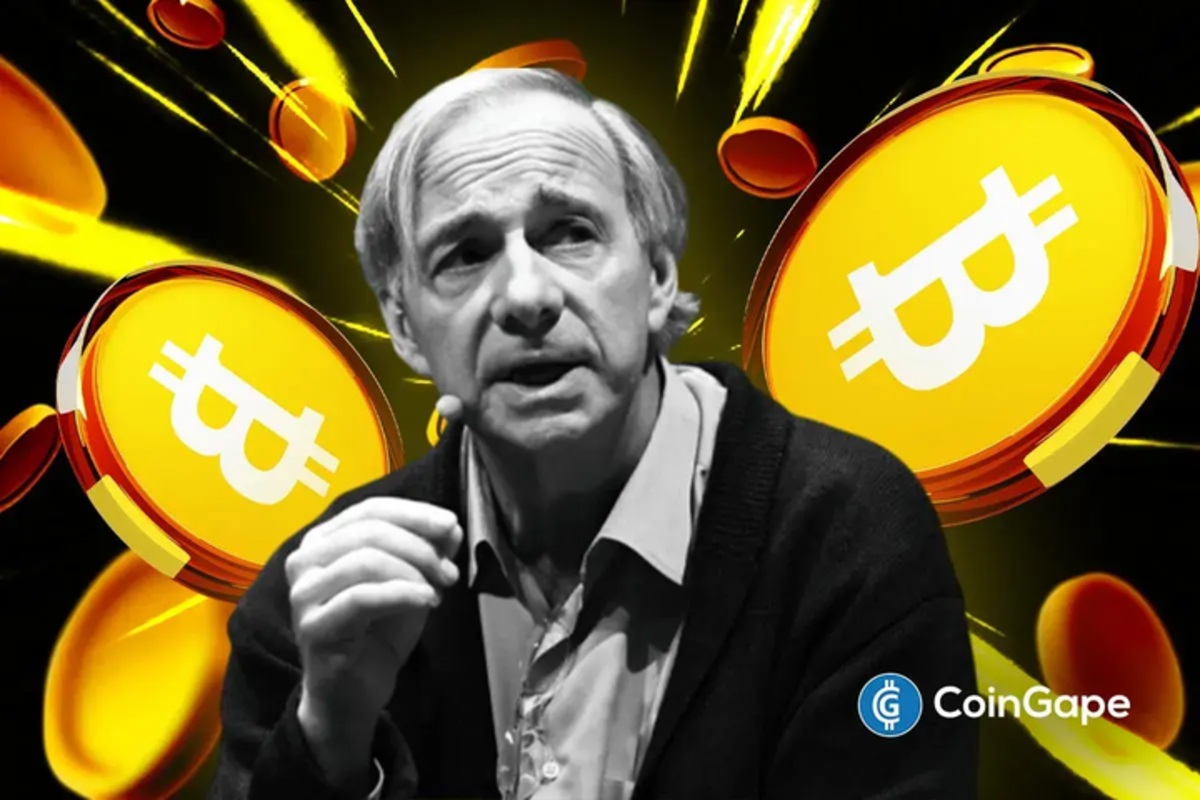
Ray Dalio’s Thoughts on Bitcoin vs. Gold: A Deep Dive Into Investment Strategies
Introduction to Bitcoin and Gold Comparison
Ray Dalio, the billionaire investor and founder of Bridgewater Associates, has made headlines yet again with his comments regarding Bitcoin’s comparison to gold. Despite the growing popularity of Bitcoin as a store of value, Dalio insists that it falls short in several critical areas. Recently, he stated during a podcast that investors should reconsider equating Bitcoin with gold, given that Bitcoin lacks central bank backing, does not guarantee privacy, and faces potential threats from quantum computing. This comes at a time when Bitcoin has seen considerable price fluctuations, underscoring the volatility and uncertainty in the cryptocurrency market.
Dalio’s Position on Bitcoin’s Limitations
In his critique, Dalio insists that gold remains unparalleled as a long-term asset due to its historical significance and inherent limitations. "There is only one gold," he emphasized, highlighting that it is the most established form of money. Dalio does hold Bitcoin, but it constitutes a mere 1% of his overall portfolio. This small allocation reflects his cautious approach to cryptocurrencies. He believes that for a store of value, an asset should possess physical limitations and historical resilience—qualities that gold inherently provides, unlike Bitcoin.
Market Dynamics: Bitcoin vs. Gold Performance
Interestingly, the market dynamics surrounding gold and Bitcoin have shown contrasting trends recently. While Dalio expressed skepticism about Bitcoin, the cryptocurrency was experiencing notable performance at the time of his comments. Bitcoin’s price dipped only marginally, a stark contrast to gold, which suffered a more significant drop. As geopolitical tensions escalated between the U.S. and Iran, one would expect gold to remain robust, yet it weakened, while Bitcoin appeared more resilient. This paradox raises questions about the reliability of gold as a safe haven compared to Bitcoin in times of crisis and market uncertainty.
The Risks of Quantum Computing
One of Dalio’s primary concerns about Bitcoin lies in the potential threat posed by the advancement of quantum computing. He has reiterated that the rapid development in this field could undermine Bitcoin’s security features, leading to vulnerabilities that could expose cryptocurrency holders to significant risks. Comparatively, some industry experts like Michael Saylor argue that these risks are overstated and not immediate, suggesting that any potential threats from quantum computing are still more than a decade away. Thus, the debate continues regarding the effective timeframe in which such technological advancements could impact Bitcoin adversely.
Privacy Issues and Regulatory Concerns
Another pivotal point in Dalio’s argument is Bitcoin’s lack of privacy. He raised concerns over the public nature of blockchain transactions, indicating that such transparency could make it easier for authorities to monitor and potentially manipulate transactions. In a world increasingly focused on data privacy and security, this characteristic places Bitcoin at a disadvantage compared to gold, which has long been utilized for discreet transactions. This issue of trust and privacy may pose a significant barrier for potential Bitcoin investors who are wary of surveillance and control over their financial activities.
Conclusion: The Future of Bitcoin and Gold Investments
In retrospect, Ray Dalio’s perspective on Bitcoin versus gold highlights the complexities of modern investing in light of evolving technologies and shifting market dynamics. While Bitcoin has gained traction as a digital asset, Dalio’s insights underscore the importance of considering historical context, security, and privacy when evaluating long-term investments. The ongoing dialogue between leading figures in finance will inevitably shape investor sentiment and strategies moving forward. For those considering entering the cryptocurrency space, it remains vital to weigh the potential risks against the opportunities, particularly in relation to established assets like gold. As we venture further into the future, the contrast between these two asset classes will likely continue to fuel debate among investors and analysts alike.