



US-Iran Conflict: How It Might Trigger a Bitcoin Rally
As tensions escalate in the US-Iran conflict, Brent crude oil prices have surged by nearly 20%. This geopolitical turmoil has caught the attention of financial experts, including BitMEX co-founder Arthur Hayes, who believes that increased oil prices could lead the US Federal Reserve to initiate money printing. This scenario, Hayes suggests, could set the stage for a significant rally in Bitcoin. This article delves into the interplay between geopolitical events, oil prices, and cryptocurrency market dynamics, offering insights for investors navigating these turbulent waters.
Rising Oil Prices and Economic Implications
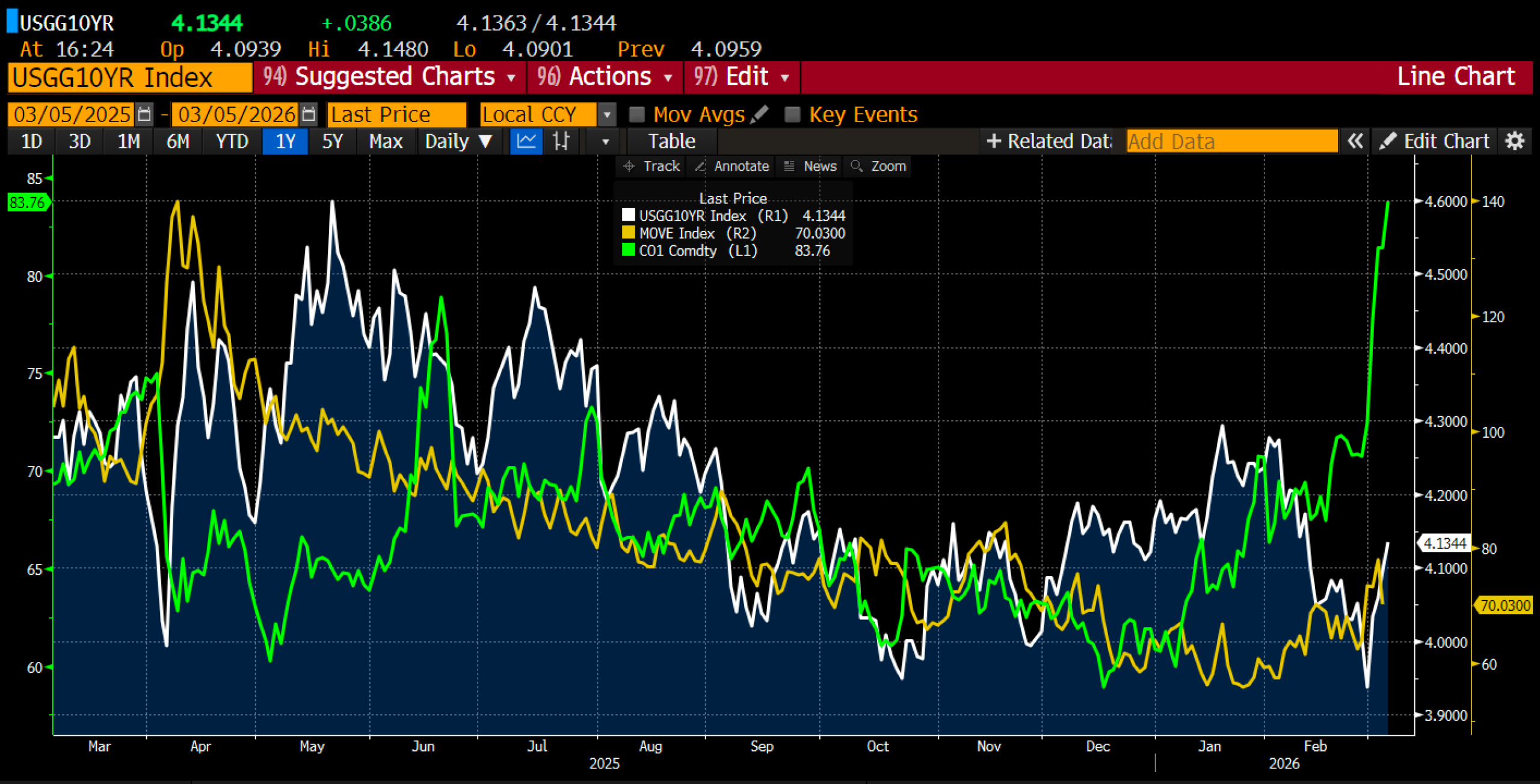
The ongoing conflict has resulted in fears of supply disruptions in the Middle East, directly impacting oil markets. On March 6, 2026, Hayes pointed out on X that the repercussions of rising oil prices extend beyond just inflation—10-year Treasury yields and the MOVE Index are also likely to rise. This pattern has historically forced the Federal Reserve to engage in money printing to cover war-related expenditures. A critical takeaway is that these economic pressures could serve as a bullish tailwind for Bitcoin and other risk assets, fostering a conducive environment for price increases.
The Role of the Federal Reserve
As President Donald Trump confirmed that the geopolitical situation in the Middle East would persist, the administration also hinted at measures to stabilize oil prices, including a 30-day waiver for India to purchase Russian oil. Despite these actions leading to a temporary dip in crude oil prices, the underlying fear remains. A sustained increase in oil prices can compel the Federal Reserve to implement a money printing bailout, which in the past has historically provided liquidity into the market—often benefiting Bitcoin. For investors, the connection between Federal Reserve actions and Bitcoin’s price trajectory is particularly salient, suggesting that external geopolitical factors play a significant role in cryptocurrency valuations.
Bitcoin’s Response to Economic Forces
When the Federal Reserve engages in money printing, market liquidity tends to soar, traditionally driving up the prices of risk assets including Bitcoin. As of now, Bitcoin, alongside the broader crypto market, has been sluggish, impacted by thin liquidity and bearish speculation. Hayes remains bullish, advising investors to look for concrete indicators of Federal Reserve rate cuts or balance sheet expansions before making significant investments in Bitcoin or altcoins. This cautious approach underscores the importance of understanding how macroeconomic trends can sway market sentiment.
Inflation Concerns and Market Sentiment
The current landscape is also clouded by rising inflation concerns, leading to fluctuating predictions regarding Federal Reserve rate cuts. The CME FedWatch Tool indicates potential rate cuts in September, but market speculation remains high. Investors are thus faced with a dual challenge: navigating the immediate geopolitical uncertainty while also keeping an eye on inflation trends and their potential impact on interest rates. As economic conditions evolve, the crypto community is continually assessing how these factors might influence the future of Bitcoin.
Technical Analysis: Key Support Levels for Bitcoin
Technical analysis plays a critical role in understanding Bitcoin’s price movements. Ali Martinez highlights that the $70,685 level serves as a crucial support cluster for Bitcoin. Maintaining support at this level is vital; if it holds, there could be relatively light supply between $72,000 and $81,000. In simpler terms, should buying momentum build, Bitcoin could experience a surge into the $75,000-$80,000 range in the short term. This insight illustrates the importance of monitoring technical indicators alongside macroeconomic and geopolitical developments.
Conclusion: Preparing for Uncertainty
As the US-Iran conflict unfolds, the implications for both crude oil prices and financial markets are significant. Arthur Hayes suggests that a potential money printing bailout by the Federal Reserve could create an ideal environment for a Bitcoin rally. Investors must remain vigilant, balancing their strategies between macroeconomic indicators, technical analysis, and geopolitical events. Ultimately, understanding these interconnections will be key for anyone looking to navigate the complexities of today’s cryptocurrency market effectively.