




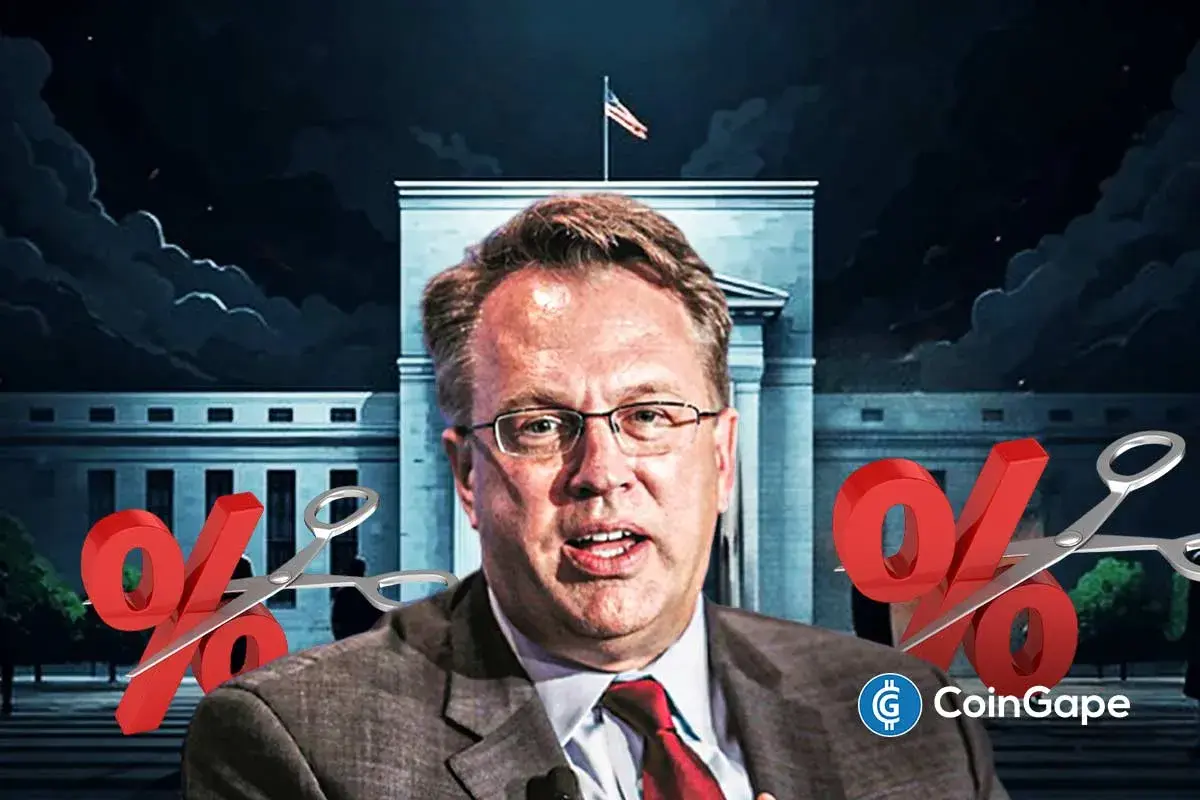
New York Fed President John Williams Signals Support for Steady Rates Amid Industry Speculation
In recent interviews and data releases, New York Federal Reserve President John Williams has expressed his support for holding interest rates steady following three cuts this year. With the Federal Open Market Committee (FOMC) discussing monetary policy, market participants, notably cryptocurrency traders, are adjusting their expectations, particularly regarding the potential for additional cuts at the upcoming January 2026 meeting. Williams emphasized that the recent rate cuts have adequately positioned the economy and indicated a cautious approach moving forward.
Williams’ Cautious Tone on Monetary Policy
During a recent CNBC interview, Williams stated that he does not feel an urgent need to take further action on monetary policy. He noted that he aims to see inflation decrease to the target of 2%, all while minimizing potential disruptions to the labor market, describing the balancing act involved in addressing both goals. His comments showcase a more measured outlook on the Fed’s monetary policy, especially after the committee’s most recent rate cut. Despite some members advocating for further easing due to signs of labor market softness, Williams maintains that the current environment calls for a more tempered approach.
Diverging Views Among Fed Officials
Debates regarding the Fed’s approach to monetary policy have intensified among officials, particularly in light of the central bank’s dual mandate to manage inflation while promoting maximum employment. While Williams leans towards stability, other Fed officials, including Governor Chris Waller, are calling for additional cuts. Waller has pointed out that indicators suggest the labor market’s softness may justify further reductions. However, some remain optimistic about the inflation outlook and believe that a pause in cuts could allow the economy to stabilize.
Job and Inflation Data Influences Fed Stance
This week’s job creation and inflation figures have also played a significant role in shaping Williams’ perspective. Notably, the data reported an unexpected rise in nonfarm payrolls and an uptick in the unemployment rate for November, suggesting a mixed labor market. Additionally, both the Consumer Price Index (CPI) and core CPI figures reported at 2.7% and 2.6%, respectively, fall short of market expectations. Williams indicated that these numbers reflect some distortions resulting from the government shutdown earlier in October but still trend towards meeting the Fed’s inflation goals, allowing for a pause in rate reductions.
Crypto Traders Adjusting Expectations
In light of the Fed’s current stance, crypto traders are betting against another rate cut at the January 28 meeting. According to Polymarket data, there’s a 77% probability that the Fed will maintain its current interest rates, with only a 21% likelihood of a 25 basis points cut. Similarly, data from the CME FedWatch Tool shows a 73% probability that rates will remain steady after the meeting, indicating a consensus among many traders that further cuts may not be imminent.
Higher Probabilities of Multiple Cuts in 2026
Interestingly, while current projections lean towards stabilization, traders are anticipating more cuts than the Fed’s median projection might suggest for 2026. Current predictions establish a 22% probability for two cuts next year and a further 19% chance for three cuts, reflecting market sentiment that aims to capture potential shifts in the Fed’s monetary policies as it navigates a turbulent economic landscape.
Conclusion: The Path Ahead for the Federal Reserve
As the Federal Reserve navigates the economic complexities of inflation and the labor market, John Williams’ recent remarks highlight a preference for maintaining current interest rates. The mixed data on jobs and inflation further complicate the outlook, prompting varied interpretations among Fed officials. While crypto traders are largely betting against additional cuts in the near term, they are keenly aware of the potential for a more aggressive easing cycle in the coming year. As we approach the FOMC meetings of 2026, the interplay between economic data, monetary policy, and market expectations will remain at the forefront of discussions within the financial community.