



Ethereum vs. Bitcoin: A Comparative Analysis of User Participation and Market Confidence
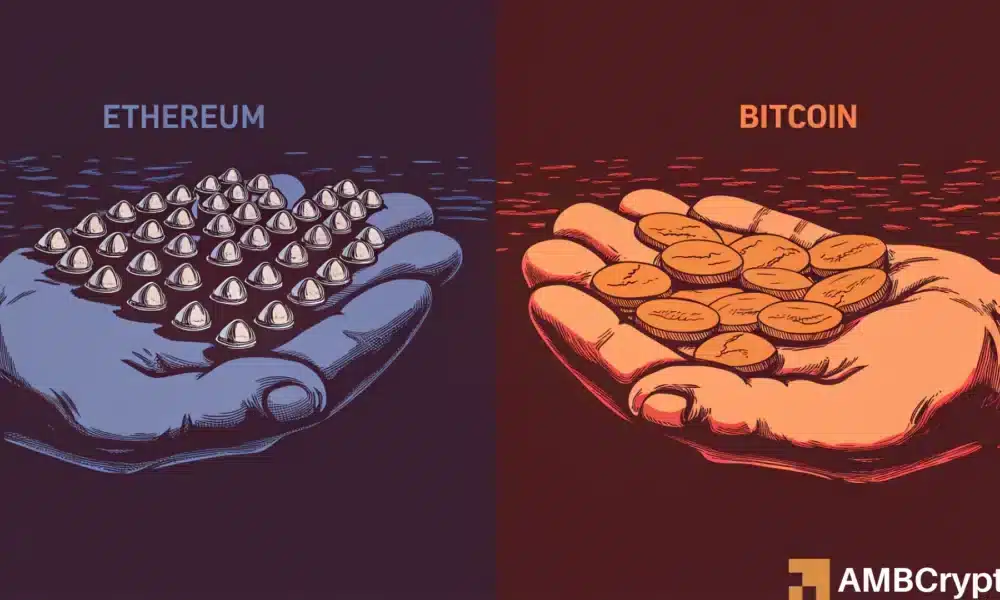
As cryptocurrency continues to evolve, the dynamics between major players like Ethereum (ETH) and Bitcoin (BTC) provide key insights into market trends and user engagement. This article delves into the contrasting landscapes of Ethereum’s burgeoning user base and Bitcoin’s tightening coin supply, ultimately reflecting on their implications for investors and the broader crypto market.
Ethereum’s Growing User Base
Ethereum has recently reported an impressive 167.96 million non-empty wallets, nearly three times the 57.62 million reported by Bitcoin. This statistic illuminates Ethereum’s widespread adoption and suggests that it is being actively utilized by a broader range of users. The increase in new wallets signifies that new participants are entering the Ethereum ecosystem, even amidst fluctuating market prices. Recent data indicates that wallet creation surged in December, with approximately 200,000 new ETH wallets added on significant dates.
This remarkable growth underscores Ethereum’s appeal beyond just a store of value; it suggests robust participation across various decentralized applications (dApps), yielding a more engaged user community. The increasing number of active endpoints on the Ethereum network indicates a sustained interest that could have substantial long-term implications for its valuation.
Bitcoin’s Controlled Supply Dynamics
In contrast, Bitcoin showcases a different behavior in market dynamics. Analysis from Glassnode reveals a gradual decline in BTC held on exchanges—from approximately 2.98 million in mid-November to around 2.94 million by mid-December. This notable reduction suggests that Bitcoin holders are not inclined to sell, reflecting a sense of confidence in the asset’s stability. Bitcoin’s diminishing exchange balances indicate that many investors are choosing to hold rather than trade quickly, which can result in lower immediate selling pressure.
This phenomenon positions Bitcoin more as a long-term store of value, catering to investors prioritizing security and confidence rather than short-lived gains. By holding Bitcoin off exchanges, investors may be signaling their belief in the cryptocurrency’s future potential, thereby reinforcing its status as the "digital gold" of the crypto space.
The ETH/BTC Market Dynamics
The ETH/BTC trading pair provides a fascinating lens through which to view the relationship between these two titans. Despite Ethereum’s growing user participation and increased wallet counts, it has struggled to outperform Bitcoin in relative terms. Recent attempts at a short breakout for ETH in early December failed to sustain traction, resulting in shallow recoveries that further highlight Bitcoin’s robust market presence.
Investors appear more inclined to favor Bitcoin during uncertain market conditions; its perceived stability, enhanced by the dwindling exchange supply, plays a crucial role in attracting capital. Ethereum’s temporary vulnerabilities to market volatility may dissuade long-term investors seeking stability, which can be a critical factor when making investment decisions.
Implications for Investors
Understanding the contrasting characteristics of Ethereum and Bitcoin can empower investors in their decision-making processes. For those who prioritize user engagement and growth potential, Ethereum presents an attractive opportunity due to its expanding ecosystem and active user base. Conversely, investors seeking a stable asset less affected by short-term volatility may lean towards Bitcoin, particularly in times of market unpredictability.
The ongoing trends showcase the differing philosophies and approaches inherent in these two cryptocurrencies. As Ethereum continues to attract new users, it is essential to evaluate how these engagements translate into financial performance over time, particularly in relation to Bitcoin’s historical stability and established reputation.
Future Perspectives
As we move forward, the landscape for both Ethereum and Bitcoin will likely be shaped by evolving market conditions, technological advancements, and regulatory developments. Ethereum’s burgeoning decentralized finance (DeFi) sector and the potential for scaling solutions such as Ethereum 2.0 could play pivotal roles in its future adoption and valuation. Meanwhile, Bitcoin’s role as a digital asset and store of value will continue to be reinforced by its declining supply on exchanges.
For investors, the challenge lies in navigating this complex environment while recognizing the unique attributes of each cryptocurrency. By combining insights from user participation with an understanding of supply dynamics, investors can make more informed choices that align with their risk appetites and long-term financial goals.
Conclusion
The contrasting narratives of Ethereum and Bitcoin offer valuable insights into the current cryptocurrency market landscape. While Ethereum champions user participation with a burgeoning wallet count, Bitcoin’s tightening supply suggests a robust foundation of confidence among holders. As the crypto ecosystem continues to evolve, the relationship between these two assets will remain a focal point for investors seeking to understand market trends and make informed decisions. Until Ethereum demonstrates sustained momentum relative to Bitcoin, the latter may be favored as the preferred asset in periods of uncertainty.