


Title: Trump’s Criticism of Fed Chair Jerome Powell: The Impact on Interest Rates and Crypto Markets
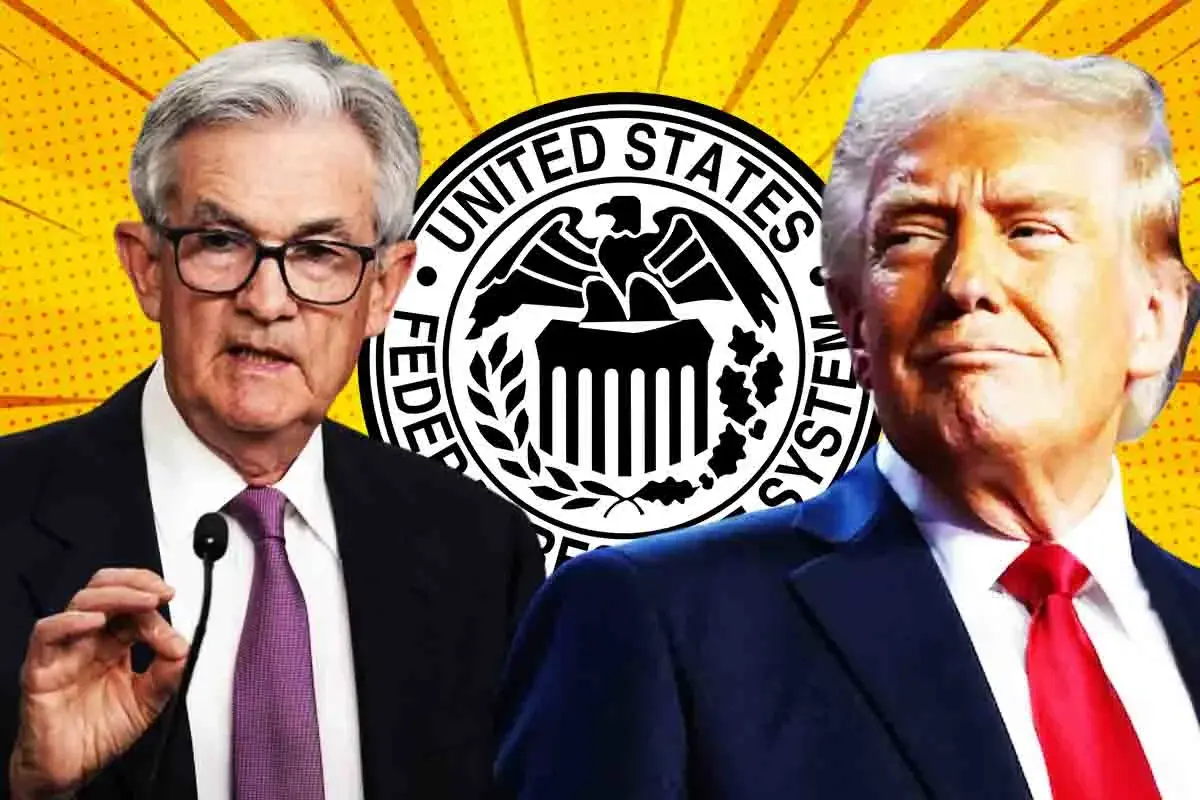
In recent weeks, former US President Donald Trump has vocally attacked Federal Reserve Chair Jerome Powell regarding his reluctance to cut interest rates. In a pointed Truth Social post, Trump branded Powell as “too late Powell,” expressing frustration that the Fed is hesitant to respond to rising calls for rate reductions. As economic pressures mount, Trump’s remarks highlight the urgency many feel regarding the need for rate cuts to stimulate economic growth.
Trump’s criticism comes amid widespread consensus in financial circles that the Federal Reserve should act swiftly to lower interest rates. His accusations aren’t merely a political ploy; they reflect the frustrations of numerous investors and economists who believe that keeping rates high could hamper economic recovery. "The consensus of almost everybody is that the Fed should cut rates sooner, rather than later," Trump stated, warning that Powell risked missing an opportunity to bolster the economy. This sentiment is echoed across various sectors that rely on accessible credit to fuel growth.
At the most recent Federal Open Market Committee (FOMC) meeting in early May, Powell chose to maintain interest rates in the range of 4.25% to 4%, which raised eyebrows among market analysts. This decision marked the third consecutive month that the Fed opted not to alter rates, prompting questions about Powell’s strategy. Many investors were left surprised, as expectations had been building for a rate cut, particularly as economic indicators showed signs of improvement. Powell’s focus on persistent inflation and trade tensions, particularly related to tariffs implemented during Trump’s administration, have been cited as reasons for his cautious approach.
Despite Powell’s insistence that inflation metrics are not improving at the hoped-for pace, emerging data presents a more optimistic picture. Newly released Producer Price Index (PPI) data from the US Bureau of Labor Statistics indicates inflation rates falling to 2.4%, signaling a potential cooling in price pressures. These developments have left investors and economists puzzled about the Fed’s strategy, especially amid fluctuating inflation indicators. Could Powell’s steadfastness begin to weaken the prospects for timely economic recovery?
The implications of Powell’s interest rate decisions extend beyond traditional markets; the cryptocurrency space is particularly sensitive to changes in monetary policy. Typically, lower interest rates tend to increase liquidity, leading to higher investments in digital assets. Given Trump’s mounting critique of Powell and the Fed’s inaction, a shift toward rate cuts could ignite a significant rally in cryptocurrency prices, presenting both risks and opportunities for investors. The interplay between traditional financial policies and the burgeoning crypto sector raises critical questions about market dynamics and future investment strategies.
As the debate continues, the eyes of the financial world remain focused on Powell and the Federal Reserve’s next moves. Will he heed the growing calls for rate reductions, or will he maintain his course? The decision carries profound implications not only for the wider economy but also for the burgeoning cryptocurrency market that is increasingly interlinked with traditional financial policies. With Trump amplifying calls for rate cuts, market participants await Powell’s next directive with bated breath, knowing any announcement could send ripples through various asset classes.
As we analyze this ongoing saga involving Trump and the Fed Chair, it is essential to consider the broader economic landscape and its impact on investment strategies. Regardless of Powell’s eventual decision, the tension between fiscal policy, market predictions, and emerging technologies will continue to shape investor behavior and market performance in the months to come. Stay informed, as the dynamics between political pressures and economic strategies evolve, influencing both traditional and digital investment avenues in unprecedented ways.