




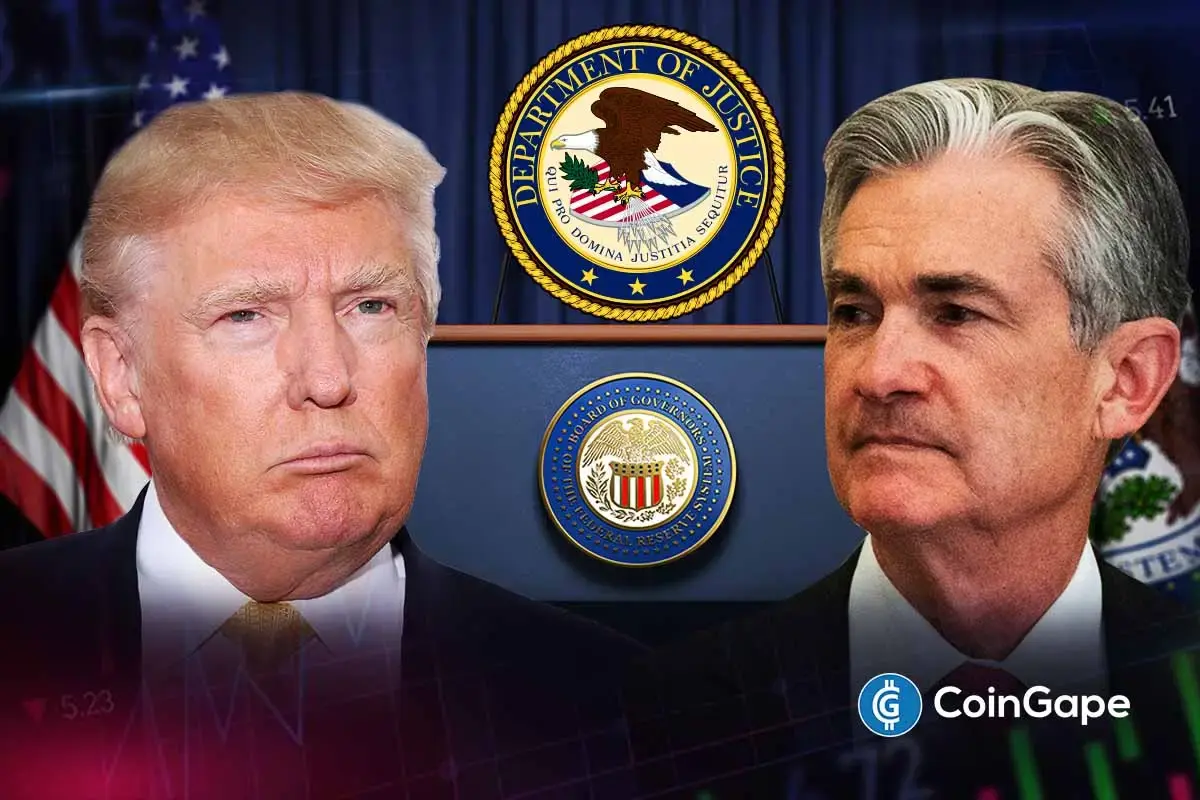
Federal Reserve Chair Jerome Powell’s Legal Troubles and Market Reactions: An Analysis
In a notable turn of events, Federal Reserve Chair Jerome Powell has found himself at the center of a Department of Justice (DOJ) investigation regarding his congressional testimony related to renovation costs. Despite this serious development, market speculators, particularly within the cryptocurrency space, are betting against the possibility of a criminal indictment against him. This situation is further complicated by ongoing pressure from U.S. President Donald Trump, who has been vocal in his demand for lower interest rates from the Federal Reserve.
Market Speculations and Polling Data
Recent data from Polymarket indicates that crypto traders believe there is only a 12% chance that the DOJ will charge Powell before June 30, coinciding with the end of his current term. This low probability reflects the sentiments of traders, who have seemingly downplayed the risks surrounding Powell’s potential legal troubles. The bets on Polymarket highlight a willingness among traders to diverge from mainstream narratives, suggesting confidence in Powell’s ability to weather this storm amid an ongoing investigation that could have significant implications for his leadership.
Details of the DOJ Investigation
Reports have emerged that the DOJ is investigating whether Powell committed perjury during his testimony before the Senate Banking Committee. This inquiry follows a criminal referral made months earlier by Rep. Anna Paulina Luna, who alleged that Powell lied under oath. The focus of the investigation adds a layer of complexity to his role and responsibilities as the head of the Federal Reserve, stirring concerns about accountability within the central bank, especially as financial markets react to political influences.
Trump’s Criticism and Ongoing Pressure
The current investigation and its timing may not be coincidental, as President Trump continues to criticize Powell’s management of monetary policy. Trump has made it clear that he seeks dramatic cuts in interest rates and has even considered legal action against Powell regarding renovation costs tied to the Federal Reserve. In a recent NBC News interview, Trump stated he was unaware of the ongoing DOJ investigation while reiterating his belief that Powell was not performing satisfactorily in his role, thus intensifying scrutiny over the Fed chair’s future.
Political Motivations Behind the Investigation
In a statement concerning the DOJ probe, Powell has suggested that the investigation is politically motivated. He indicated that the subpoenas served to the Federal Reserve were not primarily about the renovation project or his testimonies but rather targeted the Fed’s independence in setting interest rates. Powell’s assertion underlines the critical debate of whether monetary policy should remain insulated from political pressures, emphasizing the Fed’s role in making decisions based on what is best for the economy versus succumbing to presidential influence.
The Broader Implications for Monetary Policy
As this legal drama unfolds, one cannot overlook the implications for U.S. monetary policy. The Fed is set to convene for its January meeting, during which it is likely to maintain current interest rates, despite calls from Trump and his supporters for aggressive cuts. Thus, Powell’s ongoing commitment to upholding the integrity of the Federal Reserve’s decision-making process comes at a crucial time, raising questions about the future trajectory of U.S. monetary policy and its relationship with political authority.
Conclusion: Navigating Uncertainty
Jerome Powell’s situation encapsulates a pivotal intersection of politics, finance, and governance. As the DOJ investigation proceeds, both market participants and political actors will be watching closely to see how Powell navigates these challenges. For now, the market’s low probability assigned to an indictment suggests a belief in Powell’s resilience. The Federal Reserve’s broader credibility and independence may ultimately hinge on how this investigation unfolds, signaling to both domestic and international stakeholders the importance of a central bank that can function free from partisan pressures. Ultimately, how this saga resolves will likely have enduring implications for the integrity of U.S. monetary policy.