




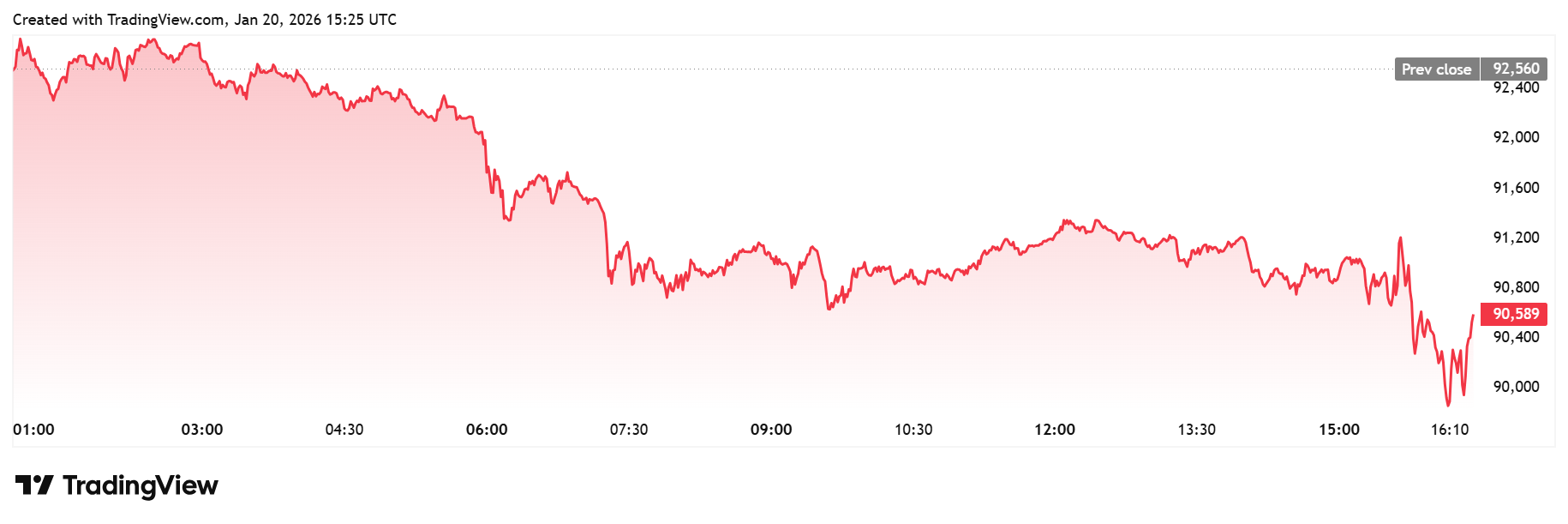
Bitcoin Falls Below $90,000: Examining the Factors Behind the Decline
Bitcoin, the leading cryptocurrency, has experienced a significant downturn, dropping below the critical $90,000 mark. This development, marked by a low of $89,800, has raised concerns among traders and investors alike. As Bitcoin’s price dipped more than 2% throughout the day, the backdrop was steadily filled with uncertainty from various economic and political events, most notably the Supreme Court’s delay in ruling on the Trump tariffs case.
Supreme Court Delays: Implications for Bitcoin
Today’s decline in Bitcoin can be directly correlated with the Supreme Court’s decision to postpone its ruling regarding the Trump administration’s tariffs. This ruling was anticipated to provide clarity on the president’s authority to impose tariffs on several countries, including France, Germany, and the U.K. CoinGape reported that, despite expectations, no decisions were made during the court’s opinion day. The lack of a ruling has intensified doubts surrounding the potential economic impacts of these tariffs, which could create further bearish conditions for Bitcoin and the broader cryptocurrency market.
Tariff Pressures and Market Reactions
The looming tariffs—set to start from February 1 at a rate of 10%—have already stirred anxiety among Bitcoin traders. A ruling in favor of the Trump tariffs would likely lead to heightened market volatility and bearish sentiment surrounding Bitcoin. Historical data indicates that past tariff threats have adversely affected Bitcoin prices. For instance, the infamous crash on October 10 can be traced back to Trump’s announcement of a potential 100% tariff on Chinese goods, resulting in widespread panic selling across cryptocurrencies.
Rate Hike Fears in Japan: Additional Burdens for Bitcoin
The sharp decline in Bitcoin’s value is compounded by growing concerns of a potential interest rate hike from the Bank of Japan (BOJ). Following its recent rate increase, the BOJ has hinted at further hikes, sending shockwaves through the market. These rate hikes could lead to significant fallout in the Yen carry trade, triggering sell-offs not only in Bitcoin but in various asset classes. The combination of rising Japanese bond yields and political uncertainty in Japan, including Prime Minister Sanae Takaichi’s call for a snap election, adds layers of complexity for Bitcoin traders.
Market Sentiment: Odds Favoring Tariff Support
Market indicators suggest that the odds of the Supreme Court ruling in favor of the Trump tariffs have increased. Data from Polymarket shows a rise in chances from 28% to 37% following the delay in the ruling. Such developments have reignited fears reminiscent of last year’s market behavior, wherein the Trump tariffs were linked with substantial declines in crypto prices. Analysts like Peter Brandt have weighed in, predicting further price drops for Bitcoin, with targets between $58,000 and $62,000, further dampening market sentiment.
Trader Sentiment: The Shift Towards Caution
Amid the current market conditions, traders have markedly adjusted their expectations for Bitcoin. Polymarket data indicates only a 12% chance of Bitcoin reaching the psychological $100,000 mark by the end of the month. The shift in sentiment highlights a cautious approach, as many traders pare back their bets on potential rallies amidst prevailing uncertainties and bearish predictions. As the market navigates these turbulent waters, it remains crucial for investors to stay informed and prepared for fluctuations.
Conclusion: Navigating an Uncertain Future
In summary, Bitcoin’s decline below the crucial $90,000 threshold is the result of a confluence of political and economic pressures. The Supreme Court’s delay regarding the Trump tariffs has added to the existing uncertainties in the crypto space, and fears of rate hikes in Japan only exacerbate the situation. As market sentiment shifts toward caution, traders need to remain vigilant in these tumultuous conditions. For those investing in Bitcoin and cryptocurrencies, understanding these underlying dynamics will be essential in navigating the future landscape.
With these developments, it becomes increasingly important for investors and traders to stay updated on not just market movements, but the broader economic indicators that can significantly influence the cryptocurrency ecosystem.