



Bitcoin and XRP Price Trends: Market Insights and the Impact of the Clarity Act
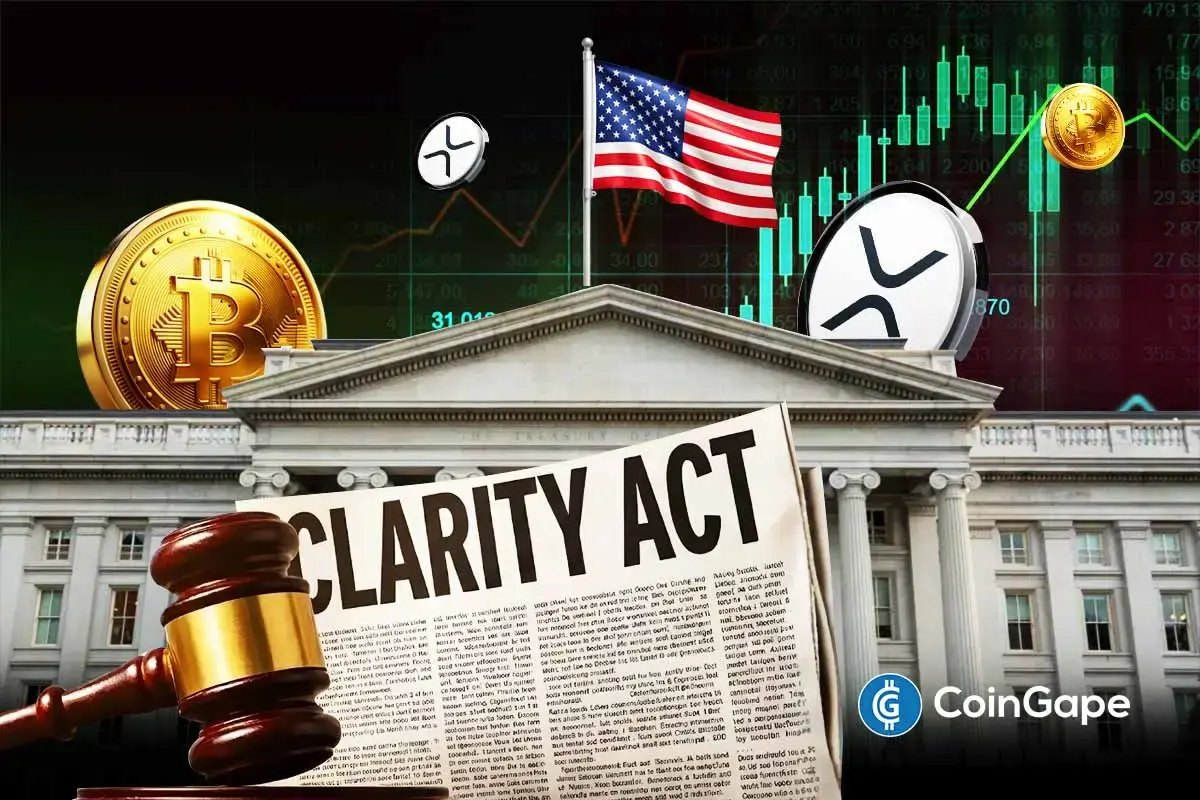
In recent days, Bitcoin and XRP have shown signs of recovery, with Bitcoin trading over $67,000 and Ether hovering around $1,950. The broader cryptocurrency market has seen a modest increase of 0.69% within the last 24 hours, reflecting growing investor interest amidst an ever-volatile market. XRP, specifically, is trading near its trendline support at $1.41. With the March 1st deadline for the Clarity Act looming, crypto enthusiasts are keeping a keen eye on potential regulatory changes that could influence market dynamics.
The Clarity Act: A Crucial Regulatory Step
The White House has set a pivotal deadline of March 1 to address the ongoing discussions surrounding the Clarity Act, particularly concerning stablecoin yield provisions. This legislative initiative aims to establish clearer guidelines for digital assets in the U.S. However, the issue of whether stablecoin issuers should be allowed to provide interest-like incentives has sparked fierce debate. Despite the bill passing in the U.S. House of Representatives in July 2025, its final approval is stalled due to differing opinions about stablecoin yield. Industry representatives have proposed bans on financial incentives, which crypto advocates strongly oppose.
Ongoing Negotiations and Market Implications
While progress has been noted in discussions led by the White House Crypto Council, uncertainty still looms. Paul Grewal, Chief Legal Officer of Coinbase, remarked on the positive nature of negotiations, emphasizing a collaborative spirit among involved parties. However, the resolution remains unknown as the March 1 deadline approaches. The outcome of these discussions is critical not only for Bitcoin and XRP but also for the broader cryptocurrency market, as it directly pertains to expanding market opportunities and influencing regulatory frameworks.
Bitcoin and XRP Price Predictions: Key Resistance Levels
Both Bitcoin and XRP have shown notable upward trends in recent trading sessions. Bitcoin’s price saw a rise of 0.86%, reaching $67,732. If it maintains this momentum above the $67,700 mark, it may target the key resistance level of $70,000. Conversely, falling below this threshold could prompt a retest of earlier support levels near $65,000. Furthermore, XRP has also demonstrated remarkable performance, trading at $1.41 after a 6% increase this week. The cryptocurrency is currently exploring important support zones, and its bullish trajectory hinges on the trendline’s continued strength.
Market Fluctuations: XRP and Bitcoin Performance
Recent market data indicates that XRP is witnessing positive inflows, with net daily inflows amounting to $4.05 million. This suggests strong investor interest, which bodes well for its price performance. In contrast, Bitcoin Exchange-Traded Funds (ETFs) have faced substantial net outflows totaling $166 million on February 19, marking the third consecutive day of declines. This divergence highlights the unique challenges and opportunities present within both cryptocurrencies.
Grok and Future Market Trends
Another cryptocurrency to watch is Grok (GROK), which saw a modest increase of 0.5%, currently valued at $0.0004734. Market analysts predict that Grok’s price could stabilize between $0.00047 and $0.00048, with optimistic projections suggesting a potential surge towards $0.0005 if bullish momentum continues. As the sector evolves, the March 1 deadline set by the Clarity Act will likely be a defining moment for both Bitcoin and XRP, with investors eager to gain clarity on stablecoin regulations.
Conclusion
In summary, the upcoming March 1 deadline for the Clarity Act poses significant implications for Bitcoin and XRP, potentially shaping the future of cryptocurrency regulation. As discussions progress, market players remain hopeful for regulatory clarity, which could bolster confidence and further stimulate market growth. Meanwhile, investors will closely monitor price movements and key resistance levels to navigate the shifting landscape of this dynamic sector.