


Ripple and XRPL: The Future of Cross-Border Payments
In the rapidly evolving landscape of digital finance, Ripple [XRP] has emerged as a formidable contender, aiming to redefine cross-border payment systems. With a vision to enhance the speed and reduce the costs associated with traditional banking processes, Ripple is targeting a significant share of the SWIFT network—specifically, a 14% slice of its liquidity flows by 2030. In this article, we explore Ripple’s ambitious goals, the current state of the XRP Ledger (XRPL), and the increasing interest from institutional investors.
Disrupting SWIFT: A Vision for 2030
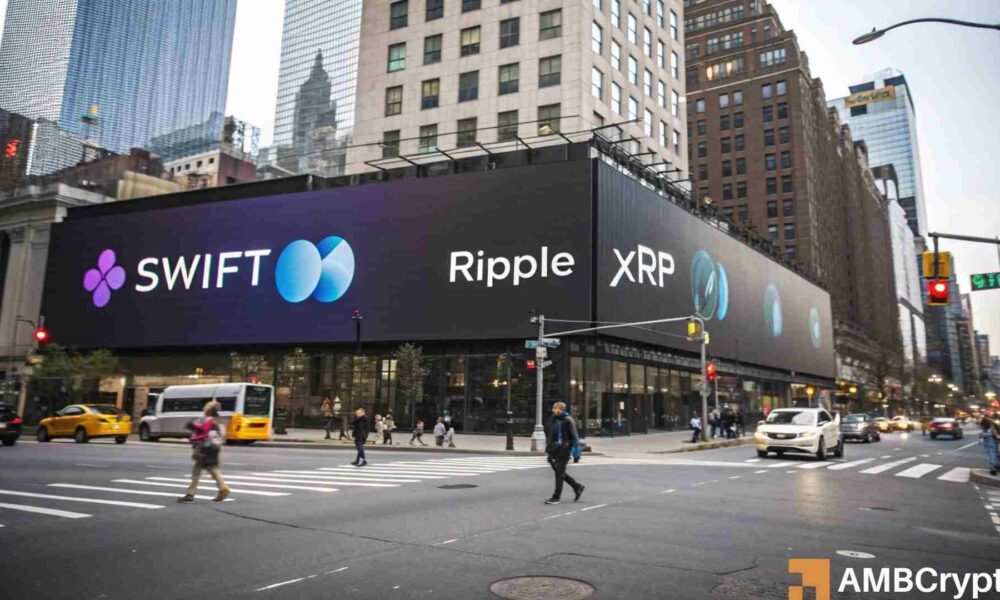
Ripple’s commitment to transforming cross-border payments is unwavering. At the recent XRP APEX 2025 event in Singapore, CEO Brad Garlinghouse articulated a clear strategy focused on seizing market liquidity rather than merely messaging capabilities. With SWIFT managing a staggering $1.25 quadrillion in capital flows annually, Ripple’s target of capturing 14% translates to an awe-inspiring $175 trillion yearly volume for the XRP Ledger. This ambition highlights Ripple’s potential to revolutionize the financial industry and serve as a more efficient alternative to the outdated SWIFT system.
Current Challenges for XRP Ledger
Despite these lofty aspirations, Ripple faces noteworthy challenges. As of 2025, XRPL’s network activity has plummeted by 94%, dropping from 105,000 active users in December to approximately 6,000 by June. Such a steep decline poses significant questions about the network’s immediate viability and user engagement. Analysts are keeping a close eye on these dynamics, as steady user growth will be critical for Ripple to achieve its long-term goals.
Institutional Interest: The Whale Effect
Interestingly, while XRPL’s active user base has dwindled, institutional interest in XRP has seen a resurgence. In June, whale transactions involving amounts over $1 million surged, indicating strong bullish sentiments among large investors. This uptick aligns with XRP’s price growth, which increased from $2.0 to $2.35. According to data from Santiment, these whale transactions coincided with a positive shift in market sentiment, indicating growing confidence in XRP’s future.
Price Dynamics: Navigating Market Sentiment
As market participants recalibrate their strategies around XRP, macroeconomic factors and internal liquidity dynamics play crucial roles in price behavior. Recent analyses suggest a potential retracement toward the $2.0 mark, which could serve as a springboard for future price action. Notable liquidity zones between $2.0 and $2.2 present critical thresholds that traders should closely monitor. As XRP navigates through these pressure points, there is speculation that a liquidity hunt might drive the price back towards higher zones between $2.3 and $2.4.
Strategic Partnerships and Acquisitions
To bolster its long-term prospects, Ripple has strategically formed partnerships and secured acquisitions, including collaborations with major banking institutions such as SBI Holdings, Banco Santander, and Standard Chartered. These alliances are fundamental not only for tapping into existing liquidity pools but also for enhancing Ripple’s credibility in the global financial landscape. By aligning with key players in the banking industry, Ripple aims to solidify its position and facilitate smoother transactions across borders.
Conclusion: The Road Ahead for Ripple
As Ripple strives to carve out its niche in the global payments ecosystem, the balance between overcoming current challenges and capitalizing on institutional interest will be crucial. The aggressive pursuit of a 14% stake in SWIFT’s liquidity flows by 2030 reflects not just ambition but also a strategic vision rooted in the potential advantages of the XRP Ledger. While the future remains uncertain, Ripple’s ongoing efforts and adaptive strategies may well position it as a leader in the next wave of financial innovation.
In summary, Ripple’s journey through 2025 may be fraught with challenges, but the company’s proactive stance in partnerships, market engagement, and liquidity management represents a bold step toward reshaping how cross-border payments are conducted globally. As the competition intensifies, Ripple’s ability to adapt and respond effectively will determine its sustainable growth in the ever-changing dynamics of the financial world.