

Twenty One Capital’s NYSE Debut: A Market Reality Check for Crypto Firms
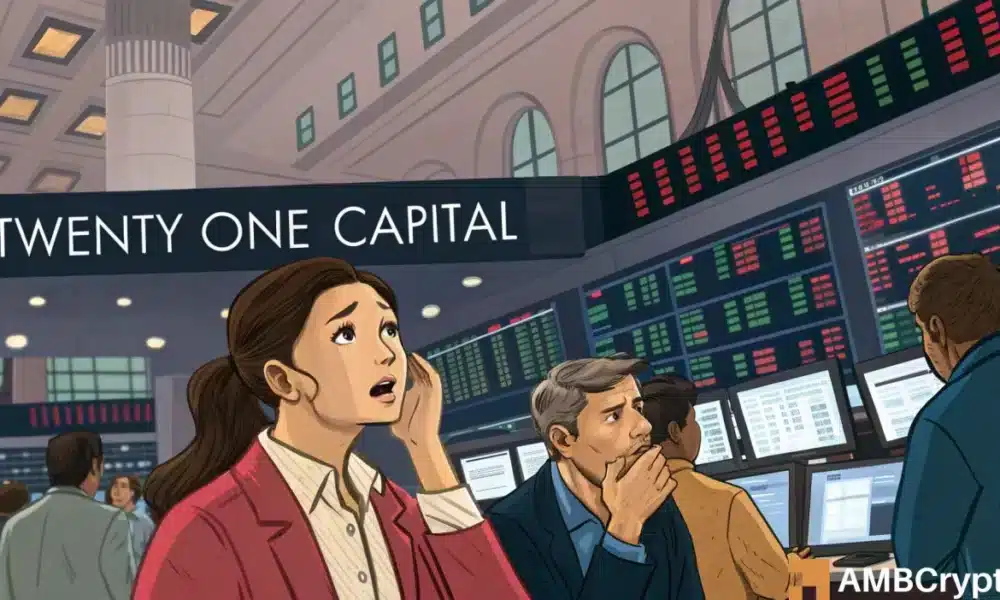
On December 9, the long-awaited New York Stock Exchange (NYSE) debut of Twenty One Capital, trading under the ticker XXI, faced a disheartening reality check. This Bitcoin-native firm, backed by heavyweights like Tether, Bitfinex, and SoftBank, experienced a near 20% drop on its first trading day following its merger with Cantor Equity Partners, a Special Purpose Acquisition Company (SPAC). Shares opened at $10.74 but closed at $11.42, signaling a tough reception from Wall Street in a climate characterized by already worrisome sentiment toward crypto-invested equities.
CEO Jack Mallers and the Vision of Twenty One Capital
CEO Jack Mallers has championed the belief that Twenty One Capital is not merely about Bitcoin accumulation but aims to provide "utility services" and develop a robust corporate framework for innovative financial products. However, despite Mallers’ optimistic outlook, investor skepticism remains palpable. The significant stock price plunge raises concerns that market participants are factoring in not just the company’s immediate challenges, but the broader pressures affecting the entire crypto landscape. Mallers reiterated the company’s commitment to not only acquiring Bitcoin but also launching diverse business lines that relate to the cryptocurrency, aiming for profitability beyond mere asset accumulation.
Market Dynamics and Valuation Paradox
This alarming decline reflects a valuation paradox that has piqued interest in financial circles. According to industry data, Twenty One Capital’s principal asset—its extensive Bitcoin treasury—is valued at over $3.97 billion, based on Bitcoin’s closing price of $91,350. The disheartening disparity between this intrinsic value and the trading price of the stock draws attention to Wall Street’s cautious stance on crypto-related investments. This cautiousness is exacerbated by the nature of the merger with Cantor Equity Partners, which was heralded as a groundbreaking partnership but has seen disillusionment following Twenty One Capital’s lackluster debut.
The Digital Asset Treasury Sector Under Scrutiny
The struggles faced by Twenty One Capital resonate beyond its individual performance; they align with a broader trend impacting the Digital Asset Treasury (DAT) sector. Market analysts are focusing on the ‘market-to-NAV’ (mNAV) ratio, which compares a company’s enterprise value to its raw crypto holdings. Notably, John Todaro, Senior Research Analyst at Needham, indicated that it’s increasingly difficult for DATs to secure capital in a climate where tangible differentiation is required to justify higher mNAV multiples. With Bitcoin itself down over 28% from its peak in October, Twenty One Capital’s debut symbolizes an existential moment for leveraged bitcoin treasury models in general.
Broader Impact on Other Bitcoin Firms
The challenges faced by Twenty One Capital are mirrored in the wider crypto marketplace, affecting firms like Metaplanet in Japan and Strategy, both of which are grappling with the harsh realities of the mNAV ratio. Metaplanet has halted its Bitcoin purchases despite steep price declines and is scrambling to establish a $500 million credit line for stock buybacks. Similarly, Strategy’s emergency $1.44 billion equity raise reveals intense liquidity pressures that have arisen due to market volatility and a need for stability.
Conclusion: A Shift in Market Sentiment
The rocky opening of Twenty One Capital on the NYSE serves as a wake-up call to investors and companies within the crypto ecosystem. The significant discount at which the company is trading, relative to its own Bitcoin holdings, underscores a growing disconnect between the confidence in crypto assets and that of equity markets. As the landscape continues to evolve, it’s evident that companies operating in this space will need to redefine their strategies and approaches if they hope to survive and thrive in an increasingly cautious investment climate.
In summary, Twenty One Capital’s NYSE debut illustrates a pivotal moment in the cryptocurrency investment arena, highlighting the urgent need for innovation and resilience amid prevailing market challenges.