



Telegram Integrates Lighter for Native Leveraged Trading: A Game-Changer for DEX Perpetual Trading
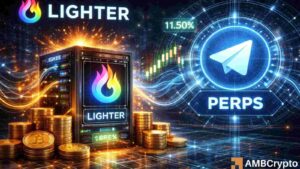
The cryptocurrency landscape is undergoing significant transformations, with platforms continuously seeking innovative partnerships to enhance user experience. Recently, Lighter, a decentralized exchange (DEX) focused on perpetual trading, has been chosen to power Telegram’s native leveraged trading service. This integration, announced on April 2nd, allows Telegram users to trade a diverse array of assets—including cryptocurrencies, stocks, metals, and oil—utilizing leverage of up to 50x. Given Telegram’s vast user base of over 1 billion, with a notable 150 million registered users and 25 million active traders, this collaboration has the potential to significantly elevate trading volumes on the Lighter DEX.
With a robust existing base of active users, Telegram should serve as a strong conduit for crypto trading activities. The messenger app has already shown promise as a central hub for peer-to-peer (P2P) transfers and fiat on-ramps. By integrating Lighter’s trading capabilities, Telegram positions itself not just as a communication tool but as a comprehensive trading terminal. This could potentially yield impressive gains, given that Lighter represents the primary and most extensive integration to date. It’s crucial to analyze whether this collaboration could provide Lighter with comparable traction to its competitor, Hyperliquid, which benefits from multiple integrations with crypto wallets including Phantom and MetaMask.
The demand for perpetual trading has surged in recent months, particularly evident during the market peak last October when overall trading volumes crossed $350 billion. Open Interest (OI) during this period also reached $25 billion, showcasing a robust interest in leveraged trading. Even though the cryptocurrency market has faced significant setbacks, with considerable declines in trading activities, the perpetual trading segment remains relatively active with volumes hovering around $150 billion. For Lighter, however, the trading dynamics have shifted dramatically, especially since the debut of its token (LIT) at the end of December. The conclusion of the farming period prompted many traders to seek new opportunities, resulting in Lighter’s trading activity experiencing a profound decline.
Statistically, Lighter’s trading volumes plummeted from a staggering $75 billion weekly in November to approximately $8 billion by April, representing an 89% decrease. Such a drastic reduction has inevitably impacted the protocol’s revenue, with an alarming drop from a weekly average of $4 million to just $325,000—amounting to a 91% crash. Despite a temporary surge in February that briefly alleviated some of the losses, the overall trend has been concerning. It remains to be seen how the Telegram integration will influence trading activity and revenue in the following months.
If the collaboration with Telegram significantly boosts trading activity in April, it could signal a turnaround for Lighter’s declining fortunes. As of early April, the integration has already spurred a noteworthy 30% recovery in LIT’s token price, indicating trader optimism. However, should trading activities fail to gain significant traction, the token may face resistance at $1, risking a drop back to $0.78 or even lower. The interplay between new integrations, user engagement, and market dynamics will be critical in determining Lighter’s future.
In conclusion, the integration of Lighter with Telegram represents a pivotal moment in the decentralized trading landscape. While the DEX has faced challenges in maintaining trading activity and revenue, the potential influx of new users and trading volumes from Telegram could provide the much-needed revival. As the demand for perpetual trading continues to grow, the real test will be whether Lighter can sustain this momentum and capitalize on its enhanced visibility within Telegram’s bustling user community. This partnership may not only influence LIT’s recovery but may also set new standards for innovation in decentralized finance.