




Understanding Solana’s Competitive Edge in the Stablecoin Landscape
In the fast-paced world of blockchain and DeFi (Decentralized Finance), Solana has emerged as a formidable player, particularly in the stablecoin market. With its ability to facilitate rapid adoption and liquidity inflows, Solana stands out against larger networks like Ethereum. This advantage is crucial for driving decentralized activities and attracting more projects to its ecosystem. This article delves into the unique attributes that give Solana its edge in the stablecoin sector, particularly focusing on its performance relative to Ethereum and other platforms.
The Rise of Solana in DeFi
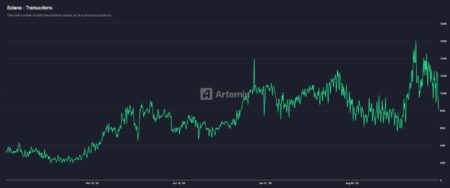
One of the key factors contributing to Solana’s competitive advantage is its speed and efficiency in handling transactions. The network’s infrastructure allows for rapid liquidity inflows, enabling users to engage in DeFi activities almost instantaneously. As of recent reports, Solana’s total liquidity sits around $14 billion, significantly outpacing competitors like Base, Arbitrum, and Optimism. While this liquidity pool might still pale in comparison to Ethereum’s $167 billion stablecoin market, the quality of Solana’s growth is noteworthy. In the first three quarters of the year, Solana’s liquidity surged by 140% and 40%, respectively, whereas Ethereum saw modest gains of 14% and 24%. This makes Solana’s ecosystem particularly attractive for short-term investors looking to capitalize quickly.
Circle’s Strategic Role in Solana’s Growth
A pivotal player in maximizing Solana’s growth is Circle, the issuer of USDC, a prominent stablecoin. Circle is strategically deploying liquidity on Solana, marking its commitment to the network’s future. With a total USDC supply of $75 billion, approximately 65% is circulating on Ethereum. However, noteworthy is that 11.62% of the total USDC supply is also on Solana, equating to around $8.74 billion. Importantly, USDC constitutes nearly 60% of Solana’s stablecoin market, reinforcing Circle’s influential role in enhancing liquidity on the platform.
Solidifying Solana’s Position with USDC Mints
Circle’s recent actions further emphasize its dedication to Solana’s ecosystem. Notably, a recent mint of $1.25 billion USDC sparked discussions within the community. On November 6, the total minted USDC reached approximately $1.35 billion, with around 93% of this supply allocated to Solana. This strategic move not only highlights Circle’s belief in Solana’s potential but also serves to boost liquidity significantly. The increasing USDC supply on Solana signifies that more DeFi activities and projects may launch on this network, further solidifying Solana’s position in the marketplace.
Comparing Network Performance: Solana versus Ethereum
While Solana’s rapid influx of stablecoins showcases its appeal, it’s essential to contextualize this alongside Ethereum’s slower yet stable growth. The decentralized finance space is characterized by the need for speed, and Solana’s architecture allows for more agile trading mechanisms. For instance, during a memecoin drop on the Solana network, immediate liquidity availability leads to spikes in trading volume. This quick capital rotation enhances DeFi activities, providing a dynamic environment that larger networks like Ethereum cannot mimic with the same immediacy.
Future Implications for Solana’s Ecosystem
The current trajectory suggests that Solana’s stablecoin flow could very well become its strongest asset. As its liquidity continues to attract various projects and users, the network is poised for further expansion and success. With stablecoins playing a crucial role in engaging new participants in the blockchain ecosystem, Solana stands to gain a significant market share. Circle’s ongoing support will likely reinforce this competitive edge, allowing Solana to remain at the forefront of the DeFi space.
Conclusion: Navigating the Future of DeFi with Solana
In summary, Solana is carving out a notable position in the stablecoin market thanks to its speed and efficient liquidity mechanisms. With Circle’s significant investments and the increasing circulation of USDC on Solana, the network is on track for sustained growth in the coming years. While it may not yet match Ethereum’s massive market size, the fundamentals indicate that Solana’s unique attributes can drive more DeFi activity and facilitate broader adoption. As the landscape of blockchain technology continues to evolve, Solana’s stablecoin market is set to become a defining force in the DeFi arena. As projects continue to launch and liquidity inflows surge, Solana may very well reshape the future of decentralized finance.