


Analyzing Pressure Sales and Market Dynamics in the Crypto Space: A Deep Dive into Pump.fun
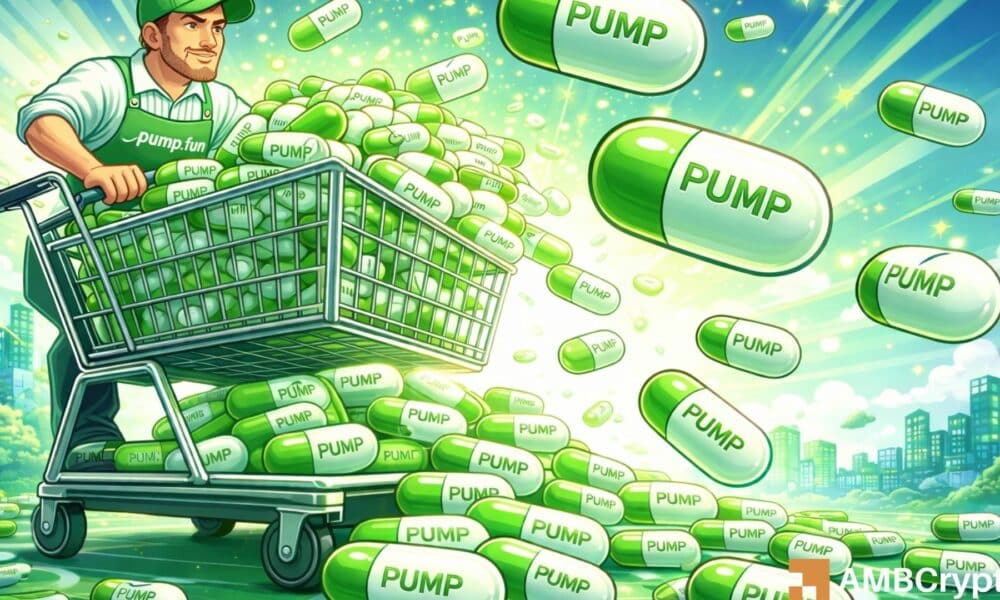
The cryptocurrency market has recently experienced turbulence as selling pressure emerged from a significant wallet linked to the address “77DsB…” This wallet began offloading large batches of Pump.fun tokens into USDC, resulting in a noticeable impact on market dynamics. Accumulating 3.75 billion tokens months earlier, valued at approximately $25.39 million, the distribution unfolded gradually rather than resulting in a single liquidity shock. This gradual sell-off sparked a chain reaction in the market, inviting scrutiny from analysts and investors alike.
The selling activity kicked off around February 17, initiating with 543 million tokens that generated about $1.2 million in USDC. This figure escalated rapidly, surpassing 2 million tokens by February 19. Just a few days later, on February 21, disposals reached a staggering total of 3.376 billion tokens, translating to roughly $7.23 million in USDC. Despite this mass liquidation of Pump.fun tokens, approximately 373 million PUMP, valued at around $788,000, remained in circulation post-disposal. The execution data indicated a series of well-structured token swaps, each involving about 14.3 to 14.4 million tokens and routed into around $30,000 in USDC. This staggered approach minimized slippage while maintaining continuous selling pressure on the PUMP token.
As this supply went into circulation, the price of PUMP saw a significant drawdown, remaining approximately 75% below its peak levels. This decline wasn’t solely due to the selling activity from the wallet; other factors also contributed to the liquidation motives. Declining platform revenue and growing memecoin fatigue exacerbated the situation, increasing the urgency for liquidations. Furthermore, the operational funding needs and an expansion of structural supply likely added to the downward pressure on the token prices in the market.
Examining decentralized exchange (DEX) leadership, Uniswap [UNI], PancakeSwap [CAKE], and Pump.fun anchor current DEX activity, but their momentum profiles present significant divergence. Uniswap commands the lead with $1.84 billion in 24-hour volume and $12.12 billion in weekly turnover, reflecting an astonishing 570% surge in activity. This notable growth signifies a consolidation of liquidity toward Ethereum-aligned execution venues, showcasing Uniswap’s robust performance in the market.
Contrastingly, PancakeSwap recorded a daily volume of $710.6 million, but its weekly flows plummeted by an alarming 84.41%, suggesting a rapid cooling of market participation. Pump.fun ranks third with $499.9 million in daily volume; however, it also registered a significant 56.26% decline on a weekly basis, a signal of vanishing speculative demand within the Solana ecosystem. The fee performance mirrors this hierarchy, with Pump.fun generating $3.15 million in 24-hour fees and around $100.13 million over a 30-day period, amounting to cumulative fees nearing $1.457 billion. However, it still falls short against leading DeFi platforms, particularly Uniswap, which amassed $1.46 million in 24-hour fees and $964.52 million over 30 days.
The supply dynamics surrounding Solana have also been undergoing a transition. With a circulating supply of nearly 568 million SOL out of a total of approximately 620 million, around 8.4% remains locked. Detailed distribution reveals improved holder dispersion: the top 10 addresses manage 6.58% while the top 100 hold a combined share of 22.76%. This increase in holder dispersion tends to stabilize the market as it mitigates the risk of any single entity exerting undue influence on price dynamics.
In recent developments, Pump.fun reported $1,444,291 in purchases over a 24-hour period, accentuating sustained buy-side activity amidst overwhelming selling pressure. Cumulatively, this figure adds to an impressive accumulation of $297,829,062 in total purchases. Notably, these revenue-funded buybacks have now offset 25.062% of the circulating supply. This milestone holds significant implications given that PUMP operates on a fixed total supply of 1 trillion tokens. By absorbing a quarter of the floating tokens, the available supply is materially reduced, thereby alleviating some of the downward pressure as demand remains stable.
Moreover, daily trading volumes hovering around $80 million reinforce ongoing participation in the ecosystem. Community engagement surrounding incentives and ecosystem tokens has further attracted sustained attention, with consistent buybacks and decreased float contributing to a firmer supply floor. This strategic approach appears to establish long-term scarcity dynamics for PUMP, although the market must tread carefully. With insider sales and token unlocks expanding supply, the backdrop of downside pressure remains, notwithstanding the cushion provided by ongoing buybacks.
In conclusion, the delicate balance of supply and demand continues to shape the trajectory of Pump.fun within the evolving crypto landscape. While selling pressures have created significant challenges, strategic buybacks and community engagement may pave the way for future growth and market stabilization. Investors and market analysts must stay vigilant, navigating between the currents of overhanging risk and engineered scarcity that define the PUMP ecosystem.