




The Federal Reserve’s Pivot: A New Era for Rate Cuts and Its Impacts on the Markets
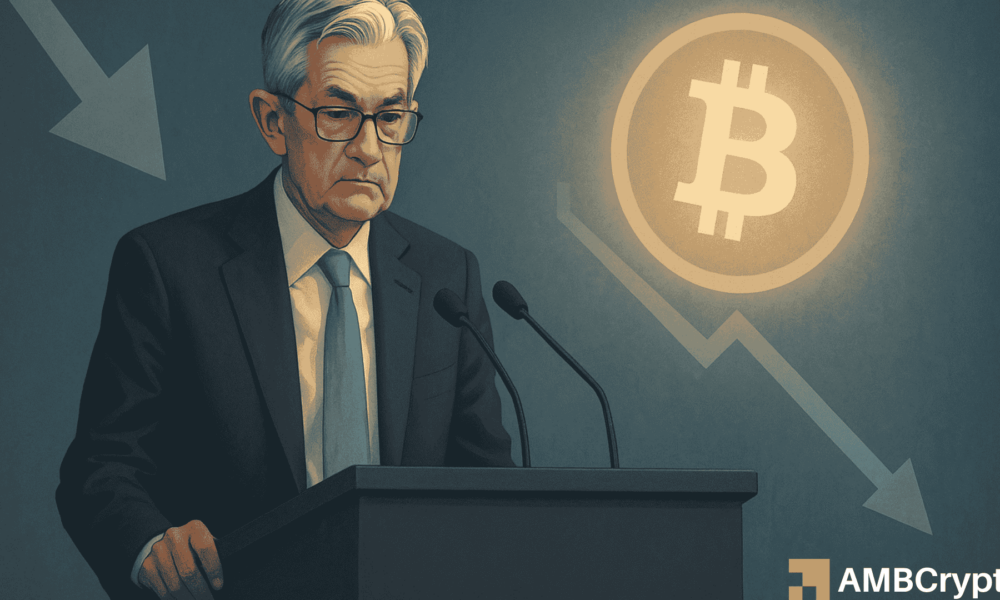
On Wednesday, Federal Reserve Chair Jerome Powell provided further insights into the recent 25 basis points (bps) rate cut during a closely monitored press conference. This marked a pivotal moment as Powell articulated the Fed’s shift in focus and how its monetary policy may evolve in response to labor market changes and inflationary pressures. The Fed’s recent decisions may have significant implications for various asset classes, particularly cryptocurrencies.
Understanding the Rate Cut: Implications on Employment and Inflation
The Federal Open Market Committee (FOMC) statement hinted at growing employment risks and moderating inflation. Powell’s extended remarks highlighted this narrative while introducing new developments that could affect market behavior. He also announced plans to purchase $40 billion in Treasury bills, indicating a move towards boosting liquidity within the financial system. Powell downplayed recent increases in goods inflation, attributing them to tariff effects rather than a broader economic resurgence. This clarification suggests that the Fed is not anticipating structural inflation risks that could impede rate cuts.
Labor Market Concerns Take Precedence Over Inflation
A critical aspect of Powell’s commentary was the explicit acknowledgment that employment risks now outweigh inflation concerns. The Fed’s focus appears to have shifted significantly; job gains are slowing, wage growth is weakening, and companies are finding it easier to hire. Powell noted, "downside risks to employment have risen," indicating that the labor market has become a central focus for the Fed. This philosophical shift represents a notable departure from the inflation-first approach that has dominated Fed policy for the past two years.
Liquidity Injections: The Fed’s Strategy Moving Forward
Another significant announcement during the press conference was the Fed’s decision to initiate short-term Treasury purchases to maintain “ample reserves.” Although Powell clarified that this strategy should not be categorized as Quantitative Easing (QE), it effectively injects liquidity into the financial system. With an initial focus on acquiring $40 billion in Treasury bills in the first month alone, this move suggests that the Fed is committed to easing financial conditions. A more liquid market typically signals a stronger appetite for risk assets, which could bode well for sectors like cryptocurrency.
Market Reactions and Expectations for Future Cuts
Powell was deliberate in refraining from committing to a predetermined trajectory for interest rates but also did not counter market expectations of further rate cuts anticipated in early 2026. His silence on this front effectively reassured traders that this recent rate adjustment may be the initial step in a broader easing cycle rather than a one-off measure. This openness to market expectations is vital for maintaining investor confidence and encourages an environment conducive to risk-taking.
Stable Inflation Expectations: A Positive Sign for Financial Markets
Powell underscored that long-term inflation expectations remain stable, allowing the Fed more flexibility to support employment without risking its credibility. Stable inflation expectations reduce the likelihood of abrupt policy reversals, providing another constructive signal for markets eager for clarity. This stable environment is crucial for financial markets, especially as investors look for stability amid changing economic conditions.
What This Means for Cryptocurrency
In the realm of cryptocurrency, market dynamics have historically responded favorably to initial stages of monetary easing. As Powell framed inflation pressures as transitory and emphasized the potential for liquidity injections, the macroeconomic backdrop appears increasingly supportive for Bitcoin and other digital assets. Should labor data soften further or inflation continue to ease, cryptocurrencies could see a resurgence in inflows as risk appetite returns. Powell’s commentary suggests a potentially sustained tailwind for risk assets, marking a shift in focus from inflation concerns to safeguarding a softening labor market.
Conclusion: A New Paradigm for the Federal Reserve
Jerome Powell’s press conference indicated a significant shift in the Federal Reserve’s priorities from curbing inflation to protecting a vulnerable labor market. For risk assets such as Bitcoin, this transition could signal the beginning of a more favorable macroeconomic environment rather than just a temporary adjustment. As the Fed navigates this new landscape, market participants should prepare for a potentially transformative period ahead, with implications extending beyond the immediate economic horizon.