


Polygon’s Path to Recovery in 2026: Analyzing the Deflationary Impact and Record Adoption
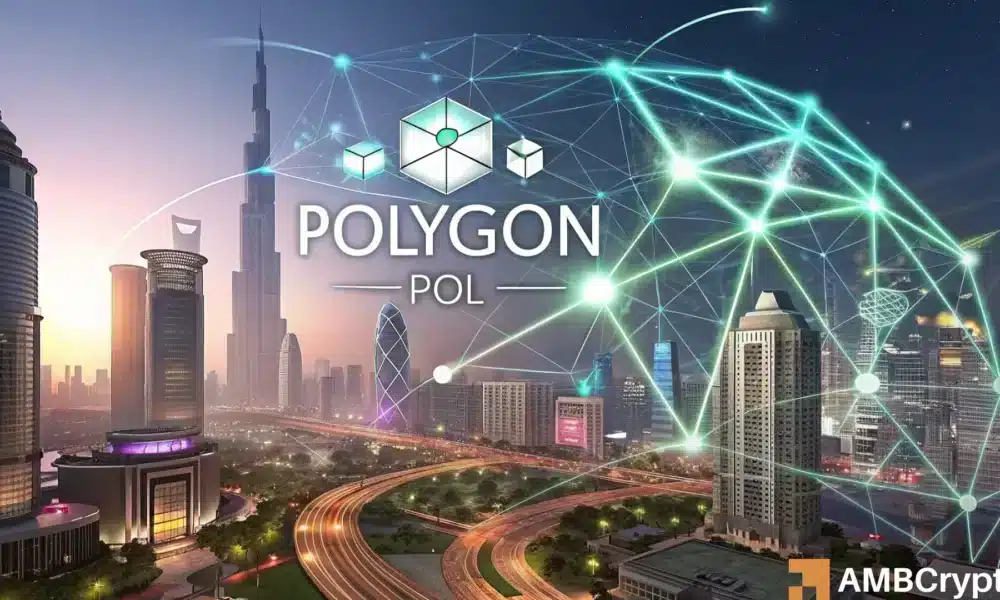
In 2025, the cryptocurrency market experienced an exceptional boom, yet Polygon (POL) found itself lagging behind in price performance. While other tokens surged, POL demonstrated minimal to no gains during this period. Nevertheless, despite the price stagnation, Polygon’s network usage and adoption skyrocketed, reaching unprecedented levels. This juxtaposition has led Sandeep Nailwal, Polygon’s CEO, to envision a promising comeback in 2026. With an influx of users and a notable rise in transaction fees, 2026 could indeed be the year that Polygon reclaims its position in the market.
Surge in Network Activity
One of the key indicators of Polygon’s potential growth is its remarkable performance in terms of network activity in 2025. Polygon achieved an astounding milestone with 1.4 billion transactions, marking a significant increase in user adoption. During this period, daily transactions consistently surpassed 5 million, with occasional spikes reaching 7 million. The accumulation of over 20 million in transaction volume reflects an engaged user base, enhancing confidence in the platform’s long-term viability. As active addresses surged to stabilize above 15 million weekly and near 1 million daily, the token appeared to establish both demand and functionality in the digital asset landscape.
Deflationary Strategies and Their Implications
Amid the impressive growth in usage, Sandeep Nailwal has pointed to a strategic focus on deflationary measures as a key to Polygon’s future success. The network has been actively burning a staggering 1 million POL tokens daily through fees generated from transactions. Over a mere three to four-day period, this led to the incineration of significant amounts of POL, pushing the burn rate to a level where, if sustained, it could result in 3.5% of the total supply being burned over the year. Such deflationary pressure is essential for POL’s growth trajectory; reducing inflation promotes scarcity, which historically has been correlated with increased token prices.
Staking and Token Scarcity
In addition to burning tokens, Polygon has also seen substantial staking activity, with 3.6 billion POL staked on the network. This staking initiative rewards stakers and validators with a total of 1.5% of POL, further promoting scarcity and driving demand. A sustainable deflationary model may provide POL with the momentum it needs to thrive in 2026. Historical data supports the idea that when inflation decreases, prices tend to recover, and if the current trend continues, the overall investment sentiment around POL could strengthen.
Positive Market Momentum
As 2026 began, POL experienced an encouraging upward trend after a challenging 2024. Starting the year at around $0.09, the altcoin surged 21% to $0.127 within just a week. As of recent data, POL was trading at $0.126, showing an increase of 4.67% on daily charts. Enhanced market sentiment is signified by the Stochastic Momentum Index, escalating from a negative zone to a robust 84, indicating strong bullish momentum. If Polygon maintains its current trajectory along with successful deflationary measures, its price could have the potential for significant growth.
Resistance Levels and Future Projections
Despite the positive developments, POL faces long-term resistance at the $0.17 mark, as outlined by the Future Trend Channel. To achieve this level, the token must first clear the $0.15 target in the short term. However, market volatility could pose challenges; a possible retreat back to $0.11 is plausible if the current momentum dissipates. Understanding these resistance points is crucial for investors and traders wishing to capitalize on POL’s projected recovery.
Conclusion
In summary, Polygon stands at a critical juncture heading into 2026, buoyed by record transaction volumes and a robust deflationary strategy. With an impressive burning of 1 million POL tokens daily and a significant staking initiative enhancing token scarcity, the groundwork is laid for a potential resurgence in value. As transaction numbers and active user engagement continue to grow, the indicators suggest that Polygon could very well reclaim its position in the crypto market, making 2026 a pivotal year for POL and its community. As investors keep a close eye on price movements and market sentiment, it will be interesting to see how Polygon navigates the challenges and opportunities ahead.