




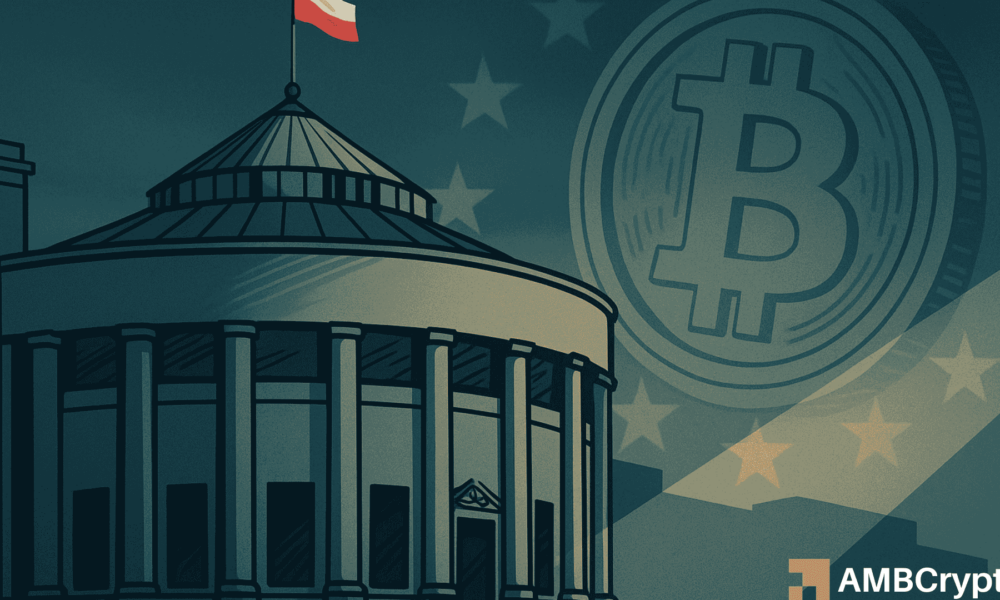
Poland’s Cryptocurrency Oversight: A Regulatory Dilemma
Poland’s recent parliamentary decision against President Karol Nawrocki’s veto regarding a cryptocurrency oversight bill signals critical implications for the nation’s digital asset environment. On December 5, the Polish parliament failed to achieve the necessary three-fifths majority to overturn the veto, effectively stalling Prime Minister Donald Tusk’s initiative for enhanced oversight in the cryptocurrency sector. Tusk highlighted the national security risks posed by increasing foreign interference exploiting digital assets. By framing the legislation as essential for safeguarding the Polish economy, he underscores the urgent need for more robust regulatory tools to monitor the evolving crypto landscape.
The proposed legislation aimed to align Poland’s regulatory framework with the European Union’s Markets in Crypto-Assets Regulation (MiCA). Key provisions included granting the national financial regulator direct authority over crypto-asset service providers and imposing criminal penalties for non-compliance, such as issuing tokens or providing services without a license. However, opposition primarily from right-wing parties and the presidency viewed the measures as excessively restrictive, arguing they could deter crypto businesses from operating within Poland and push them offshore. This ongoing tussle illustrates a significant disconnect in regulatory strategy, contrasting with broader European aspirations for a cohesive digital asset framework.
Adding further context, Italy has taken decisive steps to enhance its crypto regulation, launching a comprehensive review aimed at bolstering investor safeguards within its markets. Italian authorities recognize the potential risks posed to retail investors and the urgency of evaluating how cryptocurrency platforms function. This proactive approach stands in stark relief against Poland’s political stalemate, which has left its crypto businesses in a precarious position and devoid of clear regulatory guidance. With various EU nations advancing their alignment with MiCA, Poland now appears to be lagging, risking its competitiveness within the digital asset space.
In a broader global context, the situation in Poland contrasts sharply with regulatory trends in the United States. Recent U.S. legislative measures, such as the passage of the GENIUS Act and approval for Bitcoin and Ethereum ETFs, indicate a profound shift toward transparency rather than imposing onerous compliance obligations. While U.S. lawmakers remain vigilant about the national security implications linked to cryptocurrencies, their approach prioritizes formalizing the market, thereby fostering innovation. In Poland, however, political deadlock hampers progress, leaving the sector in a regulatory limbo that could stifle growth potential.
As Poland seeks its next steps, the presidency is encouraging the government to draft a revised bill that garners broader bipartisan support. Until a new legislative framework is established, the uncertainty surrounding regulation poses challenges for crypto firms operating in Poland. Without a coherent supervisory path, the country risks falling further behind its European neighbors, who are leading the charge in shaping their legal and regulatory landscapes around digital-assets markets.
In conclusion, the outcome of Poland’s political maneuvering regarding cryptocurrency oversight not only impacts national security but also the future competitiveness of its digital asset sector. As Europe moves towards stricter, MiCA-aligned regulations, the recent decision exemplifies a critical divide between jurisdictions tightening oversight for security reasons and those, like the U.S., that prioritize regulatory clarity to foster innovation. The need for a coherent regulatory vision has never been more pressing as Poland navigates its path in an increasingly complex global cryptocurrency landscape.