

Justin Sun Targets Trump-Backed Crypto Firm WLFI Amid Governance Controversy
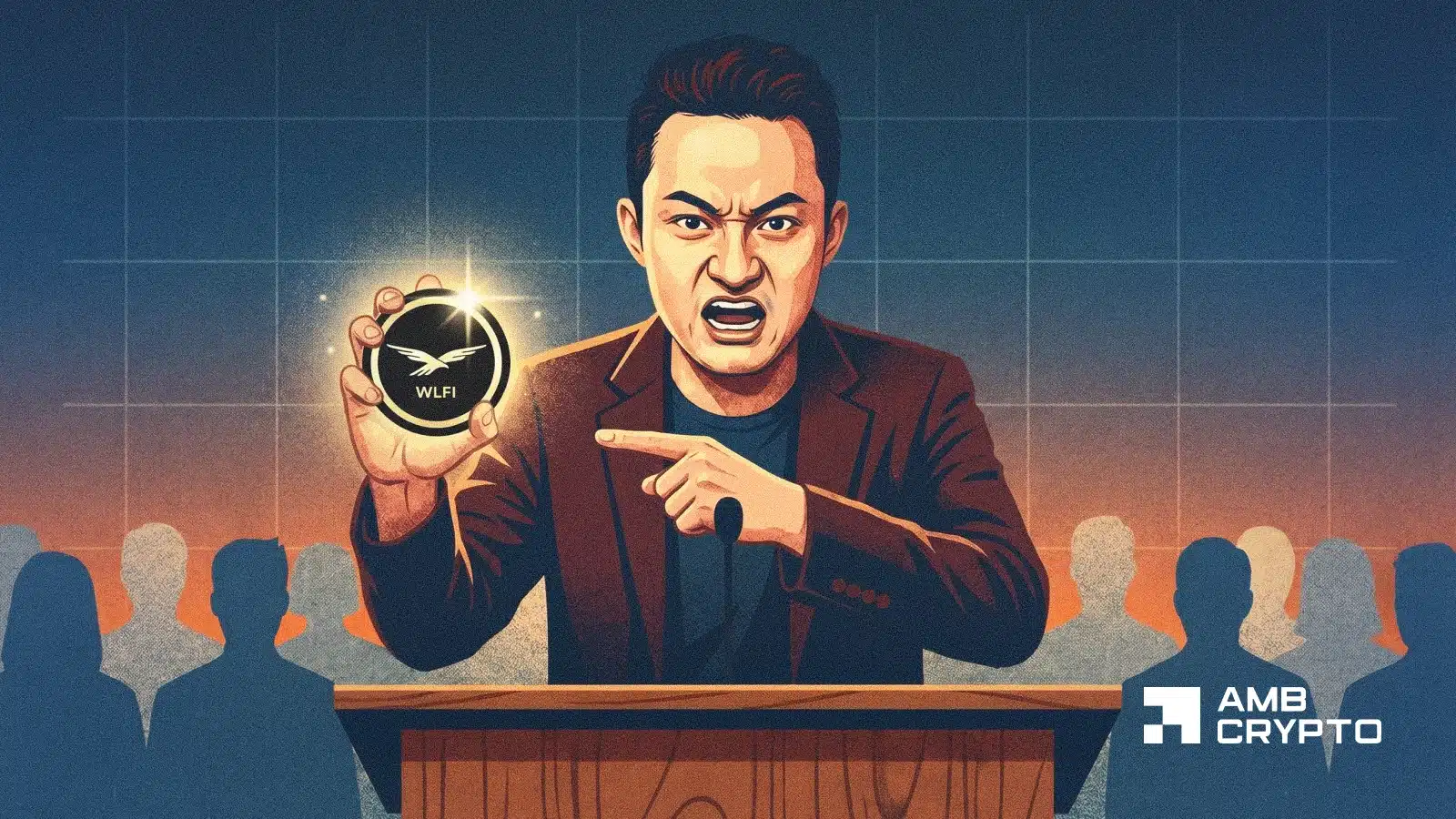
In a striking display of rivalry, Justin Sun, the founder of TRON (TRX), has publicly criticized the crypto firm World Liberty Financial (WLFI), which is backed by former President Donald Trump. Sun’s remarks came on the heels of WLFI’s controversial governance proposal aimed at reshaping its tokenomics, impacting over 62.28 billion WLFI tokens. In a scathing commentary on social media, he derided the initiative as “World Tyranny,” drawing attention to the perceived injustices within WLFI’s governance structure.
Governance Proposal Under Fire
The WLFI governance proposal has generated considerable backlash due to its implications for early supporters, who hold more than $17 billion in WLFI tokens. Under the proposed changes, these supporters would see their holdings converted to a model characterized by a “2-year cliff followed by a 2-year linear vest.” Furthermore, advisors, partners, and team members are slated to undergo a similarly restrictive vesting schedule, complicating their ability to access their funds promptly. This suggests a long-term commitment that Sun argues may not serve the interests of the wider community.
In his critique, Sun emphasized that the proposal subtly coerces voters into compliance. By warning that dissenting from the proposal could result in locked tokens indefinitely, he expressed concern that WLFI’s governance procedures don’t reflect genuine voting but rather an orchestrated manipulation of power dynamics—what he referred to as coercion disguised as governance.
Sun’s Concerns Over Voting Power
Justin Sun disclosed his voting power, which stands at roughly 4%, and raised alarms about how the governance proposal appears to strategically disenfranchise minority token holders. He contended that the proposal’s structure undermines the democratic process, alleging that decisions would be pre-determined even before official voting takes place. Sun articulated this frustration vividly, stating, “This is a performance where the police have already barricaded the doors of parliament and only let their people inside to raise their hands.” His assertion points to the imbalances and lack of transparency in WLFI’s governance.
Moreover, the control exerted by anonymous multisig wallets and an unidentified guardian EOA responsible for banning addresses has further strained credibility. Sun highlighted the contrast between the anonymity of those orchestrating these governance changes and the full identification demanded of legitimate voters, raising ethical questions regarding transparency and fairness in the voting process.
Alignment in Critique
Sun’s concerns are echoed by Derek Boirun, the CEO of Realio Network, who expressed similar fears about governance integrity within WLFI. Such a chorus of criticism amplifies apprehensions about the direction WLFI is taking, especially in a landscape where trust and transparency are paramount. The implications of these governance disputes stretch beyond mere rhetoric and raise critical questions about the future stability and sustainability of WLFI as a cryptocurrency.
Tensions Escalate with Legal Threats
The escalating conflict between Sun and WLFI is not entirely new; it has roots in an ongoing online feud that has seen both parties trading barbs back and forth. Sun had previously characterized WLFI as a “trap door marketed as an open door,” a sharp rebuke aimed at its governance structure. In what appears to be an escalating response, the WLFI team has issued legal threats against Sun as tension mounts, further confusing an already tumultuous landscape. The competitive nature of the cryptocurrency arena is evidenced by these battles for legitimacy, where criticism often sparks heated exchanges.
Market Reactions and Token Performance
Despite the waves of criticism and the public spat between Sun and WLFI, the WLFI token has shown remarkable resilience in the market. At the time of reporting, WLFI was trading at $0.08066, reflecting a modest increase of 1.08% over the past 24 hours. This uptick suggests that market participants may not be swayed by the recent controversies, indicative of a broader sentiment that the governance proposal may not substantially affect WLFI’s valuation in the short-term.
Conclusion: The Ongoing Battle for Governance Integrity
In summary, Justin Sun’s pointed critique of the WLFI governance proposal highlights the ongoing friction between two prominent players in the cryptocurrency realm. The controversy has sparked discussions about governance integrity and the importance of transparent decision-making processes. While WLFI’s token remains relatively stable amidst these unfolding dramas, the long-term effects of governance decisions are yet to be seen. As the crypto market continues to evolve, the stakes in these governance battles become increasingly significant, shaping the future of various projects and their community engagements.